
Discussions on Cancelling Online Schooling, Deputy Chair of Commission VIII: Strengthening Education Quality
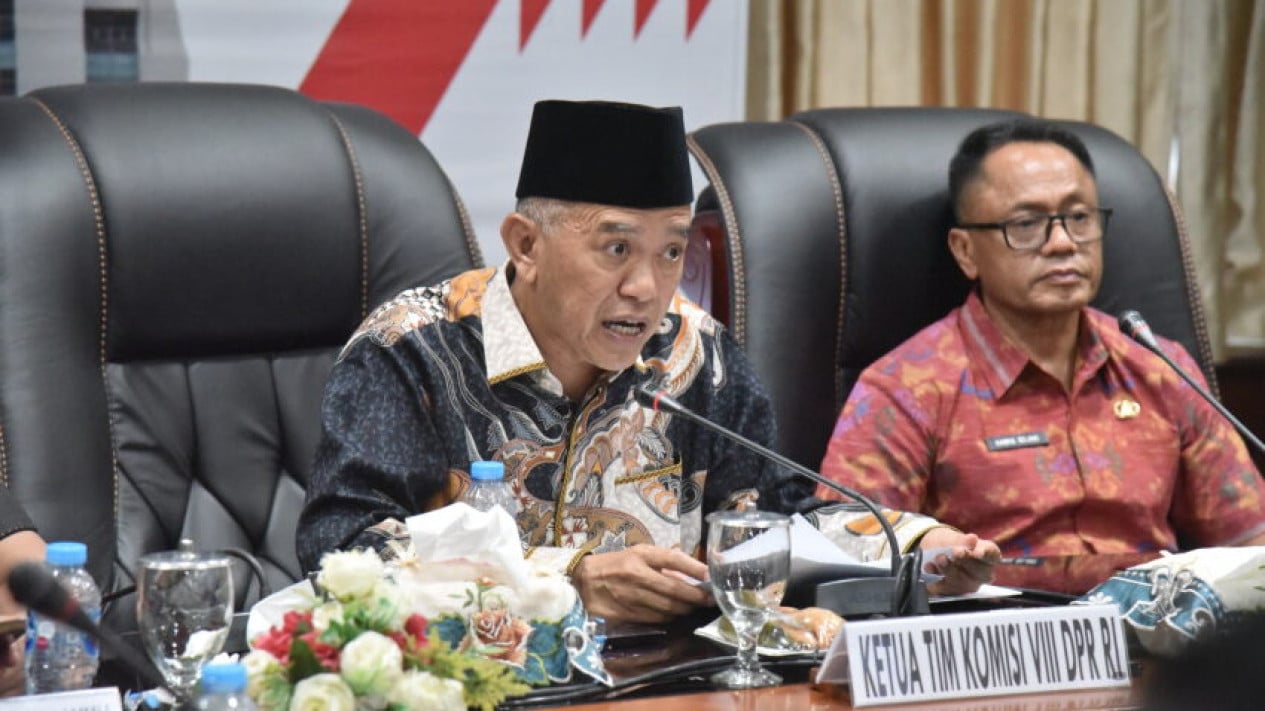
The government’s policy of cancelling plans for online learning as an anticipation of the global crisis and energy efficiency strategy has received appreciation from various parties. Commission VIII of the Indonesian House of Representatives (DPR RI) welcomes the government’s swift action, in this case by the Coordinating Ministry for Human Development and Culture (PMK), in revoking the online learning policy.
Deputy Chair of Commission VIII of DPR RI, Singgih Januratmoko, assesses that the cancellation of this policy is a form of government responsiveness to field dynamics and the aspirations of stakeholders, especially in the madrasah and religious education environment, which is a working partner of Commission VIII.
“We appreciate this decision. The quality of education is the main foundation of human development. A policy that prioritises a balance between energy efficiency and learning quality is a necessity,” said Singgih in his statement quoted on Friday, 27 March 2026.
According to Singgih, Commission VIII sees that quality face-to-face learning (PTM) remains the preferred option, especially for character formation and deep conceptual understanding in the madrasah environment.
In the context of madrasahs, Singgih continued, face-to-face learning plays an important role not only in knowledge transfer but also in the development of morals, religious values, and spiritual character, which are the hallmarks of Islamic education.
As a working partner of the Ministry of Religious Affairs, Commission VIII of DPR RI notes several crucial data points that became the main considerations. Based on the 2024 National Assessment report, there was a 5.2-point decline in numeracy and literacy competency indices in areas with high intensity of online learning over the past three years.
Meanwhile, data from the Ministry of Religious Affairs’ Management Information System for Supervision (Simwas) shows that around 34 percent of madrasahs in 3T regions (Frontier, Outermost, Disadvantaged) face significant challenges in terms of internet quota availability and signal stability, resulting in high dropout rates at the Tsanawiyah and Aliyah levels.
“Online learning is not a bad thing, but if forced in conditions where infrastructure is not yet evenly distributed, it is feared that it will widen the quality gap in education. This is where adaptive policies are important. Do not let energy savings erode our long-term investment in human resources,” he emphasised.