
Disaster Relief Funding for Aceh-Sumatra Allocation Falls, Three Critical Implementation Steps Outlined
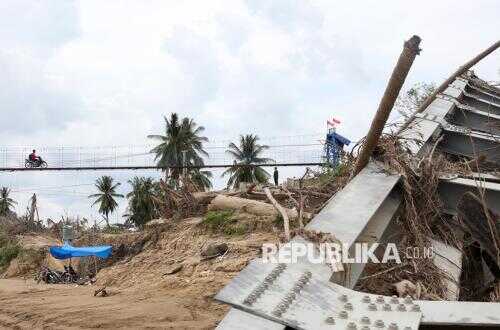
Jakarta — Finance Ministry Decree No. 59 of 2026 marks the government’s swift fiscal response to natural disasters in Aceh, North Sumatra, and West Sumatra. The central government has reallocated budget allocations and increased Revenue Sharing Funds, General Allocation Funds, and Special Autonomy Funds totalling more than Rp10 trillion.
“From a policy perspective, this represents a clear signal that the state is not delaying its presence during emergency situations,” stated Azis Subekti, a member of Commission II of the Indonesian House of Representatives from the Gerindra Faction, in a statement in Jakarta on Monday, 2 March 2026.
However, he noted that policy does not conclude with a decree. It is tested in implementation. Data on Transfer Realisation to Regions as of 1 March 2026 reveals that from a total allocation of approximately Rp85 trillion, only around 25 per cent has been disbursed.
According to Azis, this figure conveyed a clear message: the funds have been prepared, but recovery has not progressed at a pace commensurate with the needs of affected residents. “At this juncture, the primary issue is no longer budget availability, but rather execution capacity and orientation,” he said.
Azis acknowledged that increases in Revenue Sharing Funds and General Allocation Funds do provide fiscal space for regions, but remain aggregate in nature. Funds arrive as large figures rather than detailed damage maps. Yet, he noted, disasters act specifically—damaging particular infrastructure, severing specific local economic access points, and disabling essential services in clearly defined areas. Without sharpening priorities, the greatest risk is that budgets move whilst recovery progresses slowly.
He further stated that the next problem lies in regional government governance. Many regions continue to operate at normal procedural pace: multi-layered changes to regional budgets, lengthy procurement processes, and uncentred coordination across districts and municipalities. In the post-disaster context, he argued, administrative delays are not merely technical matters but touch upon dimensions of social justice. Residents who have lost homes and livelihoods do not live according to bureaucratic schedules.
Additionally, the measure of policy success remains too narrow. Budget absorption is often used as the primary indicator, as though the percentage of realisation is synonymous with recovery.