
Disaster Recovery Task Force Ensures Targeted Housing Assistance for Sumatra Survivors
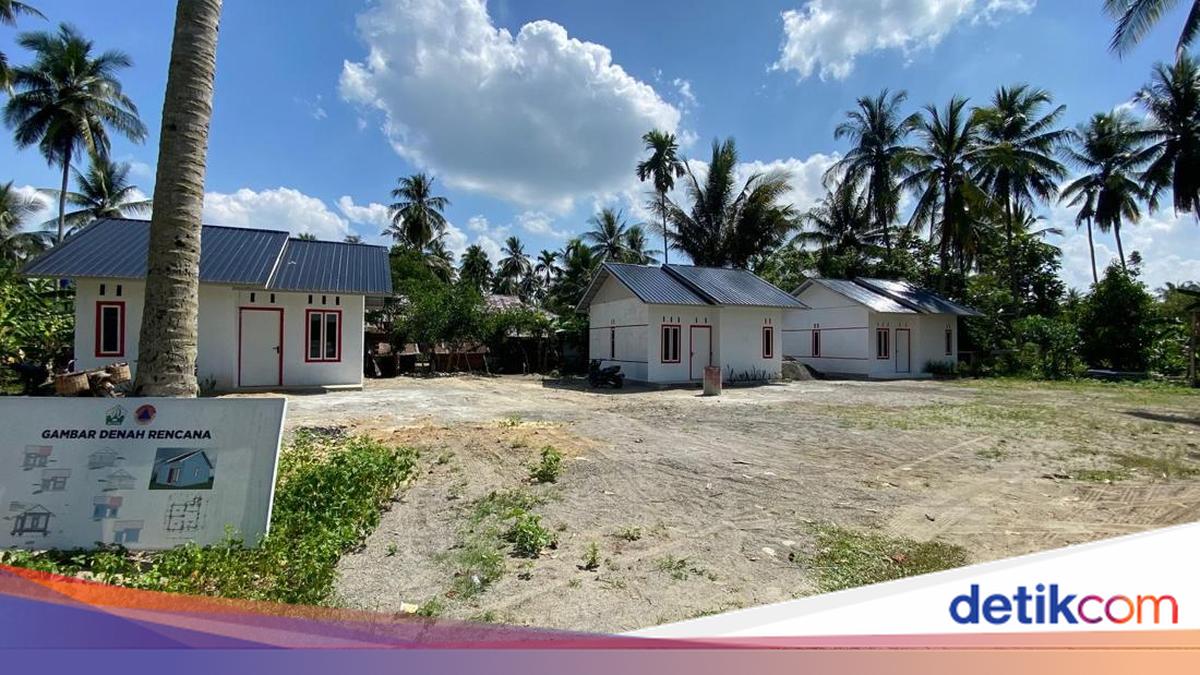
The Satuan Tugas Percepatan Rehabilitasi dan Rekonstruksi (Satgas PRR) Post-Disaster Sumatra ensures that the distribution of housing assistance to disaster survivors is carried out effectively and targeted appropriately. This is achieved through a layered data verification process and the provision of assistance schemes tailored to the needs of the community.
The Head of Satgas PRR Post-Disaster Sumatra, Muhammad Tito Karnavian, emphasised that all government assistance for housing provision, whether temporary housing (huntara), permanent housing (huntap), or the distribution of Housing Waiting Funds (DTH), is based on data collected by local governments and verified rigorously.
“Data from local governments is verified by BPS (Statistics Indonesia), which will determine whether this is indeed light damage or moderate damage,” said Tito in a written statement on Tuesday (24/3/2026).
According to him, this data-based approach is key to ensuring that assistance is not misdirected, while also guaranteeing that every survivor receives the most suitable housing scheme according to their conditions and preferences.
Tito also explained that from the outset of the response, the government has provided options to affected communities, such as staying in huntara, receiving DTH to live independently by renting a house or staying with family, or rebuilding homes through repair assistance schemes.
“If they want huntara, then huntara, but if they want to stay with family or rent, they will be given money from BNPB of Rp600,000 per month for three months,” he said.
Furthermore, Tito stated that housing repair assistance is not provided uniformly but is adjusted to the level of house damage. For lightly damaged houses, repair funds of Rp15 million are given, and Rp30 million for moderately damaged houses. Meanwhile, for severely damaged or lost houses, the government prepares the construction of permanent housing.
For severely damaged houses, Satgas PRR also provides the option of Rp60 million assistance if disaster survivors wish to build their homes independently. However, this assistance is given in two stages to ensure the funds are used effectively for rebuilding damaged houses.
The other option is the construction of huntap, which in its implementation features two main concepts: construction at the original location (in situ) and communal construction at relocation sites prepared by local governments. Both approaches are also determined based on survey results and community choices.
“Those who request in situ will be built on their land by BNPB. If they want one complex, it will be built by the Minister of Public Works and Housing on land prepared by the local government,” he explained.
To ensure data accuracy, Satgas PRR also encourages local governments to conduct direct surveys of affected residents’ homes. This data is then verified by Statistics Indonesia (BPS) before the construction process begins.
Tito stressed that the speed of housing construction greatly depends on the quality and completeness of data from the regions. Tito even suggested that local governments could form special task forces or teams for data collection.
“So the faster they (local governments) collect data, then BPS will come down to verify. After BPS validates, execution of construction by BNPB or the Ministry of Public Works and Housing or there will be special assignments,” he said.
According to Tito, this comprehensive step is part of the government’s broader strategy to ensure all survivors quickly receive decent housing.
Satgas PRR is optimistic that with a data-based approach, cross-ministry/institutional collaboration, and active involvement of local governments, the distribution of housing-related assistance can be accelerated while ensuring it reaches the right targets for all disaster survivors in Sumatra.