
Disaster Recovery and the Importance of Integrated Data
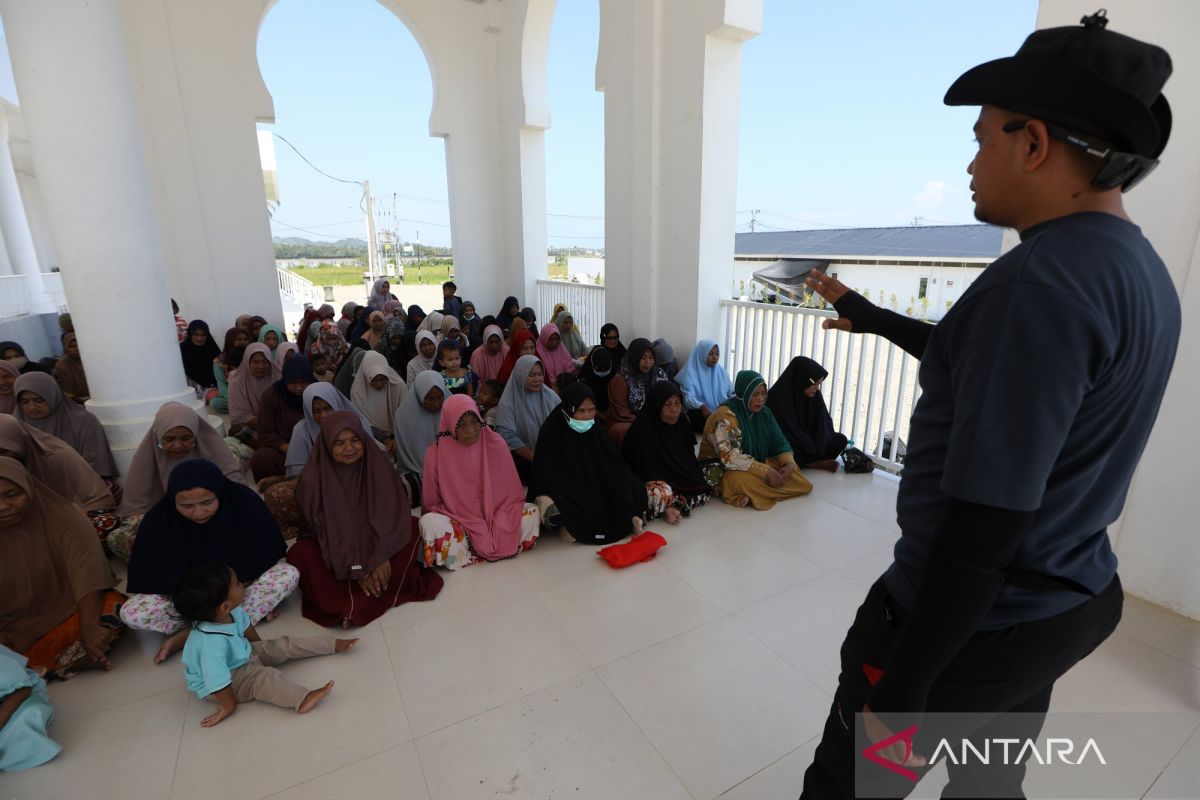
Jakarta (ANTARA) - In early April 2026, a tectonic earthquake of magnitude 7.6 struck North Sulawesi and North Maluku. This event serves as a reminder that disasters never truly end when the shaking stops or floodwaters begin to recede. Instead, after the emergency phase passes, Indonesia faces a more complex stage: recovery.
At this stage, the speed and accuracy of actions are key to enabling affected communities to return to normal life. Recovery is not merely about rebuilding physical infrastructure but also restoring social, economic functions and basic services in a sustainable manner. Throughout this process, data plays an increasingly strategic role.
As a country in a disaster-prone region, Indonesia faces significant geographical challenges. Earthquakes, floods, landslides, and other hydrometeorological disasters are risks that must be managed systematically. In this context, a rapid emergency response is indeed crucial, but the success of disaster management in the medium and long term is largely determined by the state’s ability to manage the recovery phase in a planned, coordinated, and information-based manner.
The experience of handling disasters in Sumatra at the end of 2025 through to early 2026 provides important lessons on the role of data in supporting post-disaster recovery. The rehabilitation and reconstruction process involves multiple sectors, from housing and infrastructure to social protection, health, education, and livelihood recovery. With such a broad scope, the need for consistent and integrated data becomes increasingly evident to ensure that every intervention complements one another and targets the right areas.
In response to this situation, the government has taken policy steps through the issuance of Presidential Decree (Keppres) No. 1 of 2026 on the Task Force for Accelerating Rehabilitation and Reconstruction Post-Natural Disasters in Aceh Province, North Sumatra Province, and West Sumatra Province. This policy reflects a strong commitment to accelerating recovery through more directed cross-sectoral coordination. The framework established in this regulation provides a clear basis for planning, implementation, and monitoring of integrated recovery.
In the recovery process, measuring progress is also an important aspect. Prabowo Subianto’s statement regarding the near-100 percent achievement of flood recovery in Aceh Tamiang demonstrates high attention and commitment to accelerating recovery in affected areas. At the same time, this underscores the importance of a data system capable of supporting the presentation of consistent and mutually understandable information among various parties.
Integrated data serves not only as a reporting tool but also as a basis for decision-making. By using the same data references, inter-sectoral coordination can proceed more effectively, and policies can be designed based on real field conditions. Additionally, data-based information openness with reliable data further strengthens public trust in the ongoing recovery process.
Within this strengthening framework, the Central Statistics Agency has developed the Data Tunggal Bencana Sumatra (DTBS) dashboard as one of the foundational supports for post-disaster rehabilitation and reconstruction. This dashboard integrates disaster impact and recovery data from various sectors into a single platform, facilitating monitoring of affected areas and recovery progress. Through this approach, policymakers can obtain a more comprehensive, up-to-date, and comparable overview across regions.
The development of this dashboard is reinforced by direct field data collection. The involvement of students from the STIS Polytechnic of Statistics in impact surveys helps ensure that the collected data reflects the actual conditions of affected families and housing damage. This approach narrows the gap between administrative data and field realities, while also strengthening the quality of information used in policymaking.
The existence of integrated data also provides direct benefits to local governments. In post-disaster recovery, local governments are at the forefront of programme implementation. When the data used aligns with national data, coordination between central and local levels can run more smoothly. Local governments do not need to repeatedly adjust to various data versions, allowing focus to be directed towards policy implementation and services to the community.
In addition to supporting coordination, integrated data opens up space for sustainable policy learning. Each disaster holds lessons on regional vulnerability patterns, intervention effectiveness, and community responses. With a well-documented data system, these lessons can be processed into the basis for future policy improvements. In the long term, this helps the country build strong institutional memory in disaster management.
Moreover, neatly organised data enables the recovery process to proceed more adaptively. The dynamics of post-disaster community needs often change over time. With an continuously updated data system, recovery policies can adapt to these changes without waiting for ad hoc evaluations. This data-based flexibility is a key characteristic of modern recovery governance.