
Director General of Village Governance: Village Boundary Issues Must Be Resolved Urgently
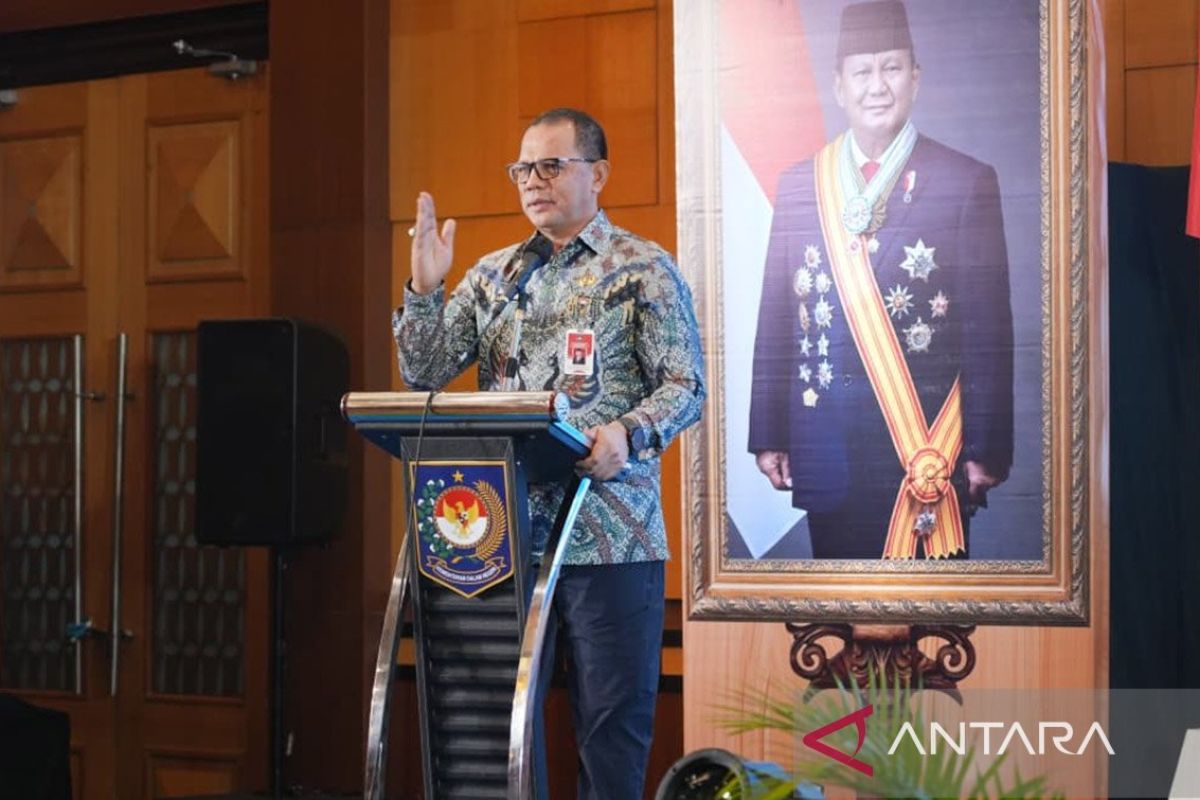
Jakarta (ANTARA) - The Director General of Village Governance at the Ministry of Home Affairs, La Ode Ahmad P. Bolombo, has emphasised that village boundaries are a crucial issue that must be resolved immediately. He stated that affirming village boundaries is essential for creating legal certainty, targeted development planning, and reducing inter-village conflicts. “It also supports the effectiveness of village governments and serves as a basis for spatial planning at the district, provincial, and national levels,” said La Ode in his statement in Jakarta on Thursday. This was conveyed by La Ode Ahmad during the Kick Off Meeting for Village Boundary Affirmation under the Integrated Land Administration and Spatial Planning Programme (ILASPP) in Manado, North Sulawesi. The event took place over three days from 28 to 30 April 2026. In this ILASPP programme, the Ministry of Home Affairs is collaborating with the Ministry of Agrarian Affairs and Spatial Planning/National Land Agency (ATR/BPN), the Geospatial Information Agency (BIG), and the World Bank. The programme will run for five years from 2025 to 2029, with a total target of 5,000 villages. In the first phase, village boundary affirmation will be carried out in three districts in Sulawesi: Bolaang Mongondow in North Sulawesi, and Donggala and Tolitoli in Central Sulawesi. “The aim is to enhance the capacity and coordination of local governments in implementing orderly and regulation-compliant village boundary determinations. The ILASPP’s objective is to support district/city-level local governments in carrying out village boundary determinations,” he said. He explained that to date, village boundary affirmation has reached 14.49%, or 10,909 villages, across Indonesia. There are 10 provinces with the highest village boundary affirmation rates: West Java, Central Java, South Kalimantan, East Java, Banten, West Kalimantan, East Nusa Tenggara, Lampung, South Sumatra, and Aceh. Meanwhile, the 10 provinces with the lowest rates are Papua Pegunungan, South Papua, Gorontalo, Southwest Papua, Maluku, North Sulawesi, Central Kalimantan, Papua, and Southeast Sulawesi. The implementation of village boundary affirmation activities involves a series of stages, including socialisation at the district and sub-district levels, collection and research of historical and juridical village boundary documents, tracking stages, and so on.