
Director General of Corrections Affirms Prisons Are No Longer Places of Retribution
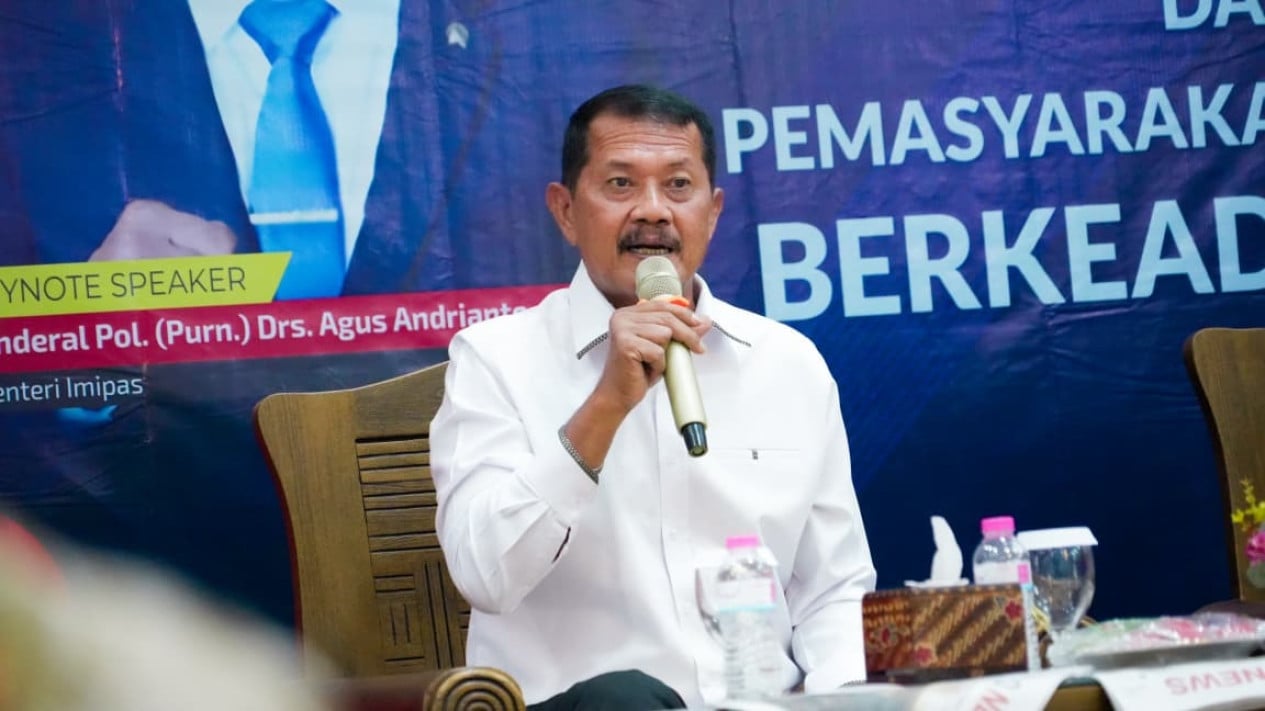
The correctional system in Indonesia is moving towards a new, more humane face oriented towards social restoration. This change was affirmed by the Director General of Corrections at the Ministry of Immigration and Corrections, retired Inspector General Mashudi, during a Public Discussion on Prison Transformation in Realising Modern Corrections with Social Justice at the Faculty of Law, Pancasila University, Jakarta, on Friday, 12 June 2026. Mashudi assessed that corrections can no longer be viewed as an institution that merely receives and executes court rulings. “If previously punishment was synonymous with retribution for wrongdoing, now sentencing is directed at improving the offender’s behaviour, restoring social relationships damaged by the criminal act, and preparing inmates to live productively again in society,” said Mashudi. “Corrections is now no longer at the tail end of the legal process. We are an important part from the beginning of the criminal justice system to support the realisation of more humane justice,” Mashudi stated. One important breakthrough is the presence of alternative sentencing such as supervised punishment and community service punishment. This approach is designed to reduce dependence on prison sentences and make imprisonment a last resort, referred to in legal terms as ultimum remedium. In the context of narcotics cases, sentencing can take the form of rehabilitation. Deputy for Rehabilitation of the National Narcotics Agency, Dr. Bina Ampera Bukit, M.Kes., stated that rehabilitation is not an alternative to punishment but rather the state’s responsibility to restore a person’s physical, mental, and social functions through medical and social approaches. “Through social restoration, reintegration into society becomes the main measure of success for every recovery programme,” said Dr. Bina Ampera Bukit, who was present as a speaker. The discussion was attended by hundreds of enthusiastic law students from Pancasila University. When given the opportunity to ask questions, the students vied to pose critical questions, including about the latest situations in several correctional institutions which they had learned about from mass media reports.