
Diplomacy in the Midst of Conflict: Stemming the Global Economy's 'Nuclear Button'
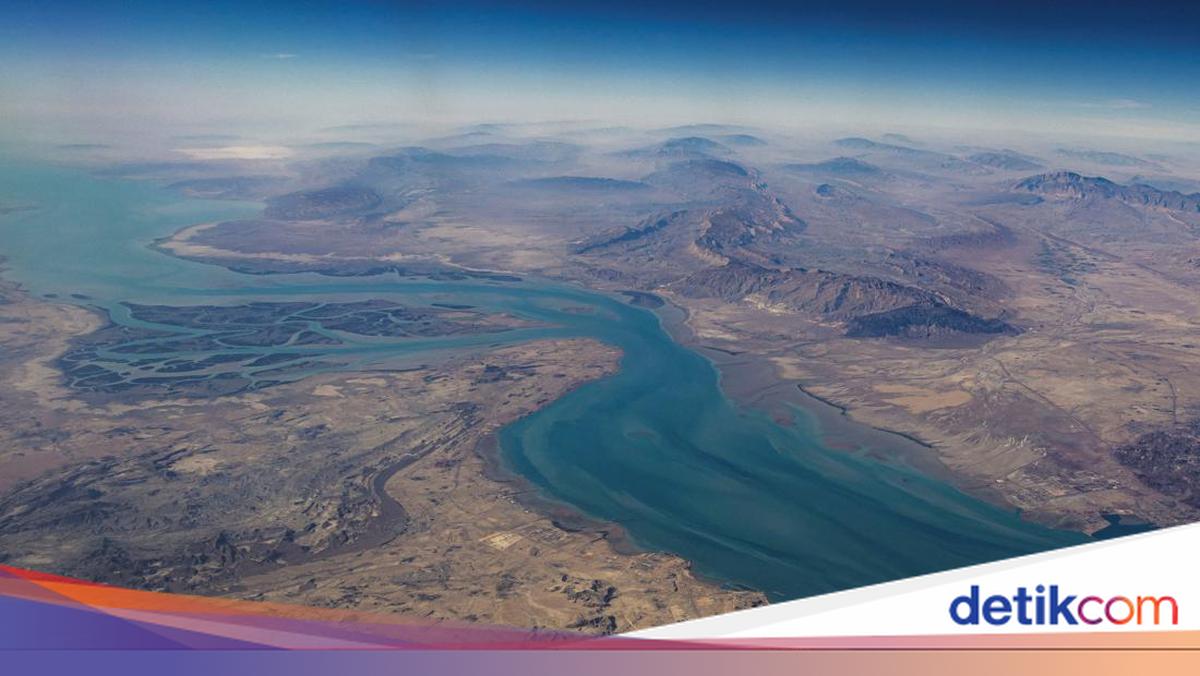
When thick smoke from war begins to loom high over the Persian Gulf horizon in the middle of this decade, engulfing 2026 with clouds of radioactive dust and the debris of conflict, the world often becomes fixated on shallow narratives: how many lives are lost, how many tons of explosives shake the earth, or how sophisticated the war technology on display is. Yet, beneath the intimidating sonar rumble and ear-piercing warning sirens, another sound rings out—far more subtle but possessing infinitely more permanent destructive power: the sound of the backbone of the global economy cracking gradually. Open military conflict between the United States and Iran is no longer merely a matter of blood and soil, or the political egos of two world leaders. It is an existential threat to the global economic order that is only beginning to recover from the pandemic. It is a tragedy of mathematical calculation that will not only leave severe wounds on the fundamentals of the world economy, but will also present a profound crisis of legitimacy for the highest international body, the United Nations (UN).
We, as a nation positioned at the intersection of global trade routes, are standing on the brink of an abyss dug by geopolitical tensions in 2026. The crux of this crisis lies in a narrow strip of geography at the bottleneck of the Persian Gulf: the Strait of Hormuz. This waterway, only 21 miles wide, is not merely a blue line on an atlas, but rather the lifeblood of modern economic life, beating vigorously. According to current data from the U.S. Energy Information Administration (EIA) released in early 2026, more than 21 million barrels of crude oil and condensate flow through this strait daily. This staggering figure represents approximately 21 per cent of total global liquid petroleum consumption. In other words, one of every five litres of fuel powering factories in China, adorning cars in Europe, and lighting the streets of Indonesia, passes through this vulnerable route. Imagine what happens to the human body if the vital blood flow carrying oxygen to the brain is suddenly cut off or completely blocked. That is the most apt analogy for what will befall this planet’s economy if the Strait of Hormuz becomes paralysed.
In a scenario of US-Iran war escalation, Tehran is estimated to promptly execute its most lethal asymmetrical strategy as a form of modern economic warfare: forcible closure of the Strait of Hormuz. This action is not merely posturing or empty threats hurled to strengthen its negotiating position at the table. Iran possesses real and proven military capacity to sow sea mines, deploy elite coastal assault forces, and lock targets with advanced coastal missile batteries to cripple commercial vessels and giant super-tankers that dare to transit. If this economic “nuclear button” is pressed, the world will not face an ordinary price increase. The world will face a total supply shock. The global oil market will seize instantly because it lacks adequate spare capacity to cover the loss of 21 million barrels per day instantaneously.
Economists at global rating agencies such as S&P Global and Fitch Ratings in their quarterly reports in March 2026 project that in this scenario, Brent crude oil prices will spike vertically, breaking through the psychological level of USD 150 to USD 200 per barrel within days, not months. To provide perspective, average oil prices over the past five years have ranged between USD 70 and USD 80 per barrel. This drastic increase means global energy costs will surge nearly three times over. Under such conditions, the market will fail to function, and the price mechanism will lose its rationality, transforming into a brutal casino that benefits only the strong whilst the weak are oppressed (World Bank, 2026).
This is the nadir for global institutions. If war breaks out and economic crisis strikes, the world’s sharp scrutiny and condemnation will not only focus on Washington or Tehran. The spotlight will shift to UN Headquarters in New York. Harsh criticism will assail the UN Security Council, which is often paralysed by veto power. A world frustrated by soaring commodity prices will judge the UN as an institution that failed to keep the peace. This is a crisis of moral authority in which the UN could be branded as a useless organisation when the world needs it most (United Nations, 2026).
In this vacuum of global leadership, international attention also turns to Indonesia’s strategic position. As one of the founders of the Non-Aligned Movement (NAM) and a steadfast proponent of “Free and Active” foreign policy, Indonesia possesses historical legitimacy to fill this void. Indonesia is urged to play the role of mediator, to be a “bridge” connecting the Western and Eastern blocs when the UN’s official bridge is “broken”. The government has a golden opportunity to translate the spirit of “Free and Active” policy into preemptive diplomatic action: prevent war by bringing regional economic stability pacts, and consolidate ASEAN and southern partners to form a pressure bloc that refuses to be dragged into excessive economic sanctions.
Let us descend from the ivory tower of high-level diplomatic theory and translate the terrifying scenario of “Strait of Hormuz Closed” into real loss figures that Indonesia must bear. These figures will prove why peace mediation is an existential necessity, not merely a moral choice. If diplomacy fails and the oil route closes, the burden of Indonesia’s national fuel imports—which average 300,000 to 400,000 barrels per day—will explode dramatically.
Based on data from the Ministry of Energy and Mineral Resources (ESDM) 2026, a price increase of USD 50 per barrel alone resulting from…