
Dinosaur-Killing Asteroid Created a Microbial Haven for 8 Million Years
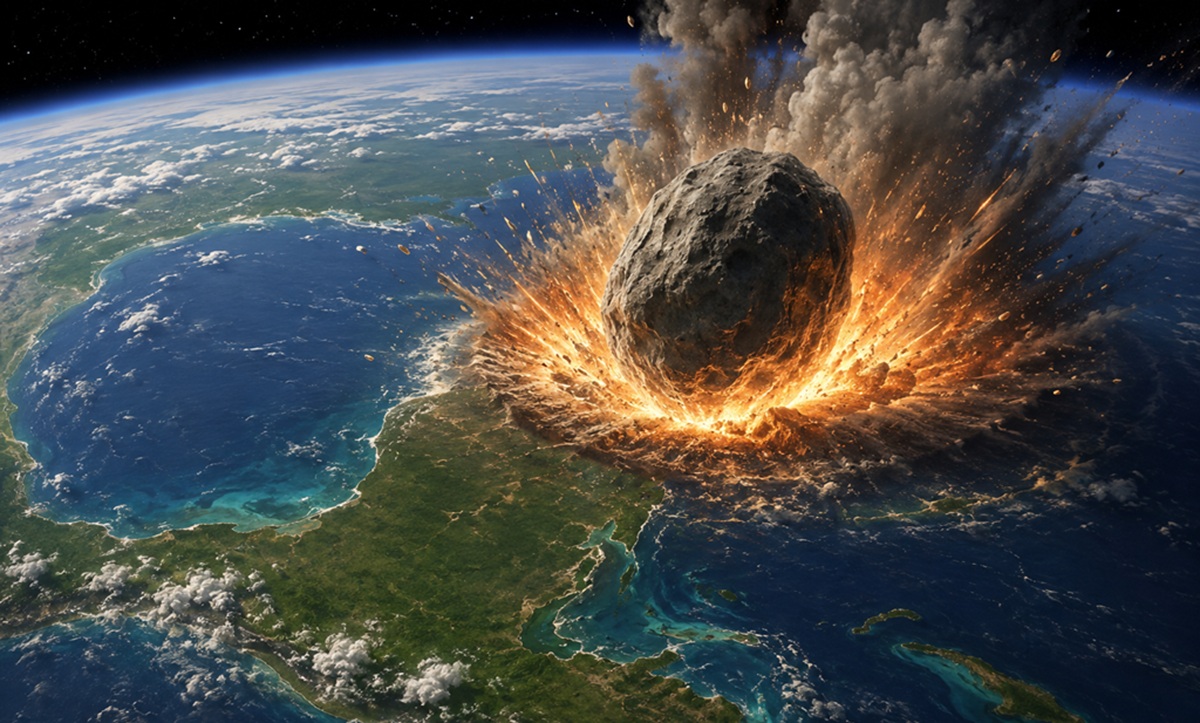
The colossal asteroid impact that annihilated the dinosaurs 66 million years ago has always been identified with global apocalypse. However, a recent study has revealed another side to the catastrophe. Besides bringing destruction to the surface, the massive impact apparently created one of the longest-lasting underground ecosystems in Earth’s history, capable of supporting microbial life. When an asteroid roughly 10 kilometres in diameter struck Mexico’s Yucatán Peninsula, about 75% of living creatures on Earth perished instantly. Nevertheless, the impact also birthed a vast underground environment that was warm and wet. Interestingly, this system was able to support microbial life for at least 8 million years, four times longer than scientists had previously estimated. Through state-of-the-art computer simulations, researchers found the hydrothermal system beneath the legendary Chicxulub Crater persisted far beyond expectations. This makes it the longest-lasting asteroid impact-generated hydrothermal system ever documented on Earth. ‘Wherever you find warm, flowing water on Earth, you find life, and we have long known that asteroid impacts create hydrothermal systems,’ said Annemarie Pickersgill, one of the study’s authors from the Scottish Universities Environmental Research Centre (SUERC). ‘Earlier research in the early 2000s estimated this system only lasted about two million years based on computer models considered conservative at the time. However, we were still surprised by our latest results,’ she added. Chronologically, the violent Chicxulub impact punched a hole in the Earth, forming a crater 200 kilometres wide and releasing massive thermal energy into the crust. Shortly thereafter, seawater from the Gulf of Mexico seeped into the fractured and melted rock beneath the crater. This process created a network of underground pores and fissures filled with hot water, ideal conditions highly favoured by microbes. To prove the duration of this system, the scientific team examined rock samples drilled from beneath the seabed of the Chicxulub Crater in 2016. In these samples, they found potassium-rich feldspar minerals formed from the circulation of hot fluids post-impact. Using argon-argon dating methods, researchers confirmed these minerals formed continuously from 66 million to 58 million years ago, indicating hydrothermal activity that blazed on for 8 million years. ‘Advances in computational methods allow researchers to simulate complex natural systems with unprecedented realism,’ explained Evangelos Christou, one of the study’s authors from the University of Glasgow. The findings, published in the journal Communications Earth & Environment, not only change our perspective on Earth’s history but also provide important clues in the search for extraterrestrial life, such as on Mars. ‘The porous and fractured rocks created by the impact provide microenvironments where microorganisms can be sheltered from radiation and extreme temperatures. These conditions offer life a chance to survive and thrive,’ concluded Pickersgill.