
Digital Learning Programme Reaches 288,865 Schools, Strengthened in 3T Regions
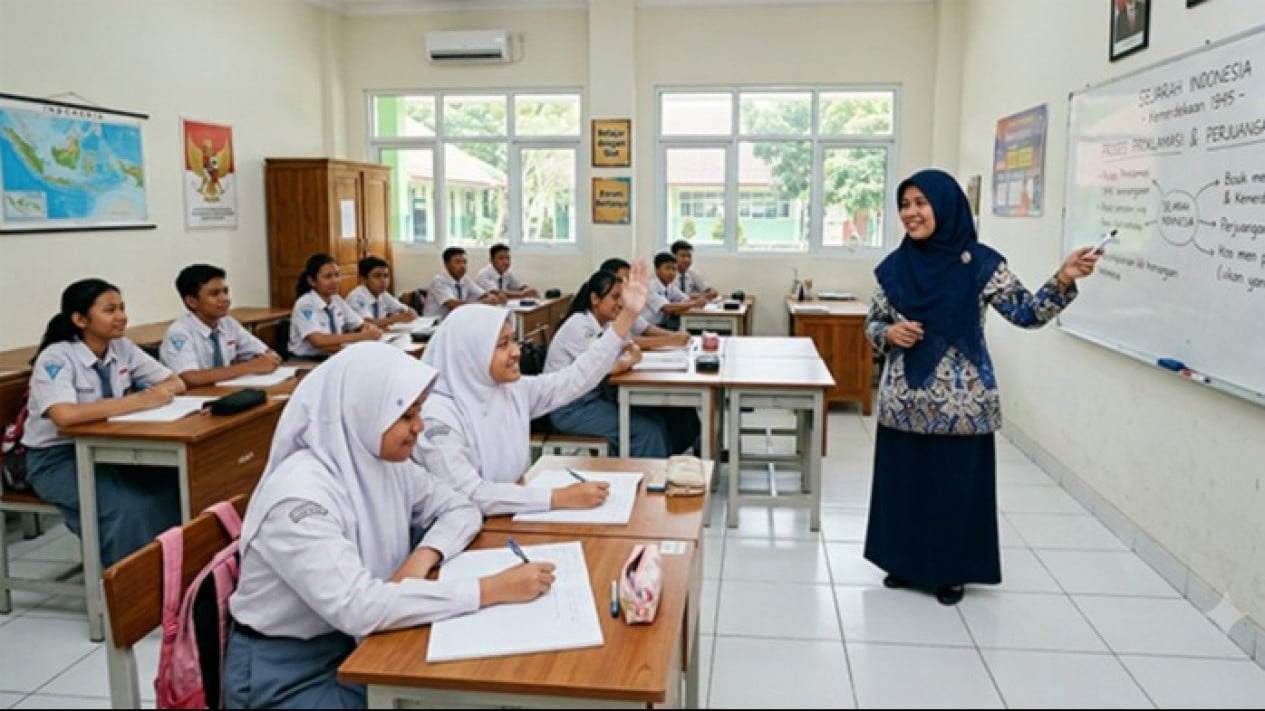
The government continues to demonstrate significant progress in enhancing the digitalisation of learning, including in disadvantaged, frontier, and outermost (3T) regions. Head of the National Communication Agency (Bakom RI), Muhammad Qodari, stated that the digital learning programme has shown consistent development during the two years of President Prabowo Subianto’s administration. Beyond expanding device distribution, the government is also promoting the use of technology to become more integrated into the teaching and learning process. “This programme has reached hundreds of thousands of educational units across Indonesia,” Qodari said during a press conference on the Best Quick Results Programme (PHTC) at the Bakom Office, Jakarta, cited on Friday, 3 July 2026. Based on data from the Ministry of Primary and Secondary Education (Kemendikdasmen), in 2025, a total of 288,865 educational units received Interactive Digital Boards (PID) along with other supporting devices such as laptops and external hard disks. Additionally, 8,265 educational units obtained internet support and 2,389 educational units received electricity support. The government has also trained 33,156 teachers and education personnel, and developed 2,856 digital learning content items to support the optimal use of the devices. In 2026, the government is continuing to prepare the procurement process for PIDs while assisting schools and compiling digital learning content. This step is taken to optimise the use of devices already received while preparing the ecosystem for PID utilisation this year. “As many as 99.5 per cent of students stated that learning using PIDs is much more interesting. In terms of material comprehension, 98 per cent of students admitted to understanding the material taught,” Qodari said, conveying the evaluation results from Kemendikdasmen on the programme’s implementation. From the teachers’ perspective, he added, the majority are beginning to switch to more interactive and varied teaching methods. Teachers also reported that students have become more active and enthusiastic in class. Qodari also confirmed that the government continues to pay special attention to communities in 3T areas so that the benefits of digital learning are not only enjoyed in urban areas. Based on Kemendikdasmen data as of June 29, 2026, the Digital Learning Programme in 3T regions in 2025 reached 13,838 schools covering all levels of education, from early childhood education (PAUD), primary schools (SD), junior high schools (SMP), senior high schools (SMA), vocational schools (SMK), special needs schools (SLB), learning activity studios (SKB), to community learning activity centres (PKBM).