
Digital in the AI Era 2026: Are Students Becoming Smarter or More Dependent on Technology?
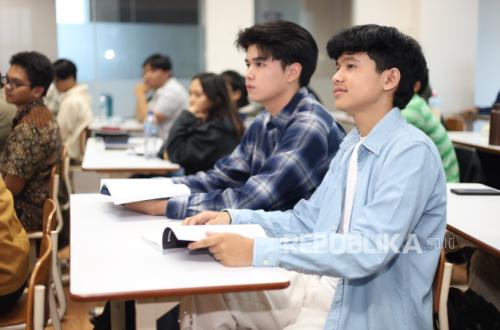
REPUBLIKA.CO.ID, JAKARTA - Be honest, when you receive a university assignment nowadays, what do you do first? Open a book or immediately ask AI? In the Artificial Intelligence (AI) era of 2026, digital technology has become an integral part of students’ daily lives.
From searching for references, summarising lecture materials, to helping complete assignments, everything can now be done with the aid of technology in mere seconds. For Generation Z, who have been familiar with the internet since childhood, using technology like this feels entirely natural.
However, behind this convenience, an intriguing question arises: does technology make students smarter, or does it make them more dependent?
According to a 2024 report by the Indonesian Internet Service Providers Association (APJII), internet penetration in Indonesia has reached more than 78 per cent of the population, with the 15–24 age group being the most active users. In fact, young Indonesians spend an average of more than seven hours a day connected to the internet.
Most digital activities among the youth include using social media, watching educational and entertainment videos, utilising various AI-based tools for school and university assignments, as well as conducting transactions through e-commerce and digital financial services.
On one hand, this situation shows that the younger generation has a very high digital adaptability. They are able to leverage technology to learn faster and access information from various global sources. Technology even helps students understand complex materials in more interactive ways.
On the other hand, the ease of obtaining instant answers also raises new concerns. Some education observers argue that dependence on technology, especially AI, can make students less accustomed to in-depth analysis processes. Academic discussions may also diminish because much of the learning process is done individually through digital devices.
Nevertheless, AI actually provides many benefits in the world of education. Students can now access global literature more quickly, use data-based adaptive learning systems, and utilise digital simulations to understand various technological concepts.
Students majoring in fields like information technology, information systems, or digital business are already accustomed to using various tools that are also employed in the industry.
However, the workforce does not only need graduates who are proficient in using technology. Companies today are actually seeking talent capable of critical thinking, problem-solving, and understanding how technology is used to create solutions.
In sectors like fintech and the digital economy, for example, companies need individuals with problem-solving skills, data-driven mindsets, strong digital literacy, and an understanding of technology ethics.
This means that students cannot merely be technology users. They also need to understand the systems behind the technology and be able to develop innovations relevant to industry needs.
In this context, universities play a crucial role in maintaining a balance between utilising technology and developing students’ critical thinking abilities. Campuses are not only places for knowledge transfer but also spaces for training analysis, creativity, and problem-solving skills.
This educational approach is implemented by Cyber University, known as The First Fintech University in Indonesia. This campus integrates technology learning with industry experience through various programmes such as Information Systems and Technology, Information Systems, Information Technology, Digital Business, and Digital Entrepreneurship.
In addition, Cyber University offers the Company Learning Programme (CLP) 3+1, where students study for only three years plus one year of internship. This way, students not only learn theory in class but also gain direct work experience in companies before graduating.
Ultimately, digital dependence is not something to fear. Technology can actually be a very helpful tool in the learning process if used wisely. The real challenge is how students remain able to think independently, critically, and creatively amid technological conveniences.
Because the future does not belong only to the most advanced technology, but to humans who can use that technology to create beneficial solutions and innovations.