
Digital Communications Ministry confirms child protection policy does not hinder digital innovation
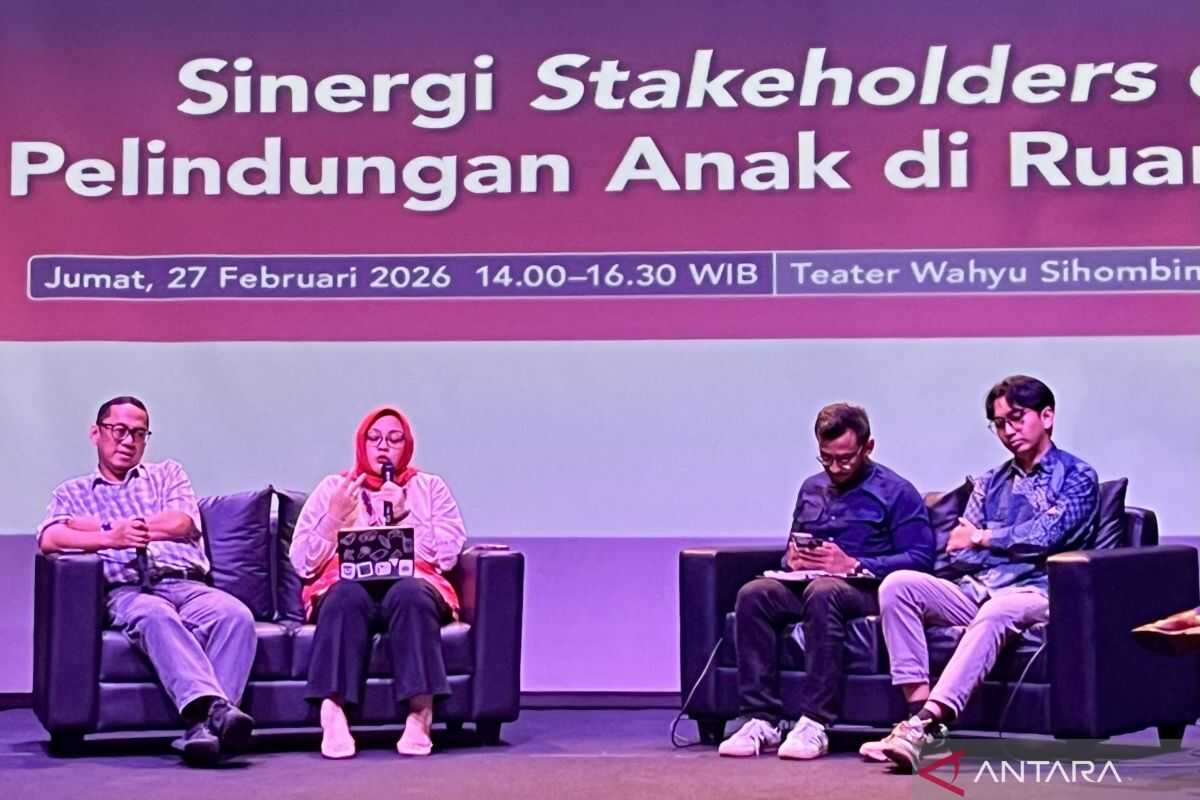
Jakarta — The Ministry of Communication and Digital Affairs has reaffirmed that child protection policies in digital spaces are not intended to restrict innovation, but rather to ensure digital platforms operate responsibly through the implementation of safety features from the design stage onwards.
Mediodecci Lustarini, Secretary of the Directorate General for Digital Space Oversight at the Ministry of Communication and Digital Affairs, stated that child protection narratives are often pitted against freedom and innovation concerns. However, according to her, government regulations are specifically designed to ensure innovation continues to grow whilst safeguarding child welfare.
“This protection is not to prohibit children from accessing digital spaces and is not to limit innovation. What is being regulated is the obligation of platforms,” Mediodecci said during a discussion held by the Center for Indonesian Policy Studies (CIPS) titled “Stakeholder Synergy in Child Protection in Digital Spaces” at Teater Wahyu Sihombing, Taman Ismail Marzuki, Jakarta, on Friday.
She explained that through Government Regulation Number 17 of 2025 concerning Electronic System Management Governance in Child Protection, or PP Tunas, the government requires electronic system operators to conduct risk assessments on every product, service, and feature before launch.
Platforms must determine from the outset whether a developed product is intended for children or has the potential to be accessed by individuals under 18 years of age. Based on this assessment, platforms are obligated to prepare mitigation measures according to risk levels.
“The approach is risk-based. The digital ecosystem is not homogeneous. Each product and feature has a different risk profile,” she said.
According to her, these obligations include implementing safety-by-design and privacy-by-design principles. This means that security and personal data protection aspects must be part of the initial design, not added after product release.
Mediodecci added that age-based provisions in PP Tunas also take into account children’s developmental stages. Young children do not possess sufficiently developed cognitive and emotional capacities to distinguish complex information or manage impulses when interacting in digital spaces.
She highlighted global trends showing that children are connecting to the internet at increasingly younger ages. Every half second, one child globally begins accessing digital spaces, simultaneously increasing potential exposure to risks.
“We are not closing access. We are ensuring that access is safe and appropriate to the user’s development,” she said.
She reaffirmed that the government views the digital economy as Indonesia’s future. Therefore, regulations are designed to create legal certainty whilst promoting a digital ecosystem that is safe, productive, and responsible in protecting children.