
Different Approaches by Indonesia and Malaysia to US Trade Agreement
Different Approaches by Indonesia and Malaysia to US Trade Agreement
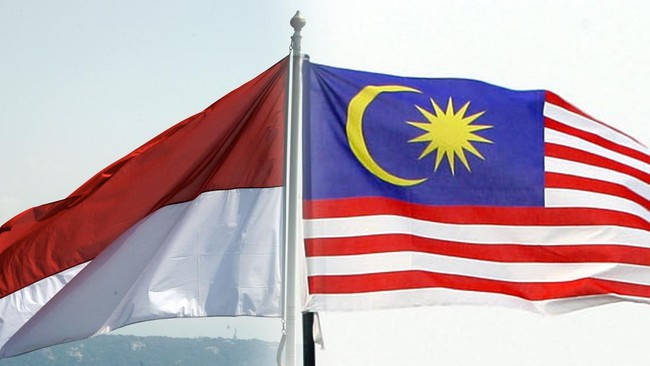
Jakarta, CNBC Indonesia - The neighbouring nations of Indonesia and Malaysia have adopted contrasting stances towards a trade agreement with US President Donald Trump. This agreement pertains to the bilateral Agreement on Reciprocal Trade (ART) established by the US.
Under President Prabowo Subianto’s administration, the Indonesian government maintains that the reciprocal trade agreement, signed on 19 February 2026, remains in effect. In contrast, Malaysia has chosen to cancel the agreement following the US Supreme Court’s annulment of Trump’s reciprocal tariff policy on 20 February 2026.
Malaysia’s Minister of Investment, Trade, and Industry, Johari Abdul Ghani, has refused to describe Malaysia’s ART with the US as suspended. He asserted that the agreement between the two countries has been completely cancelled in light of the US Supreme Court decision.
“This is not suspended. It no longer exists; it is cancelled and no longer valid,” Johari stated, as quoted from the New Straits Times on Tuesday (24/3/2026).
He explained that the US Supreme Court ruled that the imposition of tariffs must have a clear basis. Consequently, the reciprocal tariff policy previously implemented by Trump cannot be enforced.
“The US Supreme Court has decided that if you want to impose tariffs, you must have a reason. They cannot impose tariffs across the board,” he emphasised.
Following this ruling, the US government is now altering its trade policy approach. Washington is relying more on other instruments, such as temporary 10% tariffs under Section 122 of the Trade Act, which can be followed by stricter investigations via Section 301.
According to Johari, this mechanism will assess whether a country’s policies or practices are deemed unfair or discriminatory against US trade. Potential issues that could be highlighted include dumping practices due to excess industrial capacity, alleged labour violations such as the use of illegal or forced labour, as well as environmental breaches and export subsidies.
He warned that Malaysian companies failing to comply with standards could face export restrictions to the US. Even the country as a whole risks higher tariffs if it is found to have failed in addressing such practices.
Malaysia’s exports to the US in 2025 reached approximately RM233 billion, equivalent to around Rp790 trillion. Key sectors potentially affected include electrical and electronics (E&E), oil and gas, plantation commodities like palm oil, and rubber-based products such as gloves.
Johari added that the US investigations target not only Malaysia but also around 60 other trading partner countries. He stressed the importance of exporters complying with international standards, particularly in labour and environmental areas.
“What is important is that what we do must not harm the environment, the country, or the climate,” he said.
For context, the previous ART provided significant relief for Malaysia. At the peak of the Trump-era trade war, Malaysian exports faced threats of up to 47% tariffs, which were negotiated down to 24%. Under the ART scheme, these were further reduced to 19%, with as many as 1,711 Malaysian products receiving zero per cent tariff facilities.
As for Indonesia, it considers the established ART agreement between the two leaders to still be valid. This holds despite the US Supreme Court decision and investigations by the US Trade Representative’s Office (USTR) into 16 countries, including Indonesia, as part of the response to the Supreme Court ruling.
Coordinating Minister for the Economy Airlangga Hartarto affirmed that the 1,819 Indonesian commodities receiving zero per cent tariff facilities from the US, resulting from the ART signing, remain applicable. Even with the trade investigations conducted by the USTR.
“For the 1,819 commodities that are already at 0%, they remain at 0%,” Airlangga said during a media gathering at the Coordinating Ministry for the Economy office in Jakarta last Monday.
These zero per cent tariffs apply to key agricultural and industrial products, such as palm oil, coffee, cocoa, spices, rubber, electronic components, aircraft components, and textile and apparel products from Indonesia. The Indonesian government views this tariff exemption from the US as providing tangible benefits to over 4 million workers in related sectors.