
Dialogue with Farmers in Ngawi: Ibas Emphasises the Importance of Food Sovereignty
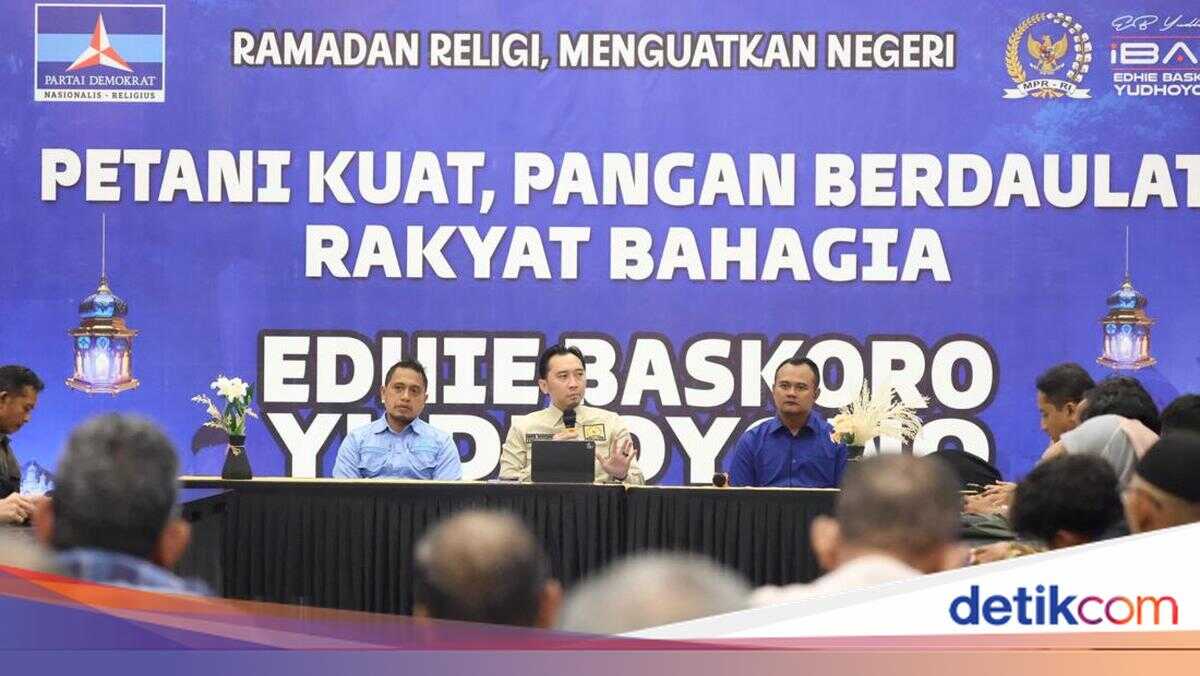
Deputy Speaker of the People’s Consultative Assembly Edhie Baskoro Yudhoyono (Ibas) launched his Ramadan recess schedule for 2026 in Ngawi Regency, East Java. During the visit, Ibas held a dialogue with farmers, agricultural extension officers, and millennial and Gen Z farmers.
The dialogue, titled “Strong Farmers, Sovereign Food, Happy People,” emphasised that food is the foundation of national strength. Ibas stressed that a strong nation is one capable of feeding its own population, and that food sovereignty is a prerequisite for true independence.
According to Ibas, the world currently faces uncertainty due to climate change, global food crises, and distribution disruptions. Data from the Food and Agriculture Organisation (FAO) indicates that more than 700 million people worldwide still face food insecurity. Indonesia must not become part of this figure, Ibas warned.
Nationally, Indonesia’s rice production in 2025 reached approximately 34-35 million tonnes, an increase of more than 10% compared to the previous year. The national harvest area has exceeded 11 million hectares, with the agricultural sector employing more than 29% of the national workforce. Ibas noted that this represents one in three Indonesian workers in agriculture—the backbone of the nation. However, he acknowledged that farmers’ terms of trade remain volatile between 110-120, and that welfare stability has not been fully achieved.
Ngawi, identified as one of East Java’s strategic food granaries, must not rely solely on rice production. Ibas encouraged the development of hybrid maize, local soybeans, horticulture, integrated livestock farming, organic agriculture, and premium rice with higher commercial value. He urged farmers to move beyond subsistence production towards value-added activities.
During the dialogue, Ibas addressed farmers’ critical concerns, including fertiliser distribution problems, grain prices during harvest season, irrigation improvements, limited agricultural machinery and equipment, and access to credit. He outlined assistance provided to Ngawi in recent years, including water pumps, four-wheel and two-wheel tractors, sprayers, power threshers, corn shellers, bioflok systems, organic fertiliser processing units, fish pond revitalisation, and agricultural tools and plant vitamins.
Ibas highlighted significant opportunities from the Free Nutritious Meals (MBG) programme. With projections of tens of millions of beneficiaries, national rice demand is estimated to reach hundreds of thousands of tonnes per month. This represents a major opportunity for Ngawi farmers, with local rice integrated into school supply chains and vegetables, eggs, and meat sourced locally, providing guaranteed markets and more stable prices.
Ibas encouraged younger generations to view agriculture as a modern and promising profession. Modern farming now incorporates drones, soil sensors, digital applications, and online marketplaces. Young people can become agrientrepreneurs, exporters, or even agricultural executives, he suggested.
From the meeting, Ibas directly heard concerns from participants. Farmer Wahdiono from Ngawi complained about the collapse of rice prices during harvest season, leaving farmers with little bargaining power. He hoped for stronger government presence during each harvest to protect farmer welfare.
Coastal farmers raised the need for harvest dryers to maintain grain quality and durability, reducing losses from high moisture content after harvest. In response, Ibas acknowledged that farmers face different challenges across regions. Irrigation farmers, rain-fed farmers, and coastal farmers have distinct needs requiring tailored support and policies suited to local conditions.
Ibas emphasised that harvest drying equipment for coastal farmers is essential for improving production resilience and preserving agricultural value. He stressed that farmers who have worked hard should not face losses after harvest. The provision of grain dryers must be a priority to ensure more durable harvests, maintained quality, and improved farmer welfare.
Ibas reaffirmed his commitment to preventing rice price collapses at harvest time. He stated that government presence and all stakeholder engagement are necessary to maintain price stability and protect farmer welfare across all regions.