
Dharma Satriadi: Fulfilling the Role of Corporate Resilience Architect
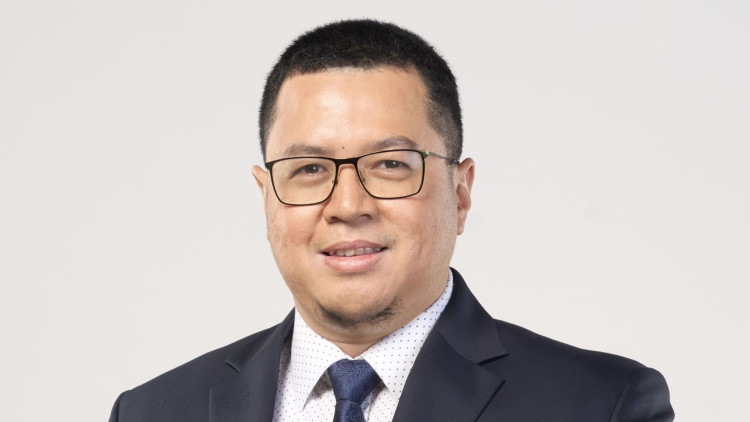
Becoming Chief Financial Officer (CFO) of PT Jakarta Industrial Estate Pulogadung (JIEP) is no easy role for Dharma Satriadi. As one of Indonesia’s oldest industrial estates, established in 1973, JIEP plays a crucial role in supporting industrial activities in the capital.
Meanwhile, in recent years, the company has also faced complex business dynamics. Global economic uncertainty, regulatory changes, and increasing demands for transparency require the finance function to operate more adaptively and strategically.
Resilience architect
Changes in the business environment have expanded the responsibilities of the finance directorate. Global uncertainties and pressures on financial performance related to interest rate changes, exchange rate fluctuations, as well as regulatory pushes on ESG (Environment, Social, and Governance) and digital reporting from OJK (Financial Services Authority) or the Ministry of Finance, have broadened the finance directorate’s duties regarding compliance and financial data transparency.
These changes mean the CFO’s role is no longer just about maintaining stable financial reporting. Dharma believes that a CFO must be capable of becoming a corporate resilience architect. “The CFO’s role has shifted from controller to resilience architect,” said the former investment manager at Aavishkaar Venture Management Ltd.
Thus, he leads various financial transformation initiatives at the industrial estate management company in East Jakarta’s Pulogadung area. This transformation is increasingly relevant in the context of the company’s internal conditions.
Over the past few years, Dharma explained, JIEP has faced several structural challenges that directly impact financial performance. Main revenue is relatively limited, capital expenditure investment absorption is low, while bad trade receivables are quite high.
On the other hand, the company’s financial system is not yet fully integrated, hindering operational efficiency and reporting speed.
“Structural challenges, from limited revenue sources, high receivables, and unintegrated financial systems, underscore the urgency of transformation towards financial excellence,” said this Economics graduate from the University of Indonesia.
This situation ultimately creates significant pressure on the finance function. High receivables strain liquidity, while inefficient operational processes hinder reporting accuracy and decision-making speed.
“The CFO’s role has shifted from controller to resilience architect.”
Financial transformation
According to Dharma, this pressure demands a redefinition of the CFO’s role within the organisation. To address this, he implements several strategies focused on strengthening cash management and improving operational efficiency.
One key step is building a more integrated and proactive cash management system. “We use an integrated cash management approach, dynamic cash forecasting, prudent investment allocation, and strategic liquidity buffer,” he explained.
This approach not only aims to maintain the company’s cash stability but also ensures that available funds can be optimally utilised to support business growth.
In his view, a CFO is no longer just tasked with safeguarding the company’s cash but also ensuring that financial management drives overall corporate performance.
One main focus of JIEP’s financial transformation is addressing bad debts, which have long been a source of liquidity pressure.
To accelerate resolution, he formed a special team for receivables management and control. JIEP collaborates with legal consultants or the local prosecutor’s office to better monitor and collect the company’s receivables.
This step is part of broader efforts to strengthen the company’s liquidity position. In recent years, the transformation has shown quite significant results. That is, the company’s cash position has increased sharply compared to previous years.
This increase comes not only from improved cash management but also from optimising previously idle funds. By actively managing idle cash through treasury management strategies, the company has generated substantial additional income.
Besides strengthening cash management, financial transformation is also carried out through balance sheet improvements. One important step is re-evaluating the company’s investment property assets, which had not been updated for decades.
Dharma explained that previously JIEP still used historical asset values dating back to the company’s establishment in 1973. This made the asset values not reflect the actual economic conditions. Thus, in 2024, the company finally conducted a revaluation of those investment property assets.
Positive results
This step yielded very significant results, with the asset value surging approximately 42-fold, from Rp128 billion to Rp5.4 trillion. “The impact on the company’s activities is quite significant,” he said. This not only improves the balance sheet structure but also enhances the company’s credibility in the eyes of investors and rating agencies.
On the other hand, JIEP also implements quite aggressive cost efficiency strategies. Through operational budget rationalisation and more systematic tax management, this DKI Jakarta SOE has succeeded in reducing several operational costs.
“We implement cost leadership and tax planning, rationalise operational budgets, and ensure timely fiscal tax payments,” said Dharma, who has also served as a special advisor.