
Developments in Pelni Merger and Passenger Handling Dynamics in Eastern Indonesia
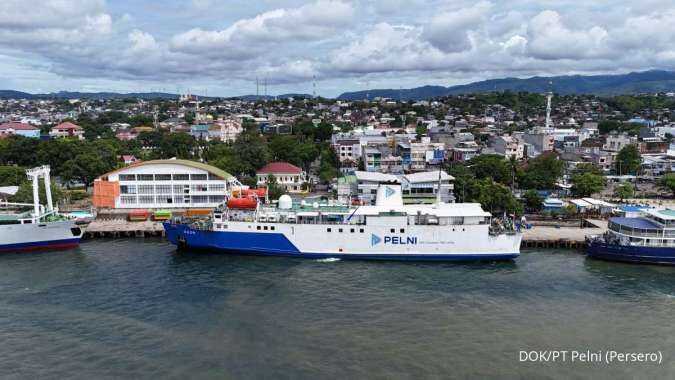
PT Pelayaran Nasional Indonesia (Persero) or Pelni has stated that the planned merger involving itself, PT Pelabuhan Indonesia (Persero) or Pelindo, and PT ASDP Indonesia Ferry (Persero) remains in the study phase and is awaiting further coordination and direction.
Speaking in Makassar, Nadya Nathasya, Pelni’s Corporate Communications Manager, explained that progress on the merger remained limited. “Currently, developments regarding the merger action remain the same as our previous statement—still in the study phase and awaiting further direction,” she told journalists when met in Bau-Bau on Thursday (26 February).
Pelni also confirmed it has yet to receive further direction regarding the merger of these maritime transport state-owned enterprises, either from the Government or the Investment Management Agency Daya Anagata Nusantara (BPI Danantara). For context, the State-Owned Enterprise Regulatory Body (BP BUMN) previously announced that the merger or consolidation of these state-owned enterprises would definitely continue in 2026.
As reported on Kompas.co.id, BP BUMN Deputy Head Aminuddin Ma’ruf stated that the consolidation of these three maritime transport state-owned enterprises—Pelni, Pelindo, and ASDP—only requires execution.
Should the consolidation of these three maritime transport state-owned enterprises proceed, proposals suggest that Pelindo would become the parent company or holding of all three. The Government also hopes that the consolidation decision will strengthen synergies between state-owned enterprises and improve the competitiveness of Indonesia’s maritime transport sector.
Passenger Handling Dynamics at Bau-Bau and Makassar
Separately, at Pelni’s Bau-Bau branch office, Djasman, Head of Pelni Bau-Bau, explained that maritime transport plays a vital role for communities in Eastern Indonesia, particularly the city of Bau-Bau.
“The characteristic of communities who migrate to various areas in Eastern Indonesia creates very high demand for passenger ships, especially during Lebaran,” he told journalists at his office in Bau-Bau, Buton Island, on Thursday (26 February).
He continued, the people of Bau-Bau and surrounding areas are scattered across Indonesian border regions such as Papua New Guinea, Australia, and the Philippines. Additionally, because migration distances are considerable, passenger movements during the mudik (exodus) and arus balik (return) periods in Bau-Bau have different characteristics compared to other regions, particularly on Java Island.
Whilst in Java the return period typically lasts around one to two weeks after Lebaran, in Bau-Bau the return period can last up to two months. This is caused by the tradition of Pesta Kampung (village celebrations) in various areas, with timing that differs in each village in Bau-Bau.
Djasman also explained that to address the surge in passenger arrivals during the 2026 Lebaran period, Pelni Bau-Bau has prepared 11 ships operating regularly. The branch has also added 2 support vessels—KM Gunung Dempo and KM Tidar—to anticipate surges and ease congestion of arriving and returning passengers.
The branch projects that during the period from 15 days before to 15 days after Lebaran 2026, approximately 26,000 passengers are estimated to depart from Bau-Bau. Meanwhile, the number of arriving passengers is estimated to reach approximately 35,000.
He estimated that the increase in ship passengers arriving in Bau-Bau is approximately 2% compared to the previous year, particularly during the arrival period. The extended holiday break provided by the government has also encouraged people to leave earlier and for longer durations.
“This difference occurs because Bau-Bau serves as one of the important transit hubs for surrounding areas such as Wakatobi, Raha, Kendari, and even passengers bound for Papua who must stop in Bau-Bau first,” explained Djasman.
Regarding security and supervision, Djasman also stated that Pelni’s passenger ferry terminal, managed by the Port Authority and Harbour Master’s Office (KSOP), has been renovated and is considered more representative.
Access is now restricted through three main gates that are strictly guarded by KSOP officers, police, Indonesian Navy, and internal security personnel. This effort is undertaken to prevent ticketless passengers from boarding ships. Djasman believes that strict supervision actually makes the public more orderly and reluctant to attempt boarding without tickets.
Regarding the difference in port management between Pelindo and KSOP, he believed there was no significant difference in principle.
“Service quality depends heavily on management and coordination between field officers—what matters is professionalism in carrying out duties, not merely who the manager is,” he stated.
He also highlighted the unavailability of X-Ray facilities at Bau-Bau Port Terminal. Such facilities should be provided by KSOP or Pelindo as the port manager.
However, Djasman acknowledged that Bau-Bau is not a high-risk narcotics trafficking route like several other ports in Kalimantan, so this shortfall can be addressed. Nevertheless, coordination with security personnel continues to anticipate existing risks.
“We appeal to the public to purchase tickets through official channels such as the Pelni Mobile application, official counters, or other official agents. We also urge passengers to maintain cleanliness and order whilst aboard ship for mutual comfort,” he concluded.
Meanwhile, Darman, Head of Pelni Makassar, indicated that as one of the busiest branches in Indonesia and serving as the main gateway to Eastern Indonesia, Pelni Makassar faces more intense surges of passengers and goods. Darman stated that several actions to be undertaken going forward include vessel improvements.