
Developments in MABIMS Criteria for Determining the Start of the Hijriah Month
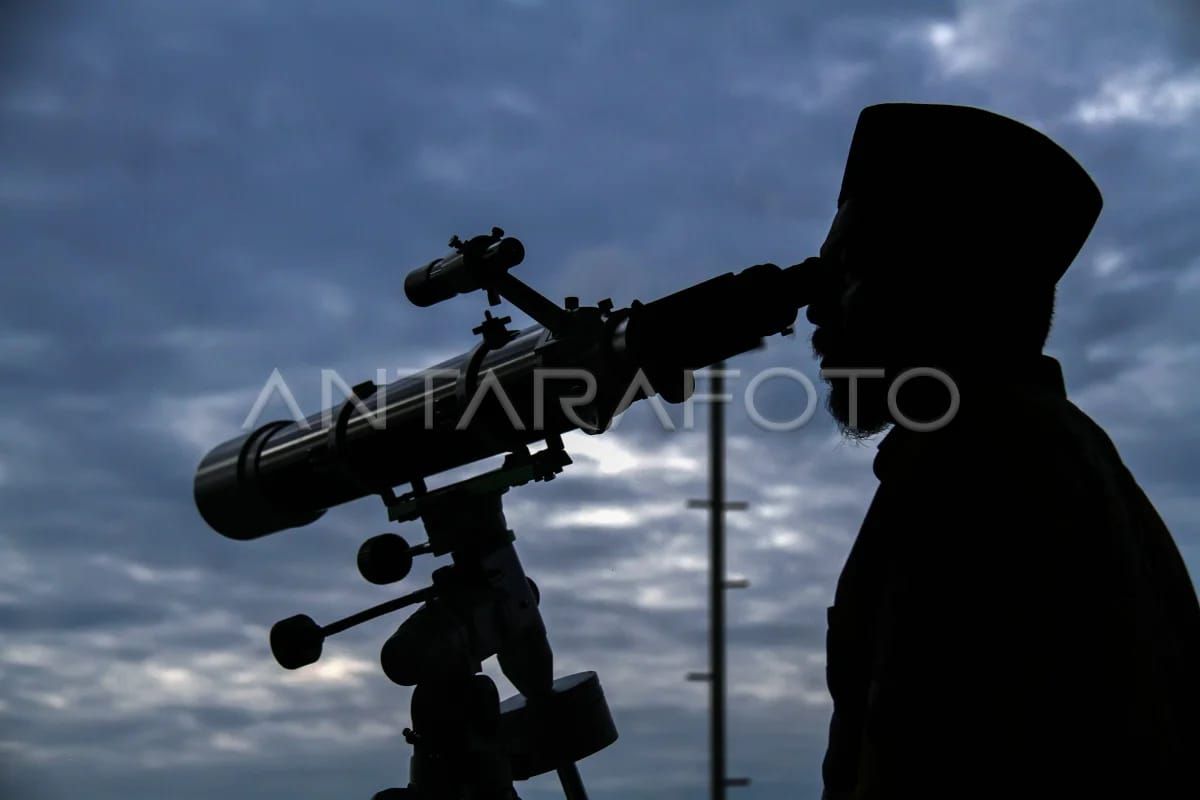
Jakarta (ANTARA) - The Director of Islamic Religious Affairs and Sharia Development at the Ministry of Religious Affairs, Arsad Hidayat, stated that the determination of the start of the Hijriah month in Southeast Asia continues to strengthen alongside advancements in falak and modern astronomy knowledge. One of the milestones is the agreement among MABIMS member countries (Ministers of Religious Affairs of Brunei Darussalam, Indonesia, Malaysia, and Singapore), which serves as a joint reference for establishing the start of Ramadan, Syawal, and Zulhijah in a more measurable and accountable manner. “Regional cooperation through the MABIMS forum has been ongoing for a long time as an effort to unify the approach to determining the start of the Hijriah month in the region. Since 1992, MABIMS member countries have used the imkanur rukyat criteria with 2–3–8 parameters as a reference in assessing hilal visibility,” Arsad said in Jakarta on Thursday. He explained that the 2–3–8 parameters encompass a minimum hilal height of 2 degrees, elongation of 3 degrees, and a minimum moon age of 8 hours after conjunction. These criteria form the basis for evaluating the validity of rukyatul hilal reports submitted from various observation points in Southeast Asia. However, developments in astronomical data indicate limitations in these criteria. At low hilal positions with small elongation, the moon’s crescent is very thin and difficult to observe with the naked eye. “At an altitude of around 2 degrees with an elongation of 3 degrees, the hilal is still very thin and often obscured by syafak light, making the chance of visibility very small,” Arsad said. This condition has prompted falak and astronomy experts from MABIMS member countries to review the hilal visibility criteria. This process occurs through scientific forums, rukyat deliberations, and research based on continuously evolving global observation data. “The agreement on these new criteria did not emerge suddenly but through a long scientific study process involving astronomy experts and falak scholars from MABIMS member countries,” he stated. The results of this study culminated in new criteria deemed more realistic astronomically, namely a minimum hilal height of 3 degrees and a minimum elongation of 6.4 degrees. These parameters are based on a compilation of global rukyat data, showing that the thickness of the moon’s crescent and its position from the horizon are the main factors in determining the likelihood of hilal visibility. According to him, the agreement on these new criteria was then adopted by MABIMS member countries as a joint reference in determining the start of the Hijriah month. This step is expected to strengthen the alignment of Hijriah calendar determinations in Southeast Asia. In Indonesia, the application of these new criteria has been used since 2022, following various academic forums and discussions with national falak experts. This process involves government elements, Islamic community organisations, and academics. According to him, the use of the same criteria at the regional level has a positive impact on the uniformity of determining the start of the month, although the final decision remains with each country’s authorities. “In general, with the same parameters, predictions for the start of the month in the region become closer,” he said. He explained that in practice, hisab calculations will be combined with field rukyatul hilal verification before being established through official sessions in each country. This mechanism maintains a balance between scientific approaches and syar’i considerations. Arsad emphasised that the similarity in criteria does not mean absolute uniformity but rather building understanding based on knowledge and sharia. “Decisions are still announced by each country’s authorities after going through the rukyat and determination session process,” he said.