
Developing WTE Projects, Danantara Establishes New Company 'Daya Energi Bersih Nusantara'
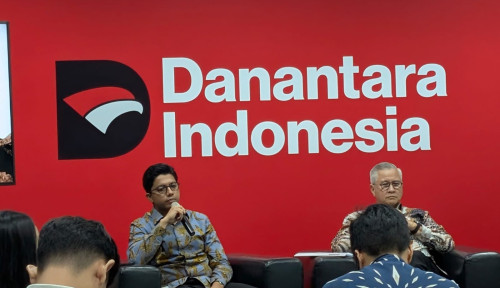
Danantara Investment Management (DIM) has established a new entity, PT Daya Energi Bersih Nusantara (Denera), to consolidate its strategy for Waste-to-Electricity (WTE) projects. This corporate move aims to manage substantial investments estimated at Rp2.8 trillion per location. Fadli Rahman, Director of Investments at Danantara Investment Management, explained that the formation of this company represents a long-term commitment to integrated waste management. “It was established by Danantara Investment Management on 1 April 2026, with a focus on implementing the WTE programme.” “Denera will hold the shares as well as handle the operations and management for all WTE projects under Danantara Investment,” Fadli stated during a Coffee Afternoon at Wisma Danantara on Thursday (9/4/2026). In pursuing this project, Danantara is applying a strategic partnership scheme with clear share ownership divisions. Fadli said that funding will also involve Foreign Direct Investment (FDI) with a mixed financing structure. “The ownership structure (of the project) is 70% our partner, 30% us at Danantara Daya Energi Bersih Nusantara.” “And each of us will have one SPV or BUPP, as per the term in the Presidential Regulation.” “The funding is a mix of debt-to-equity, so not full equity; the debt portion is quite large, around 70%.” “And this is certainly Foreign Direct Investment, which is good for the investment climate in Indonesia,” Fadli explained. Regarding the investment value, Fadli mentioned a significant figure to ensure the project’s sustainability. “So the investment ranges from Rp2.5 to Rp2.8 trillion, because the capacity is quite large at several locations, reaching Rp2.8 trillion,” he said. Rohan Hafas, MD of Stakeholder Management & Communications at Danantara Indonesia, emphasised the importance of economies of scale in this WTE project. According to him, the minimum daily waste capacity is an absolute requirement for factory efficiency. “Below 1,000 tonnes, it’s not efficient to build a factory; sold at 18 to 20 cents per kWh and so on; the bottom line is, you don’t get the economies of scale,” Rohan noted. On a macro level, this project is projected to deliver extraordinary long-term economic impacts. Fadli outlined the findings of an independent consultant’s study on the benefits of WTE, which affect society both directly and indirectly. “From building one waste-to-energy programme with a scale of just 1,000 tonnes per day, it can reach Rp14 trillion, everyone, over a period of 30 years, Rp14 trillion,” Fadli explained. Technological Safety Fadli elaborated that the main difference between Danantara’s WTE and conventional incineration lies in the completeness of its combustion. WTE uses temperatures above 850 degrees Celsius, which technically breaks down dioxins, preventing the formation of these harmful substances. Additionally, the smoke from combustion undergoes multiple filtration processes before being released into the air. Currently, preparations for construction have begun at the first three locations: Bali, Bekasi, and Bogor, with construction targeted to start at the end of June 2026.