
detikcom Editor-in-Chief Leads Discussion at State Accelerator Forum, Topics Covered
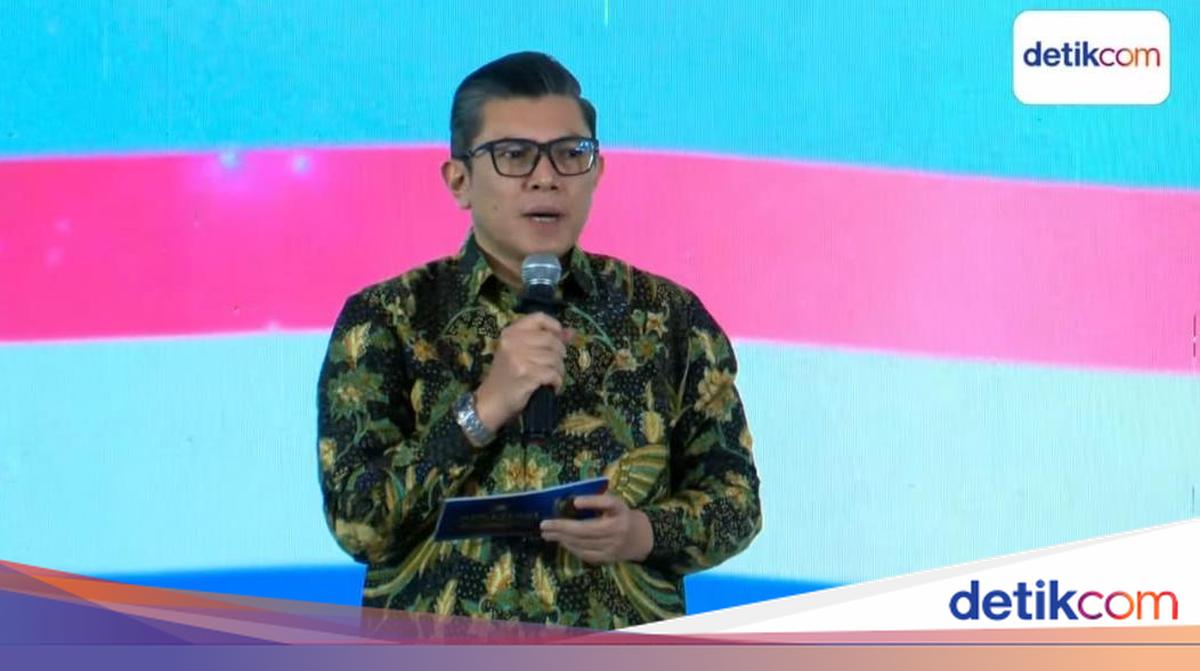
The Editor-in-Chief of detikcom, Alfito Deannova Ginting, opened the discussion at the State Accelerator Forum during the Appreciation for High-Achieving Local Governments 2026 event. Four topics will be discussed in the session, ranging from addressing stunting to enhancing creative financing by local governments.
“We will discuss controlling inflation, reducing unemployment rates, tackling poverty and stunting, as well as improving creative financing,” said Alfito, opening the discussion session at the Wyndham Opi Hotel in Palembang, South Sumatra, on Saturday (25/4/2026).
Alfito explained that the Appreciation for High-Achieving Local Governments 2026 event is a forum initiated by the Ministry of Home Affairs (Kemendagri). Kemendagri then partnered with detikcom as the facilitator of the event.
Sumatra is the first island to host the event. Alfito stated that the State Accelerator Forum also feels relevant in addressing the challenges in Sumatra, particularly after three regions in northern Sumatra were affected by disasters last year.
“This discussion is not an easy one because we all know the conditions, especially in Sumatra where three provinces in northern Sumatra are still struggling to manage post-disaster conditions. The same applies to other regions in Sumatra that must work even harder,” explained Alfito.
“Because we all know that these issues are not only internal but also how geopolitics affects life in Indonesia, including how we focus development due to existing limitations,” he added.
After Alfito opened the discussion, Deputy Minister of Home Affairs Bima Arya Sugiarto delivered an initial presentation. Bima depicted the changes in the style of local leadership since direct regional elections in 2005. He revealed three waves of regional leadership styles that adapted to the challenges of their times.
According to Bima, the first wave was marked by the emergence of local leaders close to the public and focused on basic community needs. One icon of this phase was Joko Widodo during his tenure as Mayor of Solo, known for his pro-people approach, such as strengthening MSMEs and creating jobs.
“The first wave, the local leaders who became media darlings at that time were the Mayor of Solo, Pak Idham Samawi, the Regent of Sragen; the icon at that time was Pak Jokowi. Known for innovations characteristic of basic needs: in Bali it was health, Pak Jokowi it was jobs, MSMEs, and other things that touched the grassroots of society,” said Bima.
The next wave gave birth to local leaders with more progressive breakthroughs. Names like Tri Rismaharini, Ridwan Kamil, and Abdullah Azwar Anas were mentioned as representations of the second phase. In this period, innovations developed towards “smart city” concepts, collaboration, and policy breakthroughs.
“There was the next wave after Pak Jokowi’s batch or generation, namely Ibu Risma, Pak Ridwan Kamil, Azwar Anas of Banyuwangi, and so on. This second batch is also known for characteristic things. If the first phase was basic needs, the second phase was breakthrough innovations. We all started to become familiar with smart cities, started to become familiar with the terms innovation and collaboration,” he stated.
In the current era, Bima said local leaders are in a new wave with challenges no less complex. He acknowledged the perception that being a local leader now feels more difficult, especially because the room for manoeuvre for regions is seen as narrowing due to national priority programmes.
“And today, perhaps all of you, Sirs and Madams, are entering the third or fourth wave with challenges that could be the same or different. Some say that this is the most uncomfortable time to be a local leader. I’m sure some of you will try to applaud this,” he remarked.