
Destructive Practices Plague Indonesia's Palm Oil System; Agriculture Minister Calls Industry Minister
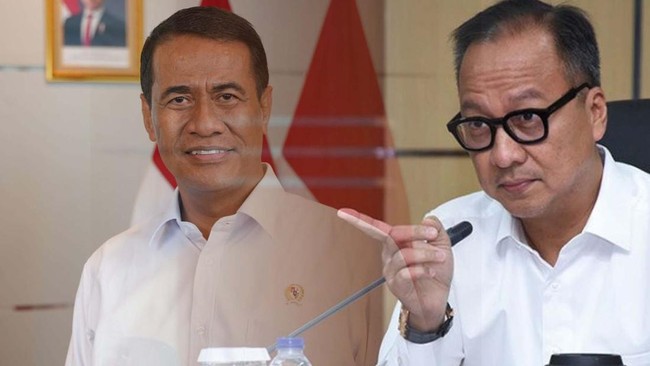
Jakarta – Agriculture Minister Amran Sulaiman has warned of potential problems emerging from the development of palm oil processing plants that lack accompanying plantation ownership. According to him, such practices can disrupt the partnership model between core companies and plasma farmers, which has historically formed the foundation of smallholder palm oil development.
Amran explained that problems typically arise when companies establish processing facilities without owning plantations or participating in farmer development programmes. As a result, harvests from farmers previously supported by one company are diverted to newly established rival mills.
“Sometimes people build a factory but have no land. That causes problems on the ground,” Amran said when met at his office in Jakarta on Thursday, 12 March 2026.
He elaborated that core companies normally require extended periods to develop plasma farmer partnerships, from plantation development through to productivity improvements. However, after such lengthy development efforts, new factories emerge that do not participate in farmer development yet still absorb farmer harvests.
“One company builds a factory and develops plasma farmers, nurturing them for a long time. Then suddenly another small factory appears behind them that doesn’t do any development. That disrupts partnerships and undermines those who pioneered the work,” he said.
According to Amran, such practices risk damaging the partnership ecosystem that has been a key pillar in smallholder palm oil plantation development.
“So it destroys the system,” he said.
To prevent such problems from spreading further, Amran disclosed that he has coordinated with Industry Minister Agus Gumiwang Kartasasmita regarding the mechanism for granting licences to build palm oil mills.
He stated that the government is preparing a scheme requiring the establishment of mills, particularly those without their own plantations, to first obtain a recommendation from the Agriculture Ministry.
“Building a factory – the Industry Minister, I’ve already called him – he said, ‘okay, I will issue the licence especially for those without land if there is a recommendation from the Agriculture Ministry’,” Amran said.
This measure is expected to maintain balance between expansion of the palm oil processing industry and sustainability of partnerships with plasma farmers.
In the same discussion, Amran also responded to several proposals from the Indonesian Palm Oil Producers Association (GAPKI), including regarding the smallholder palm oil rejuvenation programme (PSR).
He emphasised that various inputs are still being discussed by the government.
Currently, the PSR programme still relies on funding support from the Plantation Fund Management Agency (BPDP). The government will also re-evaluate various funding schemes and inputs from industry players.
Besides palm oil rejuvenation, Amran mentioned that the government has agreed to several other proposals from business actors, including the construction of retention ponds as well as strengthening downstream development programmes in the palm oil sector.