
Despite Differences in Eid Determination, Maintaining Silaturahmi to Preserve Unity
Jakarta (ANTARA) - Differences in determining the date of Eid al-Fitr in Indonesia are not a new phenomenon; since the early decades of independence, the Muslim community has been familiar with variations in establishing the start of Hijri months, including Shawwal.
These differences stem from long-developed methods in Islamic scholarly tradition for determining the beginning of the Hijri month. The two main approaches used are rukyatul hilal (direct observation) and hisab (astronomical calculation), each with strong theological and scientific foundations.
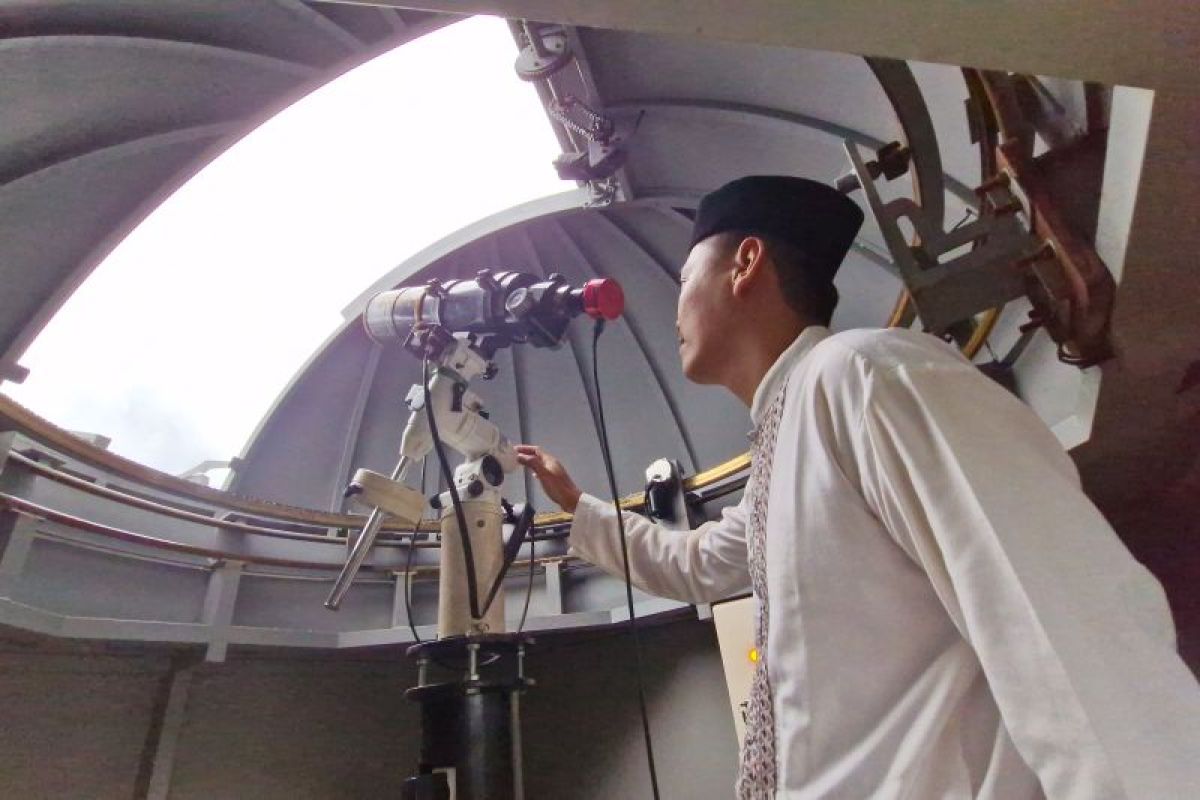
In Indonesia, Nahdlatul Ulama (NU) upholds rukyatul hilal as the primary method. Rukyat involves directly observing the appearance of the crescent moon on the western horizon after sunset at the end of Ramadan. This method derives from a textual understanding of the hadith of Prophet Muhammad SAW, which states, “Fast upon seeing the hilal and break the fast upon seeing it.”
NU considers direct observation essential as a form of caution while preserving the continuity of practices handed down by classical scholars.
Although prioritising rukyat, NU does not dismiss the role of astronomy. Hisab is still used as a supporting tool to predict the hilal’s position and determine its potential visibility. This approach is known as rukyat supported by hisab, ensuring decisions are based on measured empirical observation.
Muhammadiyah views hisab as providing greater certainty and consistency. With precise astronomical calculations, the Hijri calendar can be compiled well in advance.
The KHGT (Global Hijri Calendar) is even designed to unify Islamic dating globally, allowing Muslims worldwide to begin and end worship on the same day.
These differing approaches reflect two perspectives on understanding religious texts and the development of knowledge. NU tends to emphasise rukyat as a direct implementation of religious texts, while Muhammadiyah sees hisab as a form of ijtihad relevant to modern scientific advancements.
The government, through the Ministry of Religious Affairs (Kemenag), seeks to bridge these approaches via the sidang isbat. In this forum, hisab data and rukyat results are combined to produce an official decision. Nevertheless, the government also respects the decisions of each religious organisation.
As a result, Muslims in Indonesia celebrate Eid al-Fitr on different days.
Despite the differing days, practices on the ground show that this variation does not disrupt togetherness. Communities still exchange silaturahmi, and it is not uncommon for people to attend two halal bihalal moments in close succession. This tradition actually strengthens social relations amid diversity.
This experience proves that differences in methods are not synonymous with division. Indonesian Muslims have grown accustomed to viewing differences as part of the richness of Islamic scholarly heritage, rather than a source of conflict.
Efforts to unify the Hijri calendar continue at both national and regional levels, including through the forum of Ministers of Religious Affairs from Brunei Darussalam, Indonesia, Malaysia, and Singapore (MABIMS). However, stakeholders also recognise that this process requires time and deep mutual understanding.
Ultimately, differences in determining Eid al-Fitr reflect the dynamic ijtihad in living and evolving Islam. In Indonesia, this dynamic runs parallel to a strong commitment to preserving Islamic brotherhood (ukhuwah Islamiyah), so that differences do not obstruct unity.