
Despite Claims of Uncontrolled Danantara Management, Indonesia Imports This Much Sugar
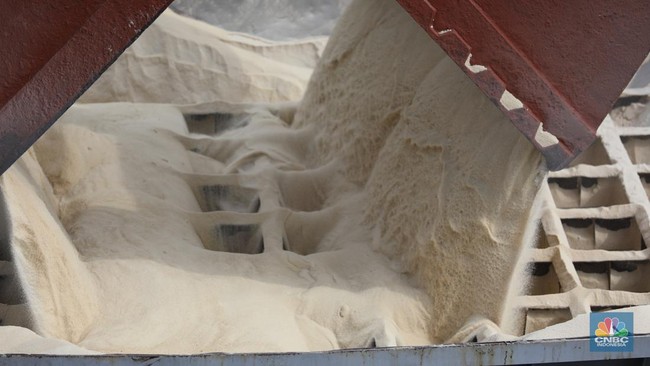
Indonesia continues to import large quantities of sugar despite rising domestic production. The Central Statistics Agency (BPS) recorded national sugar imports throughout 2025 at 3.93 million tons.
Deputy Head of BPS Sonny Harry Budiutomo Harmadi stated that this figure comes from sugar imports under Harmonized System (HS) Code 1701.
“In total, in 2025, we imported 3.93 million tons of this sugar commodity under Harmonized System (HS) Code 1701,” Sonny revealed during a working meeting with Commission VI of the House of Representatives (DPR RI) at the parliamentary complex in Jakarta on Wednesday (8/4/2026).
Indonesia’s sugar imports, he said, are still dominated by several countries, including Brazil. “Indeed, our imports mostly come from several countries, including Brazil,” he said.
Meanwhile, looking at BPS data for sugar imports from 2017-2024 (updated as of 29 July 2025), Indonesia’s sugar import volume has always ranged between 4.5-6 million tons, with a fluctuating trend tending to increase.
In 2017, Indonesia’s sugar imports were recorded at 4.48 million tons, in 2020 at 5.53 million tons, in 2023 at 5.06 million tons, and in 2024 reaching 5.31 million tons.
Imports in 2022 were the highest, reaching 6.007 million tons. Although in value, it was not the highest.
The highest sugar import value in that period was recorded in 2024, reaching US$3.028 billion. Meanwhile, in 2022, it was recorded at US$2.998 billion.
On the production side, BPS recorded that national white crystal sugar (GKP) production also increased by 8.22%, rising to 2.67 million tons in 2025. According to him, the production increase was also supported by an increase in sugarcane harvest area.
“This is also influenced by the increase in sugarcane harvest area from 521 thousand hectares to 563 thousand hectares in 2025, or an 8.17% rise. This is followed by a decline in household consumption. So we have the capacity to increase production on one side, while on the other side, we are experiencing a decrease in household sugar consumption,” he explained.
Nevertheless, reliance on imports cannot yet be avoided. “In total, we still imported 3.93 million tons, and in general, our domestic supply is improving, but we still have dependence on imports,” Sonny said.
Meanwhile, Minister of Trade (Mendag) Budi Santoso outlined developments in imports of sugar derivative commodities in the form of ethanol. In 2025, the Ministry of Trade has issued 13 import approvals for other fuels or ethanol with an allocation of 13,284,141 litres and a realisation of 2,373,594 litres or 17.87%.
“For 2026 up to 30 March 2026, 6 import approvals for other fuels or ethanol have been issued with an allocation of 6,937,565 litres, and there has been no import realisation so far,” Budi said on the same occasion.
Previously, Chief Operating Officer (COO) of Danantara, Dony Oskaria, highlighted the influx of sugar imports deemed uncontrolled and impacting the domestic industry.
“This year, Sugar Co recorded a loss of Rp 680 billion due to prices that are indeed not good enough, as a result of uncontrolled sugar imports,” Dony said.
He explained that the entry of refined sugar into the consumer market pressures local sugar prices and makes it difficult for the industry to develop. According to him, this situation has the potential to continue pressuring the national sugar industry if not addressed soon.
Dony also mentioned government intervention steps that have been taken but are deemed not yet effective in improving the market.
“I have discussed with Mr Minister of Agriculture (Amran Sulaiman) many times; actually, we are providing subsidies into the market to absorb all sugar from the public amounting to Rp 1.5 trillion. But that also did not have a significant impact,” he said.