
Deputy Trade Minister: Expansion of Global Markets Forms Foundation to Face Geopolitical Situation
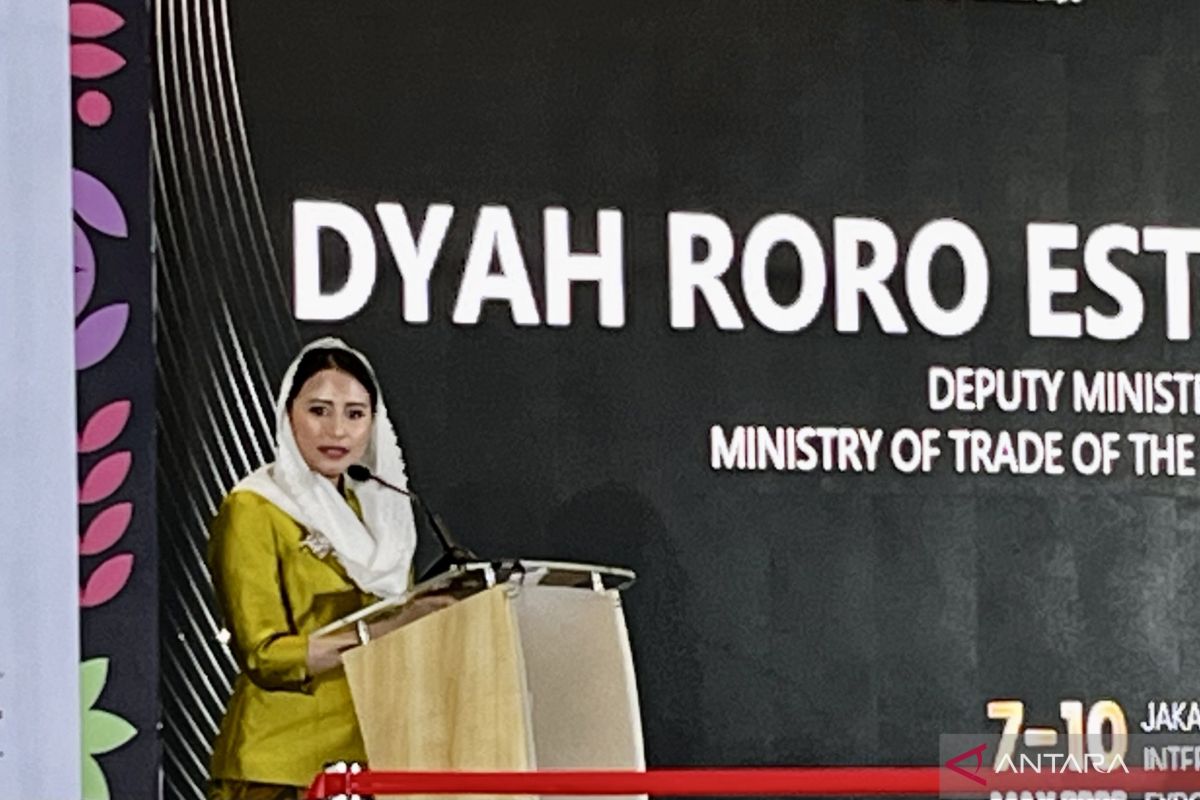
Jakarta (ANTARA) - Deputy Minister of Trade (Wamendag) Dyah Roro Esti stated that expanding international markets is one of the important foundations for Indonesia to face the current global geopolitical dynamics and challenges.
“So that we can truly ensure that amid these geopolitical conditions, we still prepare a foundation that can be used by business actors,” said Wamendag Roro on the sidelines of the FLEI Business Show 2026 in Jakarta on Thursday.
She said that domestic products and talents must have high competitiveness so that Indonesia can survive and the target of expanding global market access can be achieved amid various current challenges.
“President Prabowo Subianto always directs us in his cabinet on how we can be resilient. We must remain a competitive country, and we must be a country that can optimise our good relations with other countries,” said Roro.
She added that the Ministry of Trade (Kemendag) is also striving to expand markets through various international trade agreements.
Some examples of these trade agreements include the Indonesia-European Union Comprehensive Economic Partnership Agreement (IEU-CEPA), the Indonesia-Tunisia Preferential Trade Agreement (IT-PTA), the Indonesia-Peru Comprehensive Economic Partnership Agreement (IP-CEPA), and the Free Trade Agreement (FTA) between Indonesia and the Eurasian Economic Union (EAEU).
“Then, the IJEPA (Indonesia-Japan Economic Partnership Agreement) was also upgraded yesterday; we are also working on it,” said the Deputy Minister.
In addition to strengthening bilateral relations with friendly countries and targeting non-traditional markets, Roro said that collaboration between Kemendag and domestic entrepreneurs is also important so that the established trade agreements can be utilised together.
“On one side, we open market access, we conduct trade negotiations, but this must also be maximised and used by business actors,” said Wamendag Roro.
“Because the success of several trade agreements that we have promoted ultimately leads to business-to-business (B-to-B) conversations,” she added.