
Deputy Speaker of MPR Reminds of the Importance of the State's Role in Preparing Energy Resilience
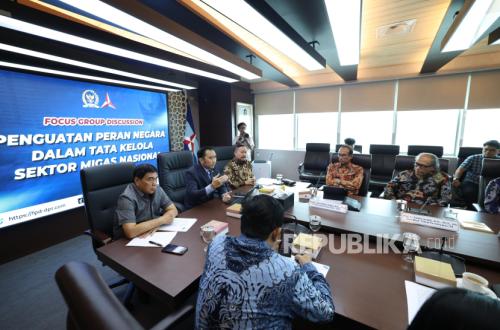
Global conflicts, from the Middle East to Eastern Europe, are directly impacting the world’s energy supply chains. Strategic routes such as the Strait of Hormuz are crucial, with around 25 per cent of global energy distribution passing through that area. “This situation is also triggering pressure on energy prices and inflation felt in almost all countries, including Indonesia,” said Deputy Speaker of the MPR RI, Edhie Baskoro Yudhoyono, during a Focus Group Discussion (FGD) titled “Strengthening the State’s Role in the Governance of the National Oil and Gas Sector” at the DPR RI some time ago, in his statement in Jakarta on Wednesday (16/4/2026). In the forum, Ibas—his familiar nickname—stressed the importance of strengthening the state’s role in facing global dynamics, while ensuring that national energy sovereignty remains intact amid global geopolitical pressures. The Chairman of the Democrat Party Faction highlighted that today’s oil and gas issues cannot be separated from the global situation full of uncertainty. “In my view, today we want to talk about oil and gas, as I mentioned earlier, which essentially we are talking about the resilience of our nation,” said Ibas. Furthermore, this Deputy General Chairman of the Democrat Party Faction reminded that global energy instability does not only impact the energy sector alone, but also spreads to the food sector, logistics, and the state’s fiscal burden. “Energy is not just about fuel, but also concerns LPG, food distribution, and the cost of living for the people.” Therefore, he encouraged energy policies not to focus only on production aspects, but also to consider social protection for the people through targeted economic cushions. He also affirmed that the constitution has given a clear mandate to the state. Referring to Article 33 of the 1945 Constitution, he stated that the state must not only be a regulator, but must be present as a protector, guide, and manager of natural resources. He reminded that without a strong state role, imbalances can occur. Quoting the views of world economists, he conveyed that markets without regulation will give birth to inequalities, and the importance of state sovereignty in determining positions in global trade. This member of the East Java VII electoral district explained several main focuses as strategic steps forward. “The first, of course, we want to see how our national production increases,” he said. He assessed that current national oil and gas production is still not optimal and needs to be boosted through more aggressive investment and exploration. “The second, we must remember the full economic value of fuel prices themselves… and how subsidies must be on target,” he emphasised, while reminding that subsidy policies should not cause distortions or shortages in society. “The third, of course, we want to strengthen state-owned energy enterprises,” said Ibas, with the hope that national energy companies can become strong and competitive main players at the global level.