
Deputy Speaker of MPR Emphasises Strengthening Collective Spirit in Shaping National Education
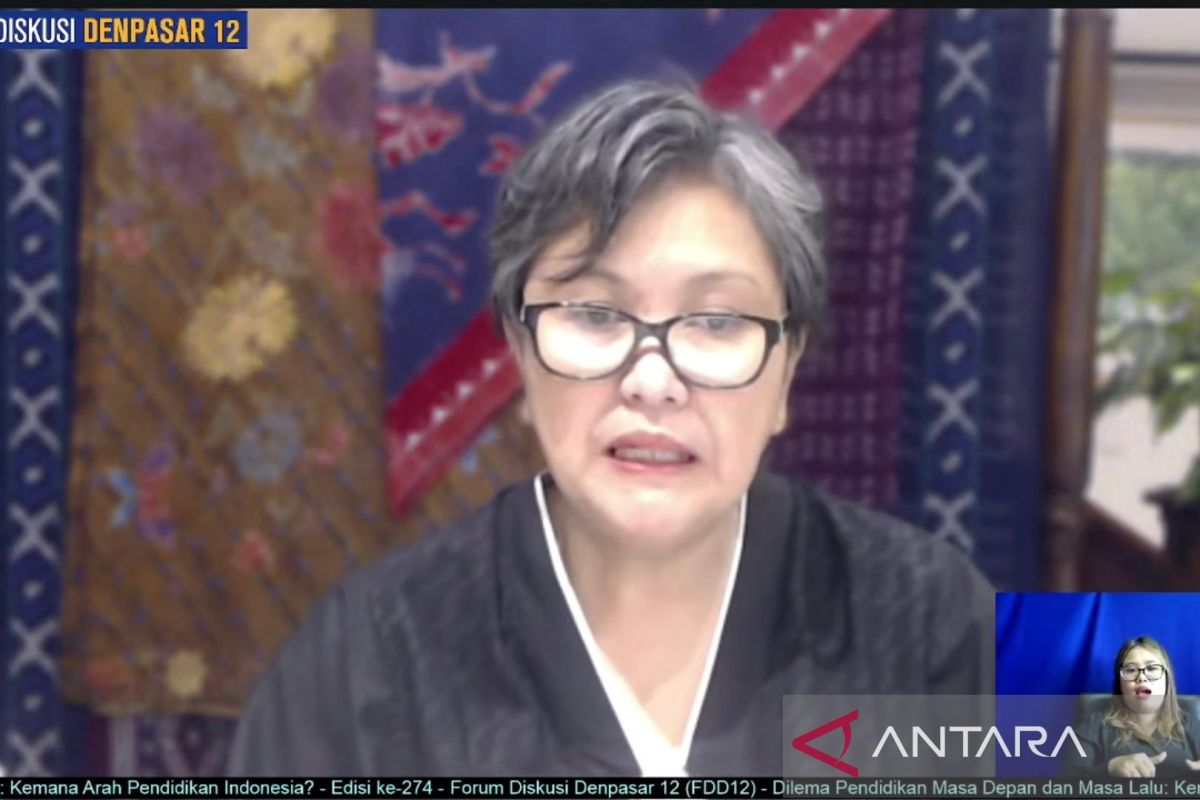
At present, we find ourselves at a crossroads, where the philosophy of national education has yet to be fully translated into the learning curriculum, while facing various challenges of the era that demand the transformation of several existing systems.
Jakarta (ANTARA) - Deputy Speaker of the MPR RI Lestari Moerdijat emphasised the importance of strengthening the collective spirit in shaping national education to produce generations that are competent, critical thinkers, of strong character, and who uphold national and cultural values.
“At present, we find ourselves at a crossroads, where the philosophy of national education has yet to be fully translated into the learning curriculum, while facing various challenges of the era that demand the transformation of several existing systems,” said Lestari in her statement in Jakarta on Wednesday.
The statement was delivered when opening an online discussion themed “The Dilemma of Future and Past Education: Where is Indonesian Education Heading?” organised by the Denpasar 12 Discussion Forum.
Lestari, who is familiarly known as Rerie, asserted that the national education system cannot be based solely on market logic, but must be oriented towards the constitutional mandate to enlighten the nation’s life.
On the same occasion, Director of Institutions at the Directorate General of Higher Education of the Ministry of Education, Culture, Research, and Technology, Mukhamad Najib, stated that strengthening the education system is an important part in realising the vision of Indonesia 2045.
He revealed that in 2025, there will be 4,416 higher education institutions in Indonesia producing around 1.7 million graduates each year. However, most higher education institutions are assessed as not having adequate quality and still focus on being teaching universities, not fully becoming research universities.
“Massive efforts are needed to improve the quality of higher education institutions to be able to address the challenges of the times,” said Najib.
“Our society is currently vulnerable to various impacts of that multidimensional transformation,” said Melani.
She added that the current education system is assessed as beginning to lose its role in building collective memory and cultural heritage that is important for shaping the character of students.
Meanwhile, Vice Rector for Education, Student Affairs, and Alumni at the State University of Surabaya (UNESA), Martadi, emphasised that education does not only aim to produce human resources for industry, but also for broader life needs.
“The state’s duty is to maintain a balance between academic education, religious values, and cultural traditions,” he said.
Education expert Indra Charismiadji assessed that policies adjusting study programmes based on market needs need to be examined more wisely. He noted the ongoing disparity between the number of job seekers and the availability of jobs that still occurs every year.
Meanwhile, senior journalist Saur Hutabarat highlighted the importance of improving teacher welfare as a key factor in the success of education. He proposed increasing teachers’ salaries up to three times the regional minimum wage to support improvements in education quality.
“Teachers who are not ready will not be able to prepare students well,” he said.