
Deputy Social Minister Urges Local Governments to Strengthen Coordination on People's School Programme up to DTSEN
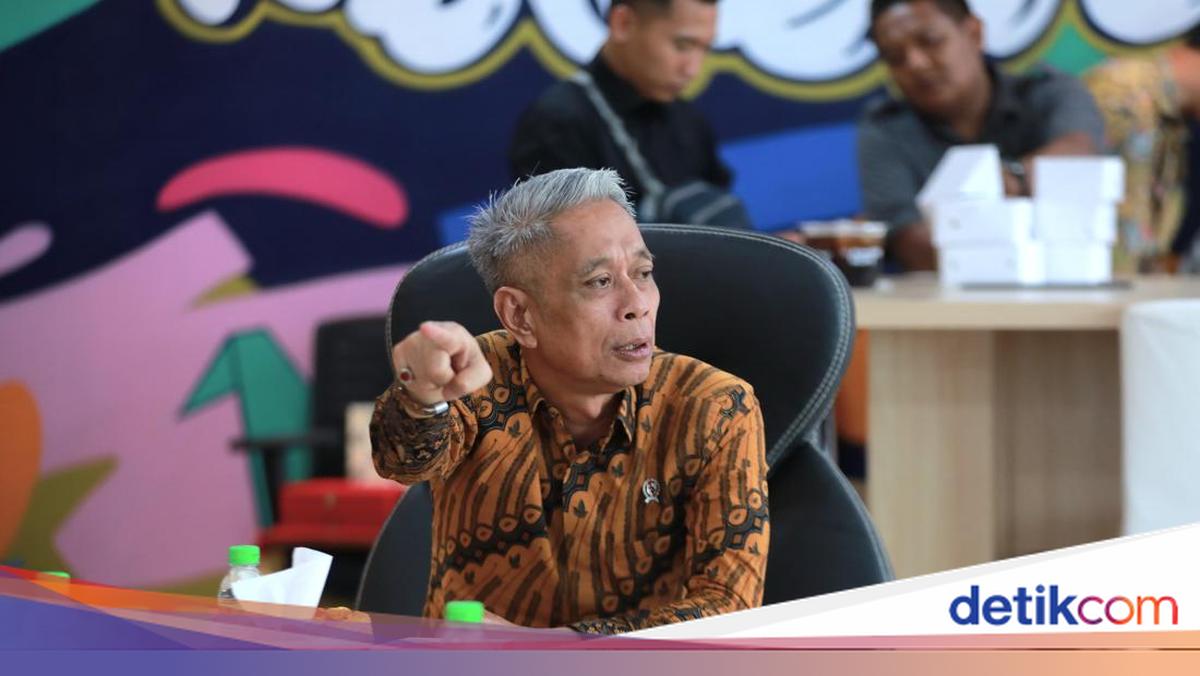
Indonesia’s Deputy Social Minister (Wamensos) Agus Jabo Priyono is urging strengthened coordination between the central and local governments in implementing priority programmes. These programmes include the construction of People’s Schools in 2026, updates to the National Single Socio-Economic Data (DTSEN), and the development of community empowerment initiatives.
On this occasion, Agus emphasised that the People’s Schools represent a presidential priority programme targeting children from poor families in deciles 1 and 2. “The People’s Schools are not based on registration but on recruitment using DTSEN data, ensuring they truly reach those most in need,” Agus stressed in a written statement on Friday (10/4/2026).
Agus also highlighted the importance of data-based programme integration. Indirectly, Agus affirmed that the quality of DTSEN serves as the primary foundation to ensure all social interventions are on target. “We want to ensure all social programmes are integrated, on target, and have a real impact through strengthened coordination between central and local governments,” Agus stated.
Regarding coordination challenges in the field, Agus directed local governments (Pemda) to further coordinate with relevant technical units in the Ministry of Social Affairs (Kemensos).
Meanwhile, Herman Koswara, representative of the Joint Secretariat for People’s Schools, conveyed that the proposal for building a People’s School in Southeast Maluku Regency has entered Phase III in 2026, with a land area of around 10 hectares. “We encourage all administrative readiness, including land legality and environmental documents, to be completed promptly so that construction proceeds according to schedule,” Herman said.
Herman also indirectly emphasised that administrative readiness is a crucial factor in ensuring the timely and planned implementation of the People’s Schools programme.
Regent of Pemalang Anom Widiyantoro reported that the proposal for a People’s School in his region has also entered Phase III in 2026, with land readiness and ongoing AMDAL (environmental impact assessment) processes. “The local government is fully ready to support national priority programmes, including People’s Schools, through land preparation, data strengthening, and cross-sectoral synergy,” Anom stated.
Anom conveyed that Pemalang continues to update DTSEN through coordination with the Ministry of Social Affairs’ Data and Information Centre and is preparing the reactivation of Premium Assistance Recipients (PBI) for around 46,000 people. Additionally, he reported that the provision of permanent housing for flood victims is progressing well.
In the empowerment sector, Anom also mentioned challenges with the banana leaf weaving programme due to weather factors, despite receiving spinning machine support from Kemensos. According to Anom, this demonstrates the need for ongoing support to optimise community empowerment programmes.
Meanwhile, Southeast Maluku Regent M Thaher Hanubun proposed support for production facilities in the form of cassava grating machines to bolster local food development. “We hope for production tool support so that local potential can be developed into a new economic source for the community,” Thaher said.
Thaher indirectly emphasised that strengthening the economy based on local potential is an important strategy in enhancing community self-reliance in the region.
During the discussion, the Pemalang Regency Social Service (Dinsos) also raised several field challenges, including coordination issues with the State-Owned Banks Association (Himbara) and the need for rotation of Family Hope Programme (PKH) assistants. This indicates that strengthening cross-sectoral coordination and support for social assistants remains an important need in implementing programmes at the local level.
On the same occasion, Director of Community Social Empowerment Adrianus Ala conveyed efforts to strengthen empowerment through the formation of data-based community groups. “We will encourage the formation of community groups based on DTSEN, so that empowerment interventions can be more directed and target deciles 1 to 4,” he stated.
Adrianus also indirectly affirmed that a community-based approach is an important strategy in expanding the sustainable impact of empowerment programmes.
For information, the audience was attended by Pemalang Regent Anom Widiyantoro accompanied by the Head of the Social Service, Population Control and Family Planning Mu’minun, as well as Southeast Maluku Regent M Thaher Hanubun with his entourage. Wamensos Agus Jabo was accompanied by high-ranking officials in the Ministry of Social Affairs.