
Deputy Social Minister Emphasises Three Key Aspects for Conferring National Hero Title on Sultan HB II
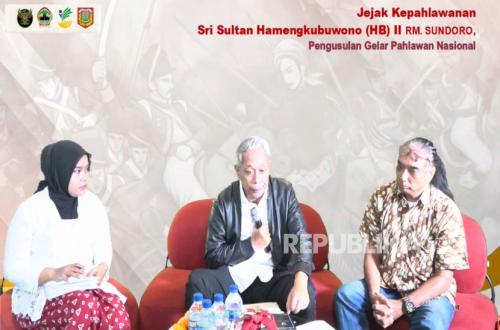
Efforts to promote Sri Sultan Hamengku Buwono II (HB II) as a National Hero continue unabated. At the National Seminar titled “The Footprints of Heroism of Sultan Hamengku Buwono II: Towards the National Hero Title,” held on 30 March 2026, the figure of Yogyakarta’s second Sultan was thoroughly examined not only as a military fighter but also as an “Architect of Civilisation” whose legacy remains relevant to today’s creative industries.
Deputy Minister of Social Affairs (Wamensos) Agus Jabo Priyono provided important notes regarding the proposal for the National Hero title for Sultan Hamengku Buwono (HB) II. Wamensos emphasised that this nomination process must fulfil three crucial aspects to gain approval from the central government.
Wamensos Agus Jabo Priyono explained that the National Hero title is not merely a form of honour but a state recognition of extraordinary dedication.
The three emphasised aspects are: Historical and Authentic Data Aspect: The struggle of the prospective hero must be supported by valid and indisputable historical documents; Broad Impact on the Nation: The proposed figure must be proven to have made real contributions on a national scale, not just local or regional; Continuity of Struggle Values: The values brought by the figure must remain relevant and serve as inspiration for current generations.
“We appreciate the enthusiasm of the community and family. All proposals will go through the mechanism of the Honours and Awards Council with a strong research foundation,” said Wamensos Agus Jabo Priyono while attending the National Seminar on the Proposal for the National Hero Title for Sri Sultan Hamengkubuwono II, organised by the Vasatii Socaning Lokika Foundation in a hybrid format in South Jakarta on Monday (30/3/2026).
Currently, the central research and evaluation team for titles will conduct field verification to match the submitted data with historical facts on the ground. If all requirements are met, this proposal will be submitted to the President for decision via a Presidential Decree (Keppres).
Sultan Hamengkubuwono II, who ruled from 1792 to 1828, is known by the nickname “King Builder of Pesanggrahan.” Under his leadership, monumental works such as Taman Sari, Pesanggrahan Rejawinangun (Warungboto), and the Baluwarti fortress were constructed with clever defensive architecture.
This discussion featured a lineup of competent speakers who dissected the figure of Sultan HB II from various perspectives, from historical records to cultural legacies.
The experts present included Prof Djoko Marihandono (Professor of History at FIB UI), who elaborated on the political context during Sultan HB II’s leadership, particularly his resistance to the policies of Daendels and Raffles that harmed the sovereignty of the palace; Dr Harto Juwono (Lecturer in History at FIB UNS), who highlighted historical documentation and field facts regarding Sultan HB II’s defence strategies in facing British military aggression (Geger Sepehi); Dr Ananta Hari Noorsasetya (Cultural Arts Observer & Descendant of Sultan HB II), who provided perspectives on cultural preservation and the noble values inherited by the Sultan to his descendants and the wider community.
Dr Ananta emphasised that Sultan HB II was a figure who laid the foundation for visual identity and constitution through art and literature. “Sultan HB II was not just a king; he was Indonesia’s first fashion designer and the author of Serat Suryaraja, which became the palace constitution. His design legacy, from the Paduraksa ornaments to the Manuk Beri motifs, is the DNA of creativity now adapted by luxury hotels and the modern fashion industry. Supporting HB II as a National Hero means supporting culture as the nation’s main strength,” explained Dr Ananta.
Representing the voice of the youth, one speaker highlighted the relevance of HB II’s heroic values that transcend armed struggle. “For us, a hero is not always about physical battles. Sultan HB II was ‘The OG Creative Rebel.’ He left a legacy that remains ‘alive’ and relatable even 200 years later. From his manuscripts now in the British Library to sustainable architecture concepts, he provides a living curriculum for young creators, designers, and artists today,” the speaker said.
Meanwhile, Chairman of the Vasatii Socaning Lokika Foundation, Fajar Bagoes Poetranto, addressed the political steadfastness and spatial vision. He reaffirmed the reasons for the suitability of the National Hero title.
“Sultan HB II was a consistent anti-colonial fighter who rejected the VOC, Daendels, and Raffles, even though he was exiled three times. Yet, amidst the struggle, he built a clever defence system through underground tunnels and watchtowers like Panggung Krapyak. His vision of ‘Cultural Sovereignty’ is the best choice for building a strong national character in the global era,” he said.
“This seminar concludes that the footprints of Sultan HB II embedded in ‘stone, pen, and aesthetics’ prove that his heroism is comprehensive—protecting territory while nurturing the soul and national identity,” said Fajar.