
Deputy Social Minister and Deputy Mayor of Balikpapan Discuss Acceleration of People's School Development
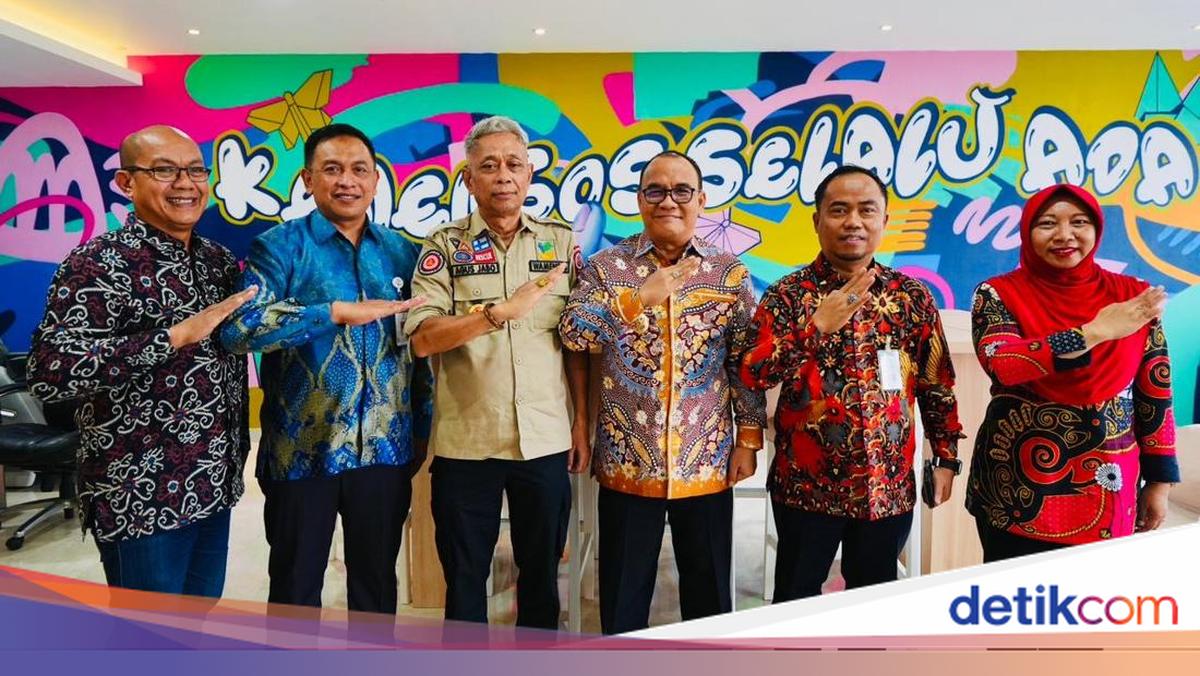
Indonesia’s Deputy Minister of Social Affairs (Wamensos), Agus Jabo Priyono, received an audience from Balikpapan’s Deputy Mayor, Bagus Susetyo, at the Ministry of Social Affairs (Kemensos) office in Central Jakarta. The meeting discussed accelerating the development of People’s Schools in Balikpapan city as part of a national priority programme.
In the meeting, Agus Jabo emphasised that the People’s School is a strategic programme directly overseen by President Prabowo Subianto to break the chain of poverty through education.
“This programme must be implemented quickly, accurately, and with quality. People’s Schools are designed to be the best, in terms of facilities, management, and learning quality,” said Agus Jabo in his statement on Thursday (23/4/2026).
He explained that to date, the government has established 166 pilot People’s Schools using temporary facilities from Kemensos and other ministries/agencies. In 2026, the government targets building 104 permanent schools and adding new pilot school units.
People’s Schools are designed as boarding schools (boarding school) for children from poor families in deciles 1 and 2 of DTSEN. Each school will be equipped with complete facilities such as classrooms, dormitories, laboratories, libraries, and sports facilities, requiring a minimum land area of 6.8 hectares.
“The main goal is to break the transmission of poverty. The state does not want children from poor families to remain in the cycle of poverty,” he stressed.
He highlighted that currently, there are still around 4 million children in Indonesia who are out of school or dropouts, making the presence of People’s Schools a concrete step to expand access to education for vulnerable groups.
In addition, all student needs will be covered by the state, from nutritious meals and uniforms to learning equipment. This approach is expected to improve the quality of life and confidence of the students.
On this occasion, Agus Jabo also emphasised the importance of synergy between the central and local governments to accelerate the programme’s realisation. Local governments are encouraged to be proactive or ‘jemput bola’ in accessing national programmes, including promptly proposing locations for People’s School development to enter the priority planning.
Meanwhile, Bagus Susetyo expressed readiness to support the people’s programme. He revealed that the need for schools in Balikpapan is still quite high.
“Our school capacity is still limited. Around 60 percent of primary school graduates enter junior high school, and from junior high to senior high school around 50 percent. People’s Schools will certainly help a lot,” he said.
However, he also noted that land availability is a challenge, as some areas owned do not yet meet the minimum size requirements and are still in the legalisation process.
In response, Agus Jabo urged the Balikpapan City Government (Pemkot) to immediately submit a development proposal, even if the land administration process is ongoing.
“The important thing is to propose it first so it enters the planning. Administration can follow as long as there is clear progress,” he said.
He also emphasised the importance of synergy between the central and local governments and the optimisation of various support sources to accelerate the programme’s realisation.