
Deputy Public Works Minister: Flyovers and Underpasses to Reduce Rail Crossing Risk
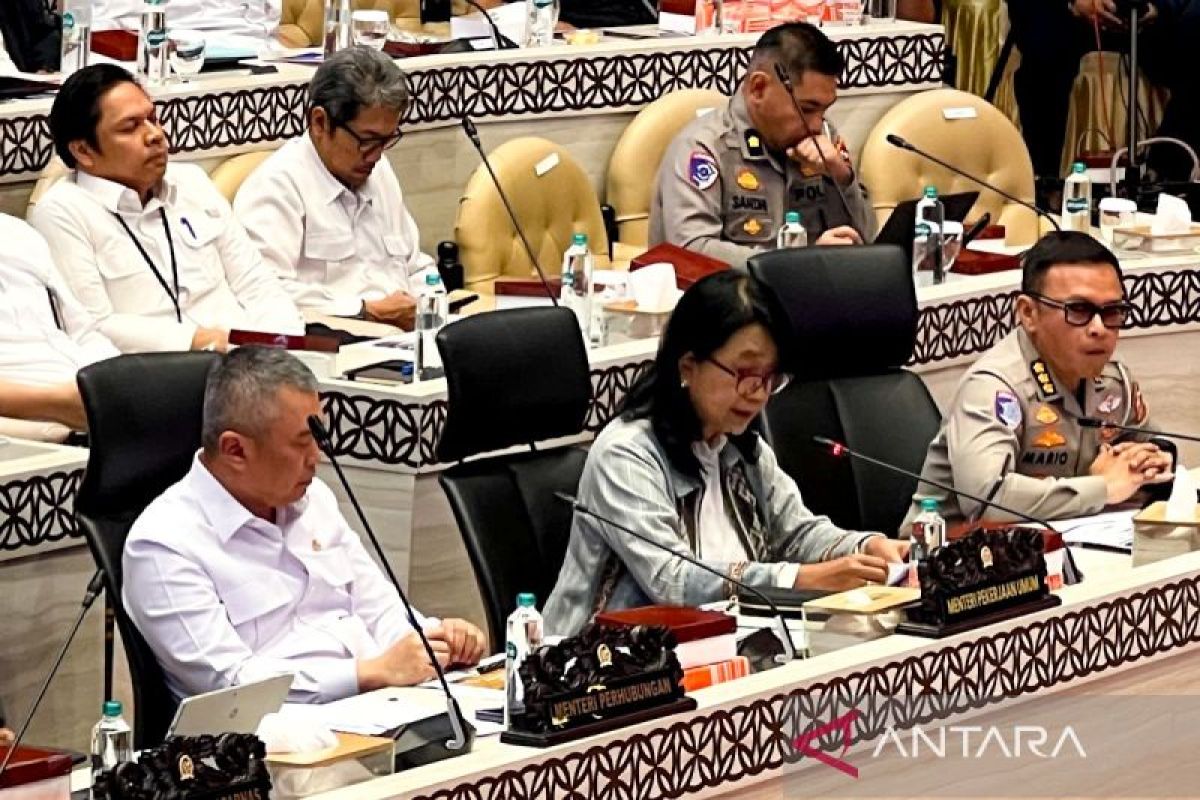
Jakarta – The Deputy Minister of Public Works, Diana Kusumastuti, emphasised that flyovers and underpasses are the primary solutions to reduce the risk of accidents at railway level crossings while improving safety for road users and trains. She told a working meeting of Commission V of the DPR in Jakarta on Thursday that the Ministry of Public Works has experience in tackling level crossings through the construction of flyovers and underpasses.
She cited several projects that have been realised, including the Kretek Flyover, 788.5 metres long, built in 2017; the Kesambi Flyover, 446.5 metres long, also in 2017; and the Klonengan Flyover in Central Java, 760 metres long, completed in the same year.
Additionally, the Public Works Ministry built the Dermoleng Flyover, 617.5 metres long, in 2017 and the Karangsawah Underpass, 850 metres long, completed in 2018, to enhance safety and mobility.
Similar infrastructure development continued with the Patih Galung Flyover, 882.5 metres long, constructed in 2022 as part of efforts to reduce direct intersections between vehicles and trains.
According to Diana, these projects demonstrate that level crossing management can be tailored to the characteristics of the location and construction needs in each region. Although the forms of intervention differ, the basic principle remains the same: to reduce risk points where road traffic and train journeys intersect, thereby improving road user safety and maintaining mobility for the public.
However, accelerating the handling of level crossings still faces a major challenge in land acquisition, whether land is owned by local communities, PT Kereta Api Indonesia (KAI), or local governments. Therefore, construction needs must proceed in parallel with certainty of land availability so that implementation can proceed as planned and within the targets set by the government.
To speed up the process, Diana said an inventory of needs and land availability for non-level-crossing junctions must be carried out by the ministry and related agencies, KAI, and local governments. Moreover, drafting regulations in line with each agency’s authority is important to simplify the land acquisition process so the construction stages can proceed more effectively.
Accelerating efforts also requires coordination among stakeholders to agree on common steps and to reinforce commitment to providing land for transport safety infrastructure. The coordination involves the Ministry of Public Works, the Ministry of Transportation, the Ministry of Agrarian Affairs and Spatial Planning/National Land Agency (ATR/BPN), local governments, and PT KAI as a key actor in programme implementation.
Diana assessed land readiness as a decisive factor because even if construction needs have been calculated, implementation cannot proceed optimally if the land is not available. She added that level crossing handling is a safety agenda requiring cross-ministerial cooperation, as success depends not only on the Ministry of Public Works but also on collaboration across ministries and agencies.
Going forward, handling will focus on three main areas: sharpening priorities based on safety risk levels, accelerating the simplification of land acquisition administration, and strengthening cross-authority coordination.
Through this approach, the government hopes level-crossing handling will be more measurable, targeted, and deliver tangible benefits for public safety and national connectivity.
According to data from the Ministry of Public Works, there are 4,242 level crossings across Indonesia, with 184 sites under the jurisdiction of the national roads requiring ongoing attention. Of these 184 level-crossing locations on national roads, 48 have been addressed through various safety infrastructure projects supporting connectivity. Consequently, the government still has work to do to address 136 level crossings across seven provinces, with different degrees of need and an estimated budget of Rp30 trillion.