
Deputy Police Chief Reveals Advanced Traffic Monitoring System for Operation Ketupat
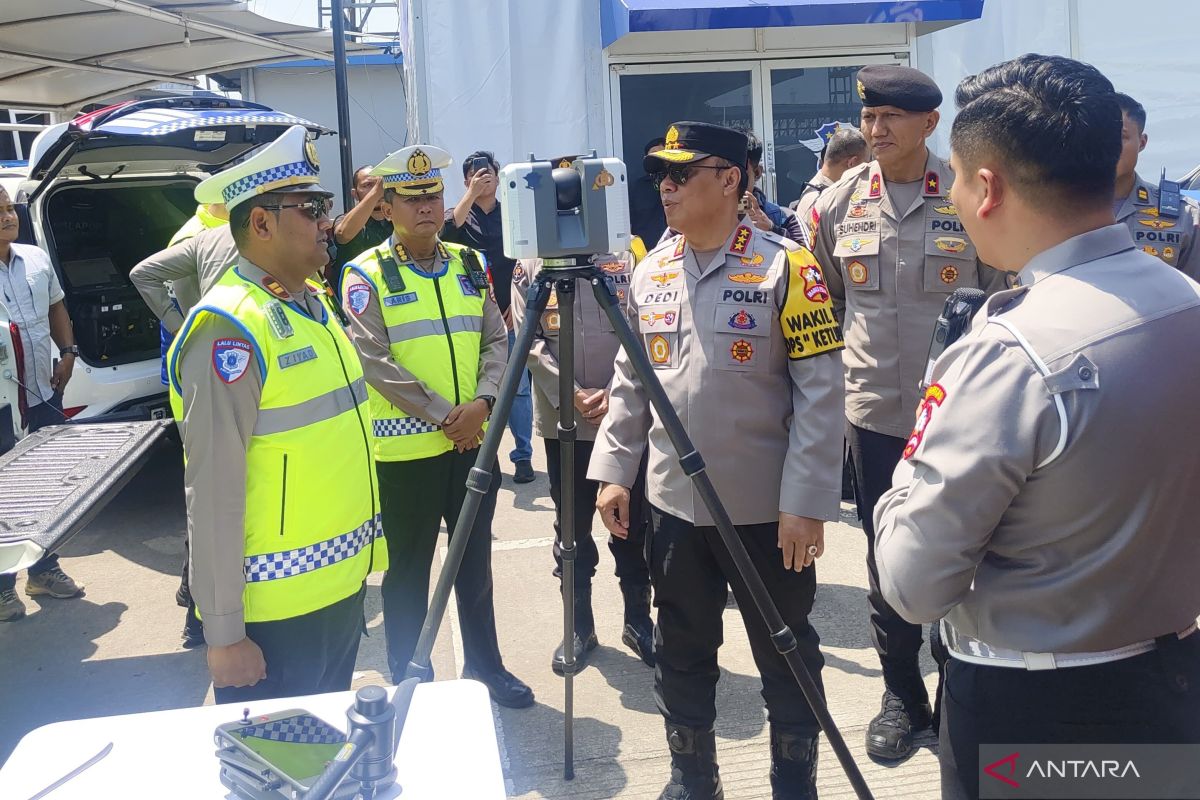
Jakarta – The Deputy Chief of the Indonesian National Police, Police General Dedi Prasetyo, has revealed the sophisticated surveillance system deployed during Operation Ketupat 2026, the annual mass exodus period around Eid al-Fitr.
Speaking at the Command Centre at kilometre marker 29 in Bekasi, West Java, on Saturday, he disclosed that the Traffic Corps of the Indonesian National Police operates two types of drones for surveillance purposes.
The first is a drone integrated with a mobile command centre, used to monitor traffic conditions at locations beyond the reach of CCTV cameras.
“This mobile drone will be used to conduct data analysis. This analysis is also important for making decisions,” he explained.
The second is a Precision Patrol Drone used for electronic traffic law enforcement (ETLE).
“The ETLE drone is used to take electronic action against traffic violators,” he said.
Beyond drone monitoring, this year’s system is supported by artificial intelligence-based analysis, enabling real-time data processing and traffic situation assessment across all migration routes. The monitoring is directly integrated with command centres distributed across Java, Sumatra, Bali, and major migration routes throughout Indonesia.
The system includes traffic counting technology to measure vehicle volumes on main roads, which helps officers determine traffic engineering measures such as contraflow or one-way systems when vehicle volumes spike.
All data is displayed on integrated screens at the Command Centre at the Unified Operation Post for Operation Ketupat at Rest Area KM 29.
One system in use is the K3I Application (Control, Coordination, Communication, and Information), a geospatial platform containing critical information about migration routes. Through this application, officers can monitor strategic locations including the positions of traffic patrol personnel conducting patrols, CCTV networks, and security posts, service posts, and unified posts.
Additionally, all field traffic patrol personnel have been equipped with body cameras. “These body cameras are important for observing situations and monitoring the actions taken by officers in the field,” Prasetyo said.
With this technological support, traffic flow supervision is expected to operate more effectively, rapidly, and transparently, ensuring optimal public service delivery during the migration period.