
Deputy National Police Chief Explains Siger Application Strategy for Managing Congestion at Bakauheni
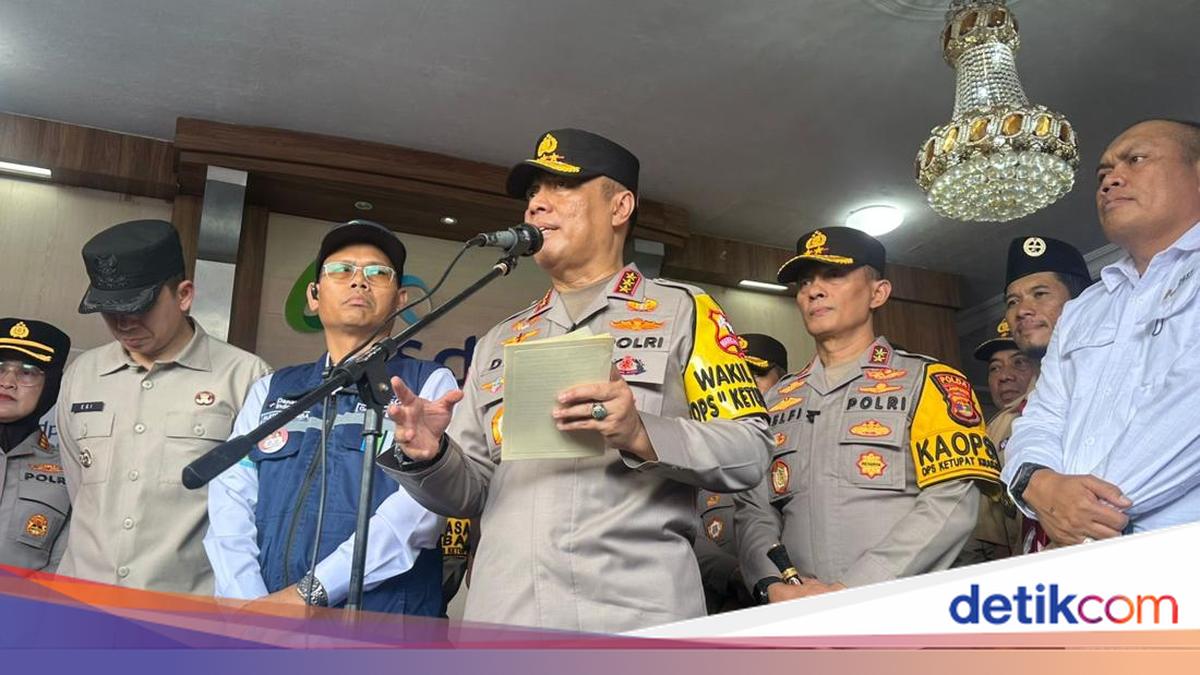
Deputy National Police Chief Komjen Dedi Prasetyo inspected readiness at Bakauheni Port, Lampung, in preparation for the Eid al-Fitr exodus for the Islamic year 1447 Hijrah. Overall, he reported that traffic flow in the Merak, Banten and Bakauheni areas was running relatively smoothly today.
“I checked the route from Jakarta to Merak and vice versa, and also surveyed from the air. Overall, the analysis from above showed relatively smooth conditions, and thankfully the weather has been quite good,” Dedi said at Bakauheni Port, Lampung, on Tuesday (17 March 2025).
“Then from Merak I observed there were already queues of two-wheeled and four-wheeled vehicles preparing to board ships heading to Bakauheni. For Bakauheni, after I checked from the air as well, conditions are thankfully relatively smooth,” he added.
Dedi also inspected the readiness of the Lampung Regional Police in securing the Eid exodus and return traffic this year. He appreciated the Lampung Regional Police’s efforts to implement improvements based on evaluations from the previous year.
“An important point already undertaken by the Lampung Regional Police that needs to be socialised to the public is that they have developed the Siger application. This Siger application is a real-time data application that is truly accurate,” he explained.
Data from the application will be used as the basis for police to implement traffic engineering and other response measures, ensuring that actions taken are both effective and efficient.
“The Siger application has prepared various alternative action methods that the Lampung Regional Police must take. For example, divided into three criteria. The green criteria indicates that the situation is very conducive for traffic flow, one could say very smooth,” he said.
If traffic counting calculations show an increase in traffic flow or congestion, a yellow warning level is triggered. Alternative action plans are then activated.
“The yellow zone occurs when congestion levels at toll gates reach 500 kilometres, extending to the 1 kilometre mark—this is already yellow zone territory. Alternatives are then prepared, including rest areas that will be used as buffer zones,” he noted.
Five rest areas serve as buffer zones to manage all traffic flow heading to Bakauheni Port. Finally, there is the red zone, indicating significant traffic congestion.
“Then if vehicle recapitulation figures rise above 6,000 towards 9,000, and the distance reaches the 4-kilometre mark, it enters the red zone. At the red zone level, the same applies—rest areas increase from five to ten,” he said.
The application also serves as a public information service, allowing travellers to select alternative routes. Four routes have been prepared: western, central, toll, and eastern.
“This has been prepared so that traffic distribution can be far more balanced and truly better controlled,” he stated.