
Deputy MPR Speaker Urges All Parties to Realise Kartini's Struggle Values in the Present Day
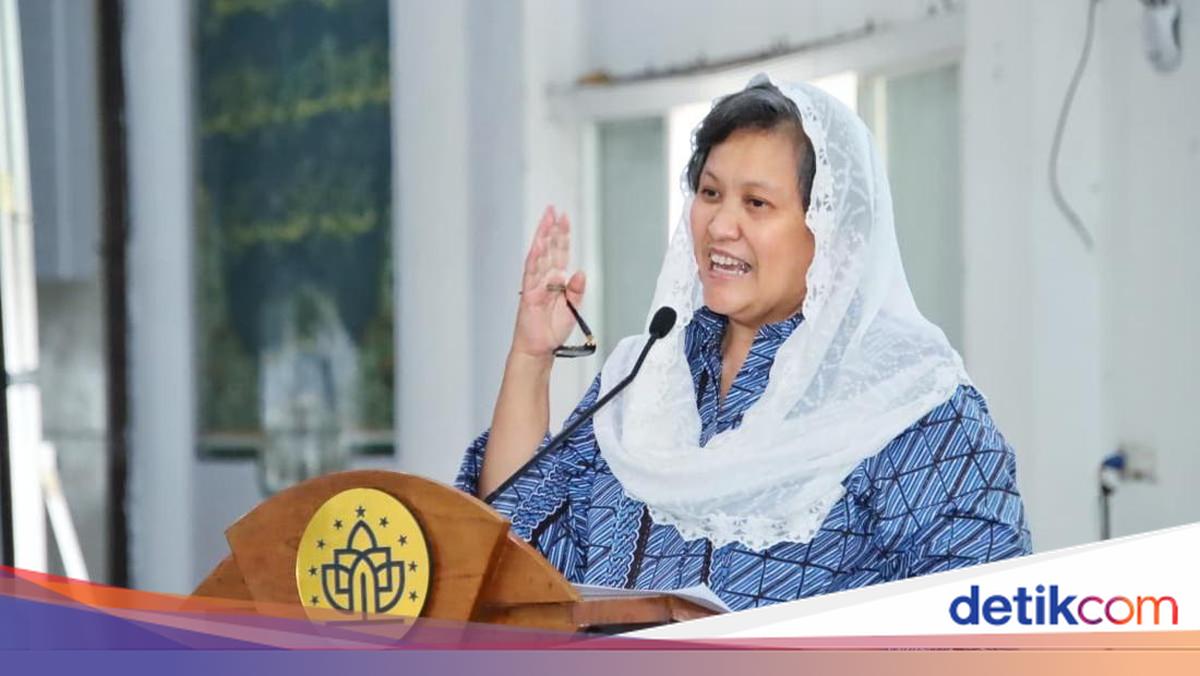
Deputy Chairman of the MPR RI, Lestari Moerdijat (Rerie), stated that women’s freedom of thought is still far from reality. She assessed that efforts to realise RA Kartini’s struggle values in the present day require collective support and commitment as determinants of the nation’s direction.
“How can RA Kartini’s struggle values truly be realised in the present day? I think even for women’s freedom of thought alone, it feels far from reality,” said Rerie in her statement on Wednesday (22/4/2026).
She conveyed this while opening an online discussion themed ‘Kartini Day: Between Symbolic Celebration and the Continuity of Emancipation Ideas’ organised by the Denpasar 12 Discussion Forum. According to Rerie, strong collective commitment is needed to realise women’s emancipation in the present day.
“Emancipation is not merely about being allowed to study, but also about enabling women to achieve their aspirations,” said Rerie.
Rerie, who is also a member of Commission X of the DPR RI, opined that there is still much work to be done to realise the values fought for by RA Kartini. The NasDem Party’s Higher Council member emphasised that every Kartini Day momentum must serve as a reminder of what has been done to enliven and realise RA Kartini’s ideas in the present day.
“How can we collectively find the root problems that can reduce gender disparities and determine the nation’s direction together,” stated Rerie.
Former Minister of Education and Culture RI for the 1993-1998 period and compiler and author of the Kartini Trilogy book, Wardiman Djojonegoro, revealed that Kartini Day commemorations have actually been held since 1915. He said that at that time, RA Kartini passed away at the age of 25, leaving behind letters she wrote during her lifetime.
RA Kartini’s friend, Abendanon, collected those letters to be compiled into a book for sale, with the proceeds used to build women’s schools for independence. Eventually, three women’s schools were successfully built in Semarang, Bogor, and Yogyakarta.
“Emancipation at that time was fought for by elevating the dignity of Indonesian women through establishing schools,” said Wardiman.
Now, efforts to elevate women’s dignity are determined, among others, by how much women’s participation there is in the economic sector, politics, human resource development, and sectors outside education.
“Currently, the factors that must be fulfilled to elevate women’s dignity and honour are increasingly complex,” said Wardiman.
General Chair of the PB PGRI, Unifah Rosyidi, opined that Indonesia is currently experiencing extraordinary leaps in women’s empowerment through affirmative policies. In the PGRI organisation, there is no discrimination in selecting organisational leaders.
However, without affirmative policies, it would not be possible for women to lead. In the last 20 years, in PGRI in 22 out of 36 provinces, 30% are led by women. According to her, PGRI chairs at the regency/city level are mostly women.
“Women can become leaders to realise the goals that have been agreed upon together,” said Unifah.
When RA Kartini wrote letters sent to her friends, according to her, she was essentially sharing her thoughts with the outside world. Unifah hopes that RA Kartini’s ideas can continue to develop to create the equality that is aspired to.
General Chair of the Central Board of Tamansiswa Women, Nyi Tri Yuliyanti Setyasari, revealed that the emancipation initiated by RA Kartini was actually continued by Nyi Hadjar Dewantara, the wife of Taman Siswa founder Ki Hadjar Dewantara. The Tamansiswa Women organisation was founded on 3 July 1922 in Yogyakarta by Nyi Hadjar Dewantara.
According to Nyi Tri Yuliyanti, Nyi Hadjar also fought in the education sector. At that time, Taman Siswa was called a wild school by the Dutch colonisers. Nyi Hadjar faced that threat by inviting teachers to come to community homes to teach students in their respective homes.
“Nyi Hadjar Dewantara fought against the Dutch colonisers through education and was one of the initiators of the first Women’s Congress in Yogyakarta amid social restrictions from the Dutch colonisers,” revealed Nyi Tri Yuliyanti.
According to her, emancipation gives rights to women to continue growing as individuals and provides space as lifelong learners.
Chair of the Board of the Editors-in-Chief Forum, Retno Pinasti, thought that women’s representation in her work environment has been fine so far. However, after she was entrusted to become a leader, it turned out that the majority of her colleagues were men. She opined that this condition occurs because it is triggered by women’s own mindset.
“With adequate education, the mindset that hinders women from becoming leaders can be overcome,” said Retno.
Retno hopes that with current technological advancements, access to various information will open up, so that society, both men and women, have equal opportunities to develop themselves.
Senior journalist Usman Kansong opined that the struggle for emancipation and equality should be pioneered by women themselves, not relying on men. This can start with getting used to using the term ‘perempuan’ rather than ‘wanita’. ‘Wanita’ refers to Javanese language meaning something that can be arranged. It is better to use the word ‘perempuan’, which is more egalitarian.
“Because from egalitarian words, that is the beginning of the struggle to achieve equality,” concluded Usman.
The discussion, moderated by Nur Amalia (Special Assistant to the Deputy Chairman of MPR RI), featured Prof. Dr. Wardiman Djojonegoro (Minister of Education and Culture RI for the 1993-1998 period - Compiler and Author of the Kartini Trilogy book), Prof. Dr. Unifah Rosyidi, M.Pd. (General Chair of the Indonesian Teachers’ Union/PGRI), and Nyi Tri Yuliyanti Setyasari (General Chair of the Central Board of Tamansiswa Women) as speakers. In addition, Retno Pinasti (Chair of the Board of the Editors-in-Chief Forum - Editor-in-Chief of SCTV and Indosiar) was also present as a discussant.