
Deputy Minister of Religious Affairs Highlights the Need for Vocational Education in Madrasah Development
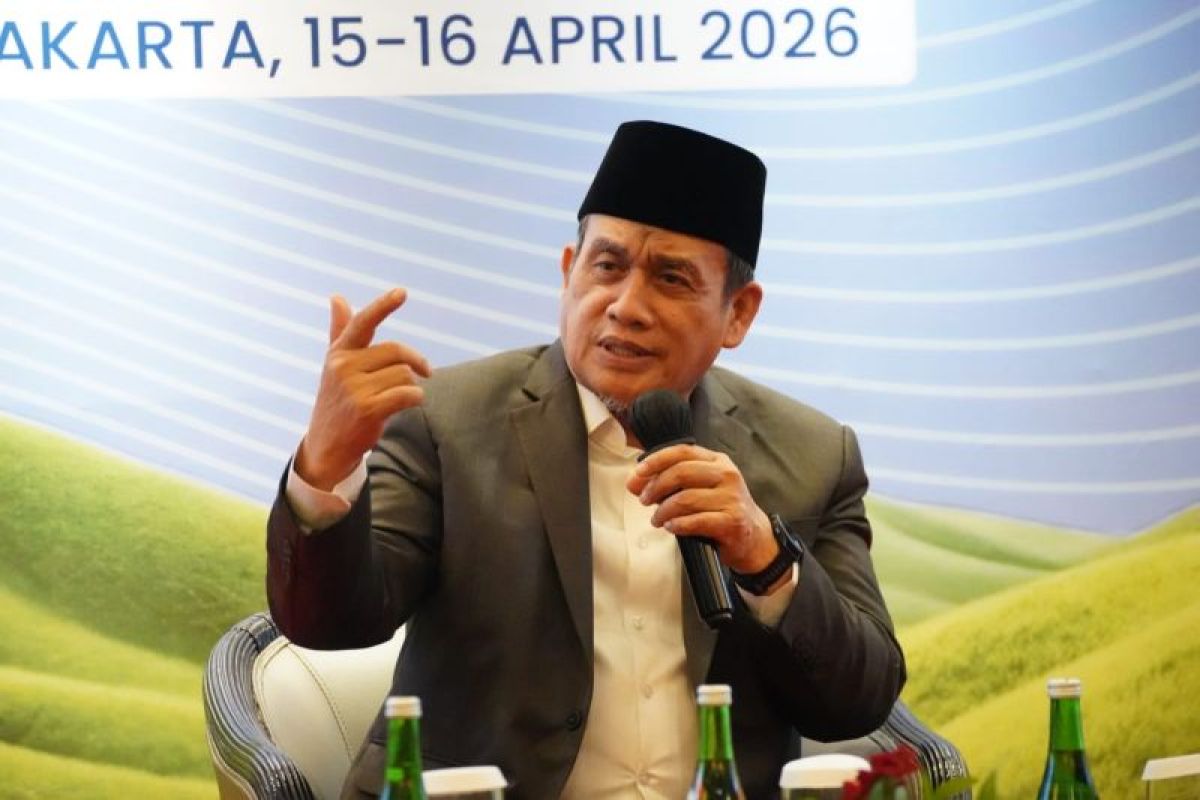
Jakarta (ANTARA) - Deputy Minister of Religious Affairs Romo Muhammad Syafi’i has highlighted the need to strengthen vocational education as a response to national requirements in the reformulation of madrasah development.
Amid the government’s major agendas such as industrialisation, downstreaming, and food self-sufficiency, Islamic education is demanded to produce graduates who are not only religious but also possess practical skills.
“Employment opportunities are wide open, but our curriculum has not fully addressed those needs,” said Deputy Minister Romo Syafi’i in his statement in Jakarta on Thursday.
Romo Syafi’i stated that the Ministry of Religious Affairs is currently reformulating the Directorate General of Islamic Education following the formation of the Directorate General of Pesantren.
Strengthening vocational education in the Directorate General of Islamic Education, including madrasahs, has become one of the focuses of attention because it is expected to answer future needs.
According to him, the reform of Islamic education, including madrasahs, can no longer stop at normative aspects. Institutional structural changes must be followed by a redefinition of the role of Islamic education in a more concrete manner.
“Therefore, the government is encouraging the development of vocational madrasahs, vocational programmes in Islamic religious higher education institutions, and cross-ministerial collaboration,” he said.
The Deputy Minister also reminded that all knowledge, whether science, technology, or economics, is fundamentally part of Islamic teachings. The separation between religious knowledge and general knowledge, in his view, becomes an obstacle to progress.
Meanwhile, Islamic thinker Haidar Bagir emphasised the urgency of building an educational vision that starts from the ultimate goal, namely the profile of graduates to be produced.
Education, according to Haidar, must be designed systematically through a logical chain, namely vision-mission, graduate profile, to curriculum. He exemplified an educational vision that is not only oriented towards intellectual and scientific intelligence but also character building.
In the context of pesantren, Haidar affirmed the uniqueness not possessed by modern education systems, namely the integration of rationality and spirituality, the role of adab as part of epistemology, and the transmission of non-formal knowledge, including through the relationship between kiai and santri.
“This distinction must be clearly formulated so that pesantren maintain their core values in the flow of modernisation,” he said.