
Deputy Minister of Law: Capital Punishment Becomes Special Penalty with 10-Year Trial Period
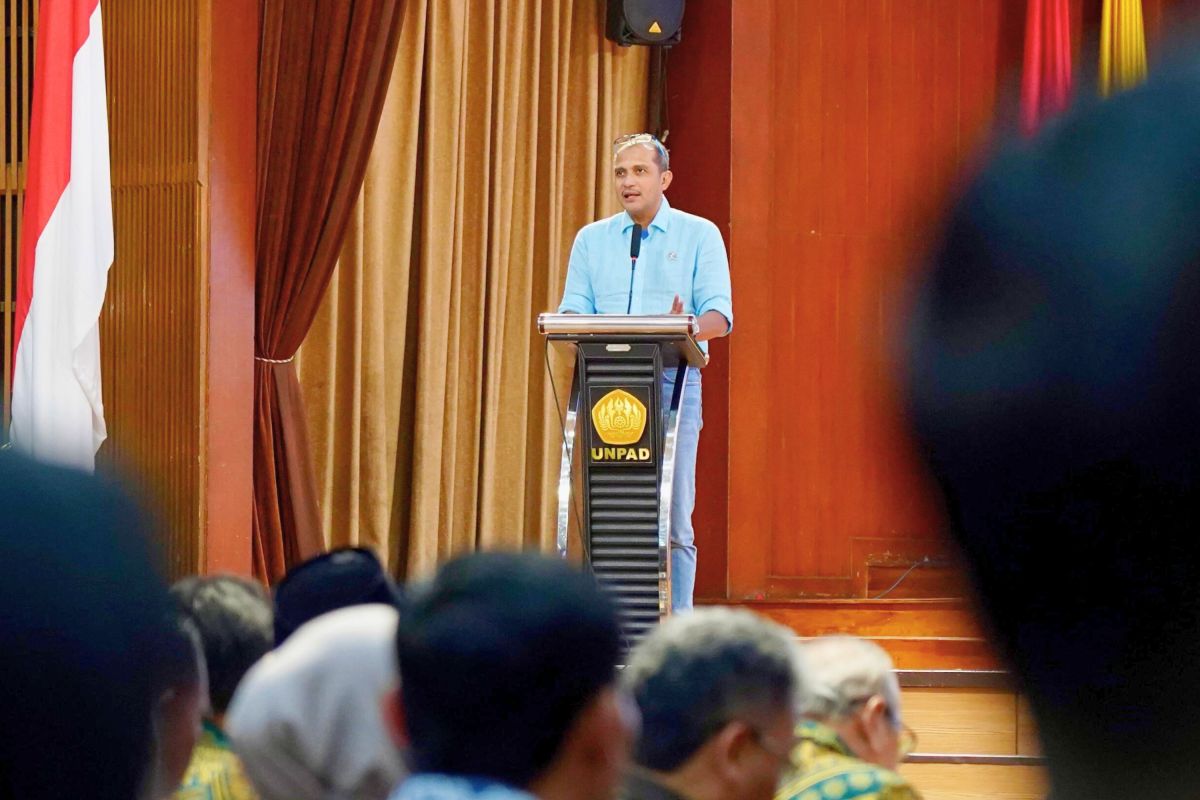
Jakarta — Deputy Minister of Law Edward Omar Sharif Hiariej has stated that capital punishment in Indonesia is no longer positioned as a principal penalty, but as a special penalty, with a 10-year trial period requirement.
“Lawmakers have taken a middle path, a win-win solution. Capital punishment exists, but there must be a 10-year trial period,” said the official, commonly referred to as Eddy, during a socialisation event on the 2023 Criminal Code and 2025 Criminal Procedure Code at Padjadjaran University in Bandung, West Java, on Thursday.
Under this framework, if prisoners demonstrate good conduct, the death sentence will be commuted to life imprisonment, which is the primary reason capital punishment remains in place.
The Deputy Minister explained that there are four categories of capital punishment application across the world. First, some countries have completely abolished capital punishment. Second, some countries are de facto abolitionist, retaining capital punishment in their laws but never applying it in practice, such as Belgium. Third, some countries retain capital punishment for specific crimes, such as the United States. Fourth, some countries maintain capital punishment under a framework similar to Indonesia’s Criminal Code, including China.
The Deputy Minister noted that Indonesia’s 2006 Constitutional Court decision stipulated that capital punishment be imposed with a trial period, thereby providing condemned prisoners an opportunity for redemption, as sentences can be commuted to life imprisonment.
Professor Zahrotur Rusyda Hinduan, Vice-Rector for Academic Affairs and Student Welfare at Padjadjaran University, stated that the reforms to the Criminal Code and Criminal Procedure Code represent an important step in the development of criminal law in Indonesia. She said such socialisation events provide a strategic space for deepening understanding and unifying perspectives among legal professionals.
“We at Padjadjaran University hope that this activity will provide benefits and strengthen our collective preparedness for implementing the new criminal law regime,” she said.
Asep Sutandar, Head of the West Java Regional Office of the Ministry of Law, stated that the event resulted from cooperation between the West Java Regional Office, Padjadjaran University’s Faculty of Law, the West Java Chapter of the Indonesian Notary Association, and the Alumni Family Association for Notarial Studies at Padjadjaran University. The cross-institutional synergy is expected to serve as a model for sustained collaboration in disseminating legal information and building capacity among legal stakeholders.
The event drew 1,000 participants from various stakeholder groups, including the West Java Regional Police, the High Prosecutor’s Office and District Prosecutor’s Offices throughout West Java, courts across West Java, the West Java Regional Government, the Ministry of Human Rights, and the Ministry of Immigration and Corrections, along with their respective technical implementation units. Participants also included representatives from higher education institutions, notary professional organisations, advocates’ organisations, and legal aid organisations throughout West Java.