
Deputy Minister of Industry States Indonesia-US Trade Agreement Will Accelerate Domestic Mineral Downstream Processing
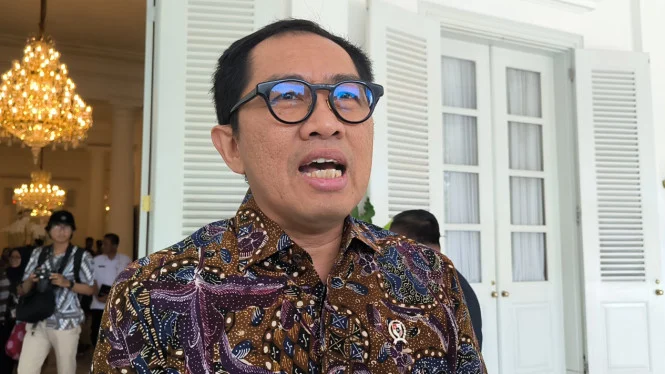
Jakarta – Deputy Minister of Industry Faisol Riza has described the reciprocal trade agreement between Indonesia and the United States as a major breakthrough for national industrialisation.
According to him, the agreement represents a major leap forward because it creates opportunities to accelerate the downstream processing of national minerals, which has previously faced various obstacles in terms of investment, technology, and market access.
“Our mineral downstream processing has faced many challenges. With the Indonesia-US trade agreement, the downstream processing of silica sand as a primary material for chip or semiconductor production has the opportunity to be realised domestically. This is a major breakthrough for Indonesian industrialisation,” said Faisol in his statement on Friday, 27 February 2026.
He explained that silica sand is one of the important raw materials in the global semiconductor industry.
As a result of this cooperation, he stated that Indonesia has the potential to become one of the suppliers to US-based semiconductor companies, whilst simultaneously increasing the added value of natural resources domestically.
For this reason, he argued that the Indonesia-US trade agreement is a strategic step that strengthens Indonesia’s position in global trade. Meanwhile, he emphasised that the agreement will not destroy national industry, particularly small and medium enterprises (SMEs).
He stated that the government has ensured through this agreement that national industrial products are not placed in direct competition with US products in the domestic market.
Additionally, he noted that 1,819 Indonesian products have received zero-tariff facilities to the US market. Before this agreement, these products were subject to tariffs of between 8 and 12 per cent.
“The textile, wooden furniture, rubber industries, and various SME products are actually very advantaged. This is a major opportunity for export expansion and job creation,” he said.
He further emphasised that President Prabowo Subianto’s strategy in this agreement reflects a balanced trade policy – opening US market access for Indonesian products whilst simultaneously protecting domestic industry interests.
“This is not merely an ordinary trade agreement. This is part of a larger strategy to make Indonesia an important player in the global supply chain, including high-technology industries such as semiconductors. We must view this as an opportunity, not a threat,” he concluded.