
Deputy Minister of Human Rights Rejects the Death Penalty: The Right to Life Cannot Be Diminished
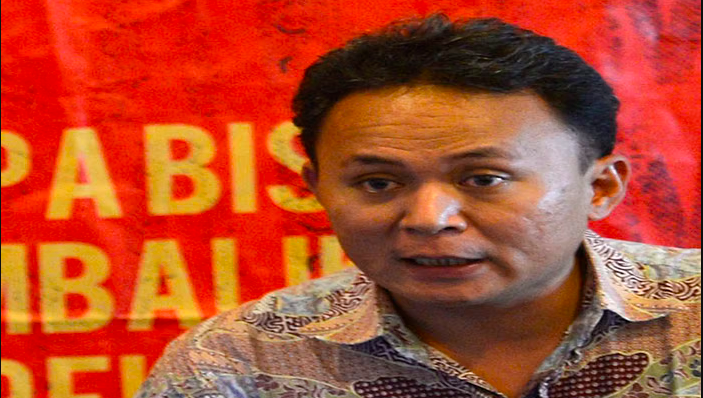
Deputy Minister of Human Rights Mugiyanto Sipin has reaffirmed his rejection of the death penalty, positioning the issue within the framework of the right to life as an inviolable principle. He stated that, in principle, his ministry has never approved capital punishment.
“As the Ministry of Human Rights, which acknowledges the universality of human rights, we will never approve the death penalty. This contradicts the fundamental principle that only God has the authority to take a person’s life,” he said in a statement on Thursday (February 26).
According to him, the harshest punishment is not the death penalty. If a crime is considered very serious and requires maximum punishment, the state still has other options. “There are other punishments because the goal is actually to deter. Life imprisonment is a severe punishment,” Mugiyanto added.
In terms of policy, he believes that Indonesia is moving towards the de facto abolition of the death penalty. Executions are no longer carried out, and there is a moratorium. In the new Criminal Code, the death penalty is also no longer placed as the primary punishment.
Regarding actions that result in the loss of life, including those committed by law enforcement officers, Mugiyanto reminded of the classic debate about retributive justice. He believes that a vengeful approach is not in line with the goals of modern punishment.
“Therefore, it is not the right punishment. If we refer to the international instruments ratified by Indonesia, we have ratified the ICCPR, which does not include the death penalty. The maximum punishment does not have to be death,” Mugiyanto explained.
According to him, punishment is not about revenge but about prevention to ensure that crimes are not repeated. He cited various studies that show that the death penalty is not effective in reducing serious crime rates.
He also emphasized that the right to life is a right that cannot be diminished under any circumstances. “From a human rights perspective, every person has the right to life, and this is a non-derogable right, a right that cannot be reduced,” said Mugiyanto.
In addition to principled reasons, Mugiyanto mentioned technical issues in the judicial system, which he believes still has loopholes. The risk of wrongful convictions is a serious concern if the death penalty remains in place.
“Moreover, there are other reasons why the death penalty should not be imposed, because the judicial system still has many flaws. There have been many cases where people have been wrongly convicted, as is currently happening,” he concluded. (Mir/P-3)
DEPUTY Minister of Human Rights. Mugiyanto supports the use of body cameras for members of the National Police. This is part of the oversight following the increase in violence by police officers.
In the initial draft, this requirement will target large-scale companies, namely those with a minimum of 2,000 employees.
DEPUTY Minister of Human Rights Mugiyanto Sipin reaffirmed his rejection of the death penalty by placing the issue within the framework of the right to life.
The Judicial Commission (KY) stated that it is ready to monitor the trial of the alleged smuggling of 2 tons of crystal methamphetamine, in which a crew member from the Riau Islands was sentenced to death.
Hasbiallah Ilyas asked law enforcement officials to be transparent in handling the case of Fandi Ramadan, a crew member of the Sea Dragon who faces the death penalty in the case of 2 tons of crystal methamphetamine.
The Utah court ruled that the prosecutor’s office could continue to pursue the death penalty against Tyler Robinson, despite allegations of conflict of interest.
Nick Reiner, 32, is on trial for the murder of his parents, Hollywood director Rob Reiner and Michele Singer. He faces the death penalty.
Copyright @ 2026 Media Group - mediaindonesia. All Rights Reserved