
Deputy Minister of Home Affairs: Special Autonomy Development Planning Deliberations in Papua Must Be Completed by March 2026
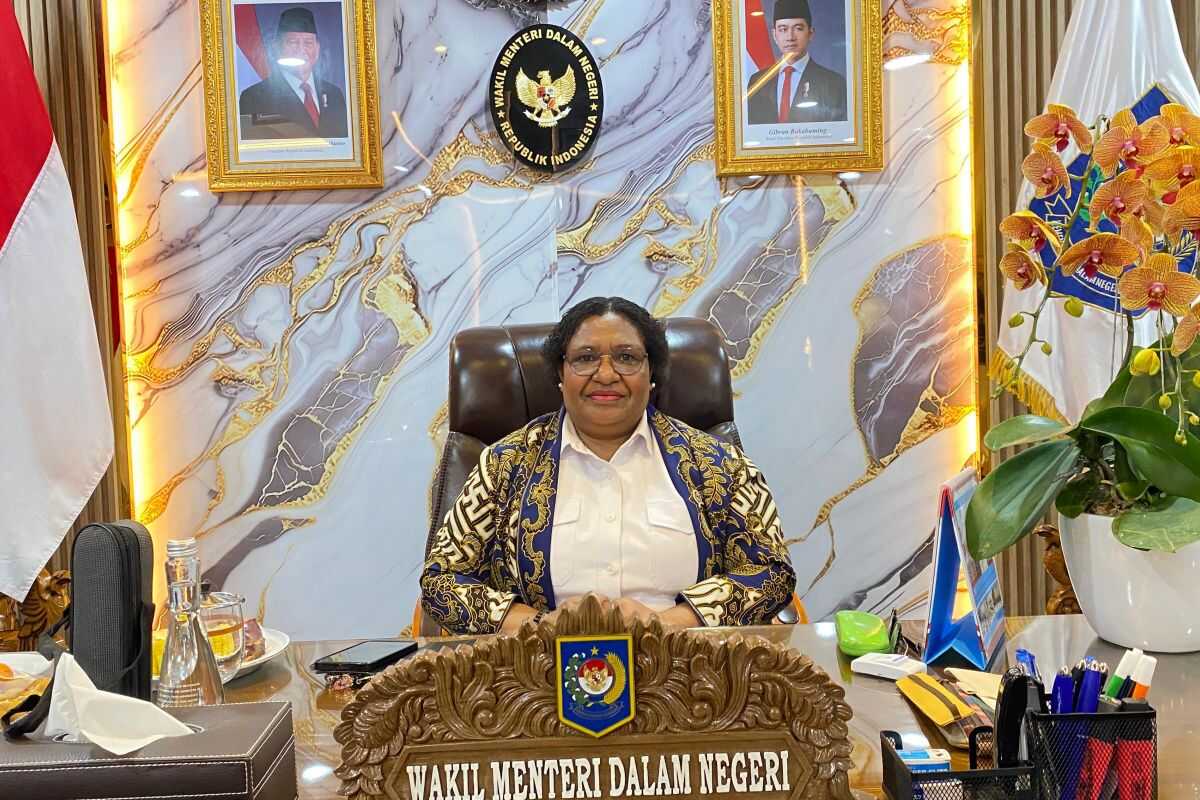
Jakarta (ANTARA) - Deputy Minister of Home Affairs (Wamendagri) Ribka Haluk has affirmed that the implementation of Special Autonomy (Otsus) Development Planning Deliberations (Musrenbang) at district and city level across all regions of Papua must be completed no later than March 2026.
Musrenbang Otsus across six provinces in the Papua region represents a strategic opportunity to ensure development planning proceeds on schedule.
“Today we have entered March, specifically 2 March 2026. March is the month for implementing Musrenbang Otsus for all regional governments, particularly in the six provinces of the Papua region,” Ribka stated at the headquarters of the Ministry of Home Affairs in Jakarta on Monday.
She emphasised that before proceeding to the provincial-level Musrenbang Otsus phase, all preceding stages must be ensured to have been implemented hierarchically. These stages begin with village and kelurahan (sub-district) deliberations, followed by sub-district level deliberations, through to district and city level.
According to the schedule, district and city level Musrenbang Otsus will be held throughout March 2026. Subsequently, provincial-level Musrenbang Otsus is scheduled for April, and will continue to the national level in May 2026.
“We need to conduct checks at each district and city to ensure whether Musrenbang Otsus at village and sub-district through district and city levels has been implemented according to schedule. We must obtain this data immediately. Once all stages have been implemented, only then can we proceed to the provincial level,” she stressed.
According to Ribka, the role of the Head of Regional Development Planning Agency (Bappeda) in each region is crucial to ensure all deliberation stages at district and city level are completed this month. The Ministry of Home Affairs will also continue coordination and field inspections.
In terms of planning approach, she emphasised a bottom-up approach from grassroots level. This means aspirations for the use of Otsus funds must genuinely be drawn from village level whilst involving all stakeholders, including the Papua People’s Assembly (MRP), Papua People’s Representative Assembly (DPRP) through appointment mechanisms, and other relevant parties.
“Programmes must not become mere copying from other regions that do not align with the characteristics and potential of that particular area,” she stated.
Nevertheless, all planning must remain aligned with policy directions and the Regional Medium-Term Development Plan (RPJMD) of the province and the National Medium-Term Development Plan (RPJMN). Such alignment is intended to create synergistic and integrated policies.
Ribka also highlighted improvements in Otsus fund governance through the integration (interoperability) of three systems: the Ministry of Home Affairs’ Regional Government Information System (SIPD), the Ministry of Finance’s Regional Financial Information System (SIKD), and the State Ministry of Planning’s Papua Development Acceleration Information System (SIPPP). According to her, the Otsus programme is among the first to implement such integration.
In 2025, its implementation had reached 100 per cent and continues to improve in financial governance. She hopes that the function of public oversight will also operate optimally to ensure funds are genuinely realised and programmes proceed as planned.
“Fund disbursement becomes faster and more controlled. Oversight is conducted jointly so disbursement can proceed on schedule. Indeed, some provinces have already made withdrawals in February and begun implementing their programmes,” she said.
Meanwhile, Senior Policy Analyst at the Directorate of Facilitating Transfer and Regional Debt Financing, Directorate General of Regional Finance, Ministry of Home Affairs, Emile George Boeky stated that village-level deliberations have been held and continued at sub-district level. He affirmed that regional governments must also prepare Budget and Programme Plans (RAP) to be discussed in the deliberations forum.
The RAP will subsequently be processed through the interoperability system of SIPD, SIKD, and SIPPP, which represents synergy among the Ministry of Home Affairs, Ministry of Finance, and the State Ministry of Planning.
“The outcome of this process will subsequently become the final draft in the formulation of the Regional Government Work Plan (RKPD),” he concluded.