
Deputy Minister of Hajj and Umrah: Second-wave pilgrims must get enough rest on the plane
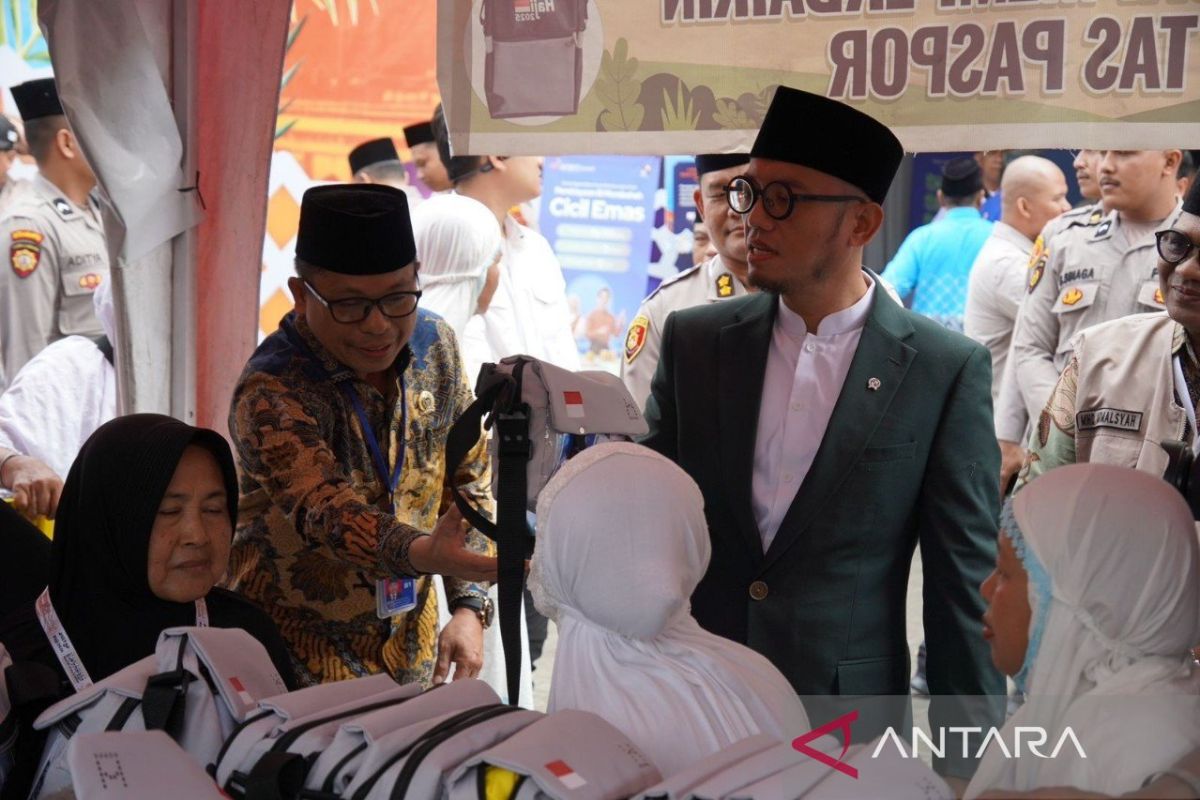
Medan - Indonesia’s Deputy Minister of Hajj and Umrah, Dahnil Anzar Simanjuntak, has requested that second-wave prospective Hajj pilgrims get sufficient rest while on the aeroplane. “They will already be in Ihram attire. Then, upon landing, they will immediately perform the obligatory Tawaf for Umrah,” Dahnil stated, accompanied by the Head of the North Sumatra Hajj and Umrah Ministry Regional Office, Zulkifli Sitorus, at the Medan Hajj Hostel on Friday. The Deputy Minister explained that second-wave prospective Hajj pilgrims will inevitably expend more energy upon arriving in the holy land. Data from the Ministry of Hajj and Umrah of the Republic of Indonesia as of Thursday (7/5) indicates that 286 flight groups comprising 110,848 prospective Hajj pilgrims and 1,141 Hajj officials have arrived in the holy land. Among them, 9 flight groups with 3,459 prospective Hajj pilgrims and 36 officials have arrived at King Abdul Aziz International Airport in Jeddah as part of the second wave departure from 7 May to 21 May 2026. These second-wave prospective Hajj pilgrims will take their Miqat or intend Ihram inside the aeroplane before landing or while at King Abdul Aziz Jeddah Airport. “Therefore, it is recommended that the regional head ensures plenty of rest on the plane. Reduce the gossiping on the plane,” Dahnil stressed. “Alhamdulillah, the visit by the Deputy Minister of Hajj and Umrah of the Republic of Indonesia, Dahnil Anzar Simanjuntak, serves as motivation for all staff at the Medan Embarkation to continue providing the best service to prospective pilgrims,” Zulkifli said. According to him, the various instructions delivered by Deputy Minister Dahnil Anzar Simanjuntak are a point of attention for continuously improving the quality of services at the Medan Embarkation. “Especially in dealing with Hajj operational dynamics, such as technical landings or handling prospective pilgrims with special health conditions,” Zulkifli stated. The Medan Embarkation, he continued, not only serves the departure of regular pilgrims but also has a strategic responsibility in supporting the smooth operation of the national Hajj. His side also stated that the Medan Embarkation must be prepared to face various situations, including emergencies and flight transits. “For that reason, we continue to strengthen cross-sector coordination to ensure that the comfort and safety of pilgrims remain the top priority,” Zulkifli emphasised.