
Deputy Minister of Hajj and Umrah Inspects Pondok Gede Hajj Dormitory, Ensures Smooth Hajj Services
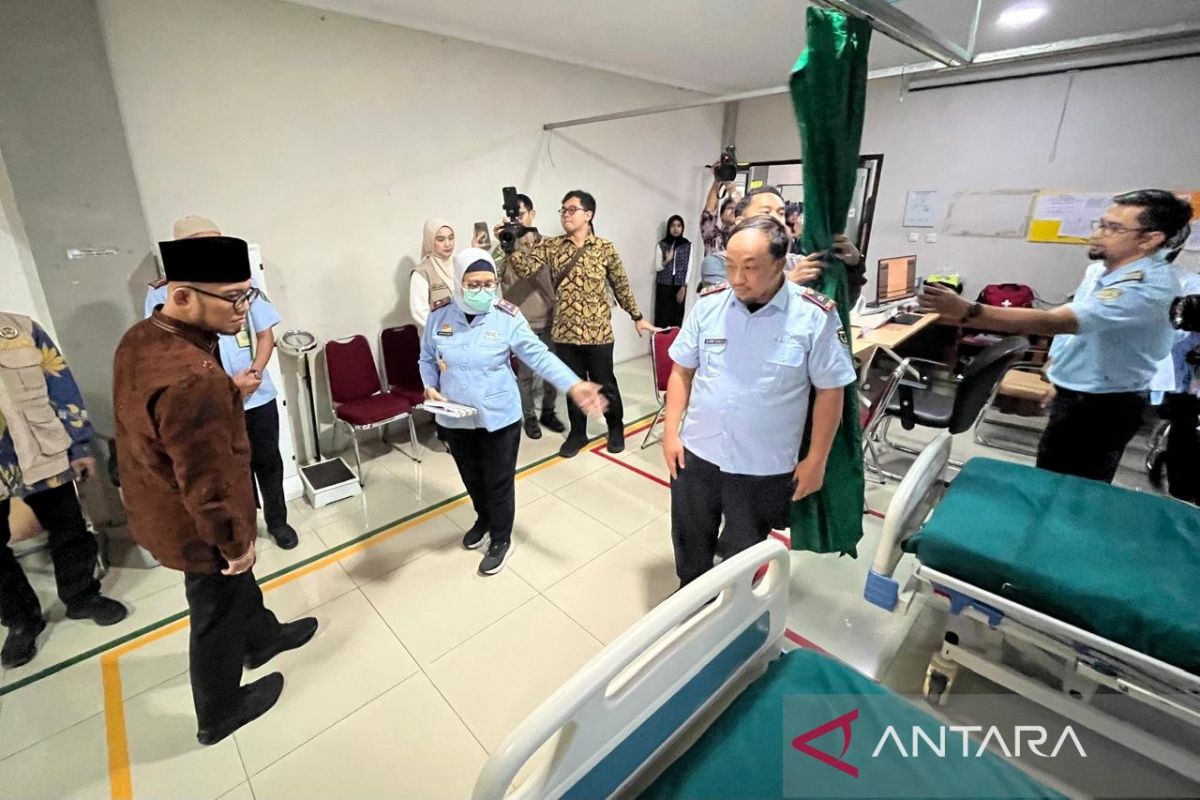
Jakarta (ANTARA) - Indonesia’s Deputy Minister of Hajj and Umrah, Dahnil Anzar Simanjuntak, inspected various services at the Pondok Gede Hajj Dormitory in Jakarta on Tuesday to ensure that all processes for serving prospective hajj pilgrims proceed smoothly from departure.
“This is the last batch of groups, probably the final one on 21 May. So today I visited Pondok Gede. Alhamdulillah, there are no major issues at Pondok Gede; everything is running smoothly,” Dahnil said after the inspection.
During the visit, Dahnil checked several facilities, such as health services, elderly-friendly rooms, and catering services for pilgrims. According to him, the inspection results showed that the provided food is fit for consumption and no health problems were found.
“We also checked the catering earlier; alhamdulillah, it’s suitable and there are no issues like food poisoning or the like. This is a special focus of the Ministry of Hajj and Umrah with assistance from the Health Quarantine Agency,” he stated.
The Deputy Minister said that the Pondok Gede Hajj Dormitory, as well as hajj dormitories in various regions, continue to make improvements to enhance the quality of services for pilgrims.
“We believe this is the first year the Ministry of Hajj is directly handling the hajj. But there must be many improvements; we are continuously reviewing them,” he said.
Nevertheless, the Indonesian Government has received appreciation from the Saudi Ministry of Hajj and the Kingdom of Saudi Arabia regarding the performance of Indonesian hajj officials.
“They appreciate the roles of our hajj officials this year, which are very inspiring, with great dedication to the pilgrims and much more orderly,” Dahnil remarked.
He emphasised that this appreciation is not a reason for complacency, as the most crucial phase of the hajj organisation will take place from 26 to 31 May.
According to him, that period is a key point because it involves the mobility of millions of people from hotels to Arafah, then to Muzdalifah, Mina, and the stoning of the jamarat.
“Those processes are our focus, and we also prepared with the team in Saudi Arabia,” he said.