
Deputy Minister of Creative Economy Urges Local IP to Penetrate Global Markets
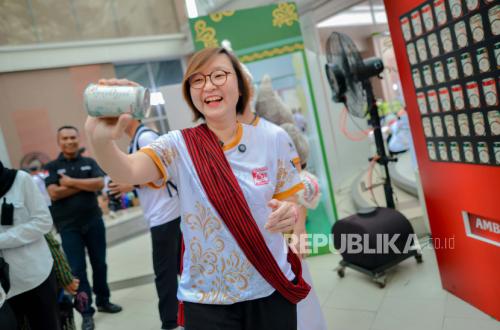
The government is continuously promoting the creative economy to become a new engine of national growth through strengthening intellectual property (IP) from the nation’s works. One of the steps taken is to bolster the creative ecosystem from the vocational education level and open up opportunities for global collaboration for local creators.
Deputy Minister of Creative Economy (Wamen Ekraf) Irene Umar stated that IP development should not be viewed merely as creative works, but as a long-term investment that can generate sustainable economic value. This was conveyed at the IP Expo 2026 in Jakarta.
“IP should not be seen as a burden, but as a long-term investment because it can be developed into other products with economic value,” said Irene during the discussion session “Future Forward: Building Creative Champions” on Friday (8/5).
According to Irene, Indonesia has great potential in the creative economy sector, supported by cultural diversity and continuously developing young talent. Therefore, the government is striving to build an integrated creative economy blueprint to create growth based on creativity and culture.
She assessed that the IP Expo serves as a strategic space to connect local IP with international industry players. Thus, Indonesian creative works can not only survive in the domestic market but also have opportunities to penetrate global markets through cross-country collaborations.
“This expo must be a place for Indonesian IP to explore collaborations with foreign IP to penetrate international markets,” she said.
Meanwhile, Programme Manager of Djarum Foundation, Galuh Paskamagma, highlighted the importance of developing creative human resources (HR) from school benches. Through partnerships with SMK Raden Umar Said, they implement a teaching factory-based learning system integrated with the needs of the animation industry.
According to her, students at SMK Raden Umar Said not only learn to create works but are also trained to produce creative products relevant to market needs. Several IP works by students have even developed into commercial products.
“Students must develop a portfolio of works relevant to industry trends to be ready to enter the workforce,” she said.
Currently, there are at least 10 IP works from the teaching factory at RUS Animation Studio that have generated economic value for the school. Some of them include Nyla, Sabda Alam, Unstring Your Heart, and the Waka Kibo animation, which has been developed into derivative products such as electronic money cards through collaboration with the banking sector.
Galuh added that advancements in artificial intelligence (AI) technology can actually assist students’ creative processes in the animation industry. However, aspects such as artistic taste and the ability to build emotional stories remain the main human strengths that AI cannot yet replace.