
Deputy Minister of Creative Economy Opens 2026 Nusantara Lunar New Year Parade: A reflection of national unity
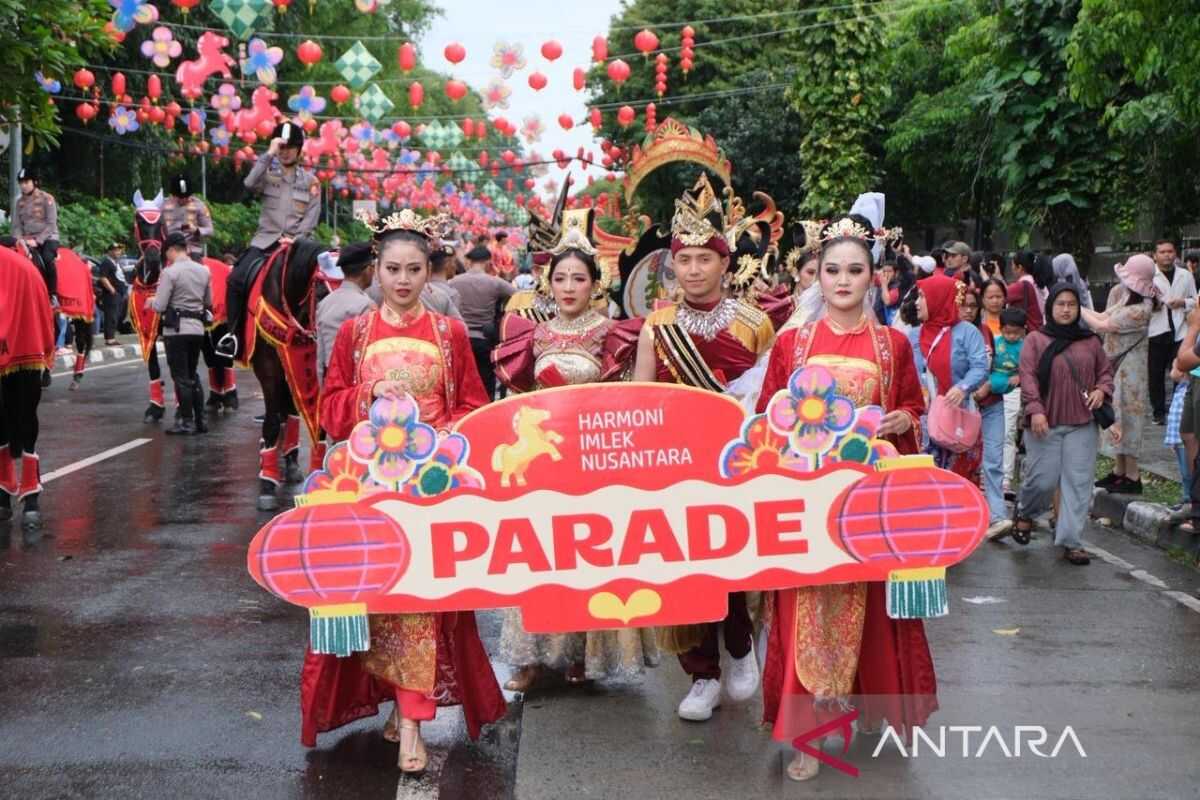
Jakarta – Deputy Minister of Creative Economy (Wamenekraf) Irene Umar officially opened the 2026 Nusantara Lunar New Year Parade at Lapangan Banteng, Jakarta. The parade served as the culmination of the National Lunar New Year Festival activities running from 22 February to 1 March 2026, providing a space for cross-cultural encounter that reflected the spirit of togetherness and diversity in Indonesia.
Irene emphasised that the Nusantara Lunar New Year Parade, coinciding with the month of Ramadan, reflected the nation’s values of unity and inclusivity through multi-stakeholder collaboration involving the government, communities, the private sector, religious leaders, and society at large.
“Indonesia is the most inclusive nation because diversity is not merely something we speak of, but something we demonstrate and experience every day. This Lunar New Year celebration does not belong to one group alone, but to all Indonesian society, regardless of ethnic, religious, and racial background,” stated the Wamenekraf in a press release received and confirmed in Jakarta on Sunday.
The Nusantara Lunar New Year Parade featured cultural processions blending Chinese and Nusantara traditions, including mounted police and female police contingents, decorated vehicles and art troupes, dragons and barongsai, drum bands, Jakarta Koko Cici performers, Bedug Yudha Asri drums, wushu and pencak silat demonstrations, jaran kepang, and ondel-ondel puppets.
The parade commenced with a Long March from Jakarta Cathedral to Lapangan Banteng and opened symbolically through a drum strike by representatives from various constituencies. Several regions, including Pontianak, Surakarta, Medan, and Semarang, actively participated as parade entrants, showcasing Chinese artistic performances collaborated with local Nusantara culture throughout the parade route.
Irene, also serving as Chair of the National Lunar New Year Festival, added that the selection of the parade location between Istiqlal Mosque and Jakarta Cathedral constituted a powerful symbol of harmony and tolerance, whilst affirming that diversity forms the fundamental foundation of national life in Indonesia.
“Indonesian national identity is formed together through a lengthy acculturation process. Many cultural elements we know today emerged from encounters between various cultures, including the contributions of the Chinese community in history, language, cuisine, and national struggle,” stated Irene.
Through the 2026 Nusantara Lunar New Year Parade, the government reaffirmed its commitment to making cultural celebrations not only a space for national unity and strengthening values of diversity, but also as an ecosystem fostering the growth of creative economy based on collaboration, mutual cooperation, and diversity.