
Deputy Minister of Communications and Digital Affairs Affirms Postal Service Integration to Reduce Logistics Costs
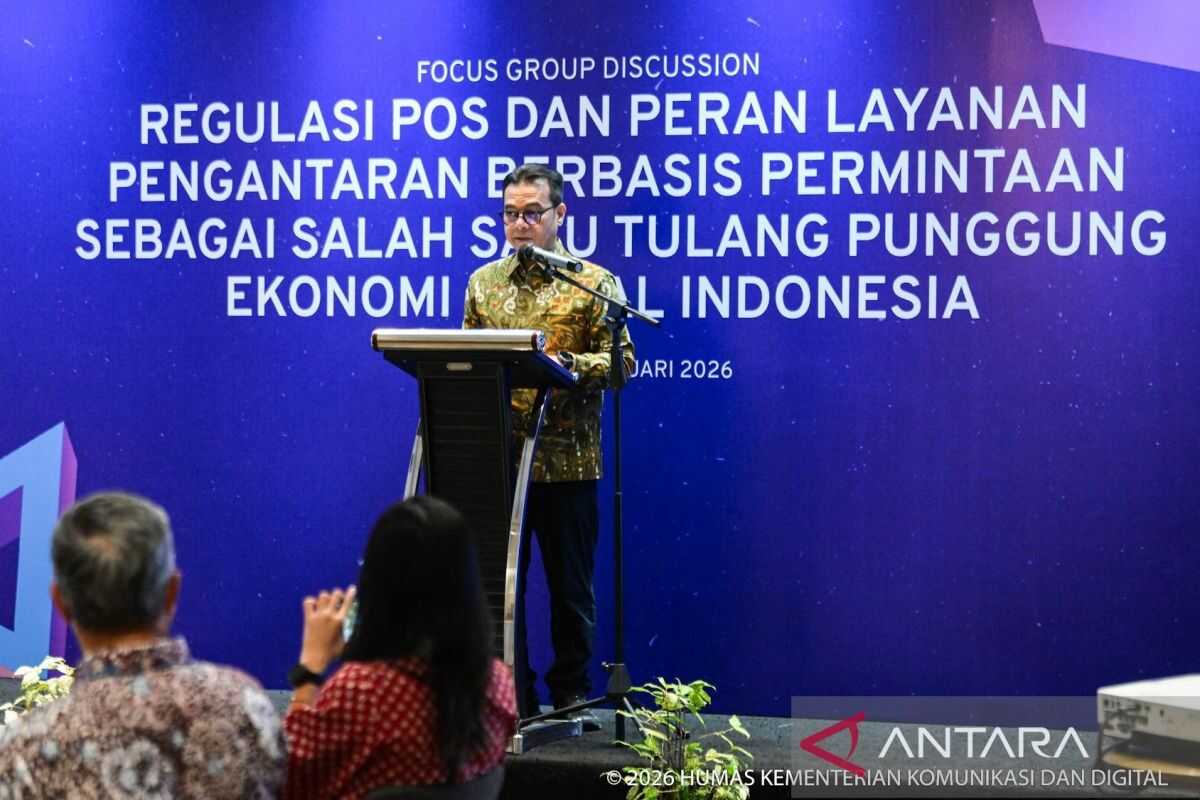
Jakarta - The Deputy Minister of Communications and Digital Affairs (Wamenkomdigi), Nezar Patria, has affirmed that integrating commercial postal services and demand-based delivery services represents a concrete step to suppress national logistics costs, which remain above 14 per cent of gross domestic product.
Nezar outlined that the transportation and warehousing sector grows at 8.98 per cent annually, reaching approximately 9 per cent in the first quarter of 2025, whilst simultaneously employing over 6 million workers and handling up to 7 million parcels daily.
“This demonstrates the vital importance of the transportation sector as the backbone of the digital economy,” Nezar stated in an official statement received in Jakarta on Saturday.
He noted that persistently high logistics costs directly impact commodity prices, UMKM competitiveness, and shipping costs borne by the public.
Consequently, system integration and the adoption of smart logistics have become urgent necessities.
He noted that postal services no longer merely dispatch goods, but instead serve as network consolidators, standards managers, and quality controllers.
Conversely, demand-based delivery services strengthen the first-mile and last-mile stages, which demand high speed and flexibility.
“The existence of demand-based delivery services is very real, and we cannot overlook their presence or their contribution, which has already facilitated and stimulated digital economy dynamism,” Nezar said.
He affirmed that this integration aims to create a mutually complementary system.
This model is expected to reduce distribution costs, accelerate delivery, and maintain the sustainability of millions of workers.
Nezar also emphasised the importance of a level playing field through transparent monitoring and infrastructure sharing.
He assessed that this policy provides business certainty for large operators, UMKM, and delivery workers.
The Ministry of Communications and Digital Affairs has opened a space for further discussion, including coordination with the Ministry of Transportation regarding transportation aspects and tariffs.
The government also aims to establish a more efficient logistics ecosystem to ensure more controlled pricing, more competitive UMKM, and faster delivery services with reasonable costs for the public.
“We expect feedback from industry players so that in formulating policy, we can accommodate all existing stakeholders and also provide fair solutions,” he said.