
Deputy Minister for National Development Planning: Current Global Situation is 'New Normal'
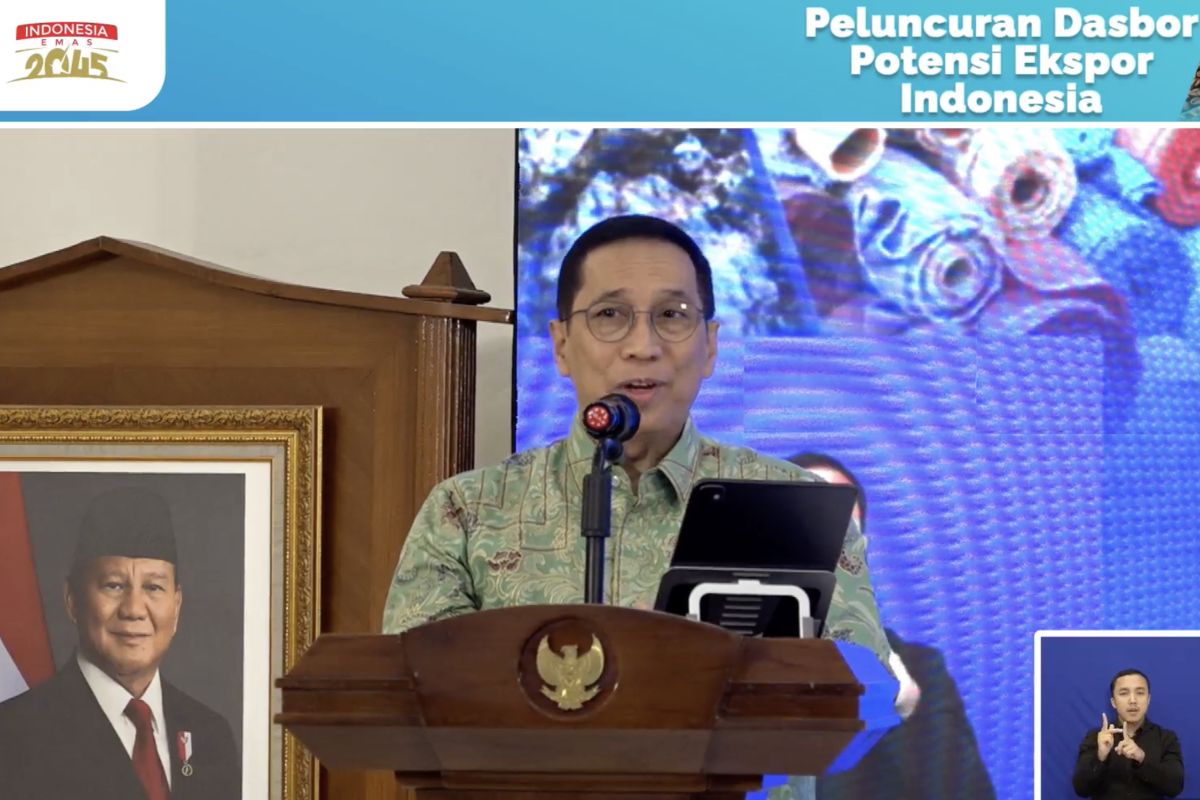
Jakarta (ANTARA) - Deputy Minister for National Development Planning and Head of the National Development Planning Agency (PPN/Bappenas), Febrian Alphyanto Ruddyard, stated that the current global challenges are part of a ‘new normal’.
‘I want to remind everyone that what we are experiencing is not abnormal; it is the new normal. We must never think there is a better time than now; this is our baseline, and this is the life we must live and confront,’ he said during the launch of Indonesia’s Export Potential Dashboard in Jakarta on Monday.
He highlighted that the global economy is expected to shift this year, requiring strategic opportunities to be harnessed. The world is undergoing global shifts marked by economic slowdown, trade fragmentation, accelerated AI adoption, and the resurgence of industrial policies. Indonesia must view these changes as strategic opportunities for knowledge-based transformation.
According to International Monetary Fund (IMF) projections, global economic growth will slow in 2026 due to Middle East conflicts and rising geopolitical tensions, which are key factors pressuring growth.
Increased trade conflicts, geopolitical tensions, and policy shifts towards protectionism are making international trade increasingly unpredictable. Factors such as trade policies, imbalances, and geopolitics are expected to influence energy prices, supply chain stability, and international trade dynamics.
Industrial policies are reshaping global trade regulations. The IMF emphasised that industrial policies have re-emerged as a major global trend, influencing nations to design more strategic trade policies.
The IMF also identified protectionism and greater fragmentation as key factors restricting trade and global growth. The United States has begun reducing dependence on China and is pursuing new trade agreements with Southeast Asian nations including Thailand, Malaysia, and Cambodia.
Additionally, decarbonisation, now serving as a new form of non-tariff protectionism, acts as an export barrier, raises production costs, and diminishes competitiveness for developing countries.
The AI revolution is boosting productivity and global competition. Nations lagging in AI adoption face declining productivity and competitiveness compared to those that adopt it earlier.
‘Therefore, new innovations are needed as these changes present challenges but also significant opportunities for Indonesia. I always remember the phrase there is always a silver lining in every cloud. So, we should view this as a half-full glass rather than half-empty,’ Ruddyard said.