
Deputy Minister: Export Transformation Requires Robust Ecosystem
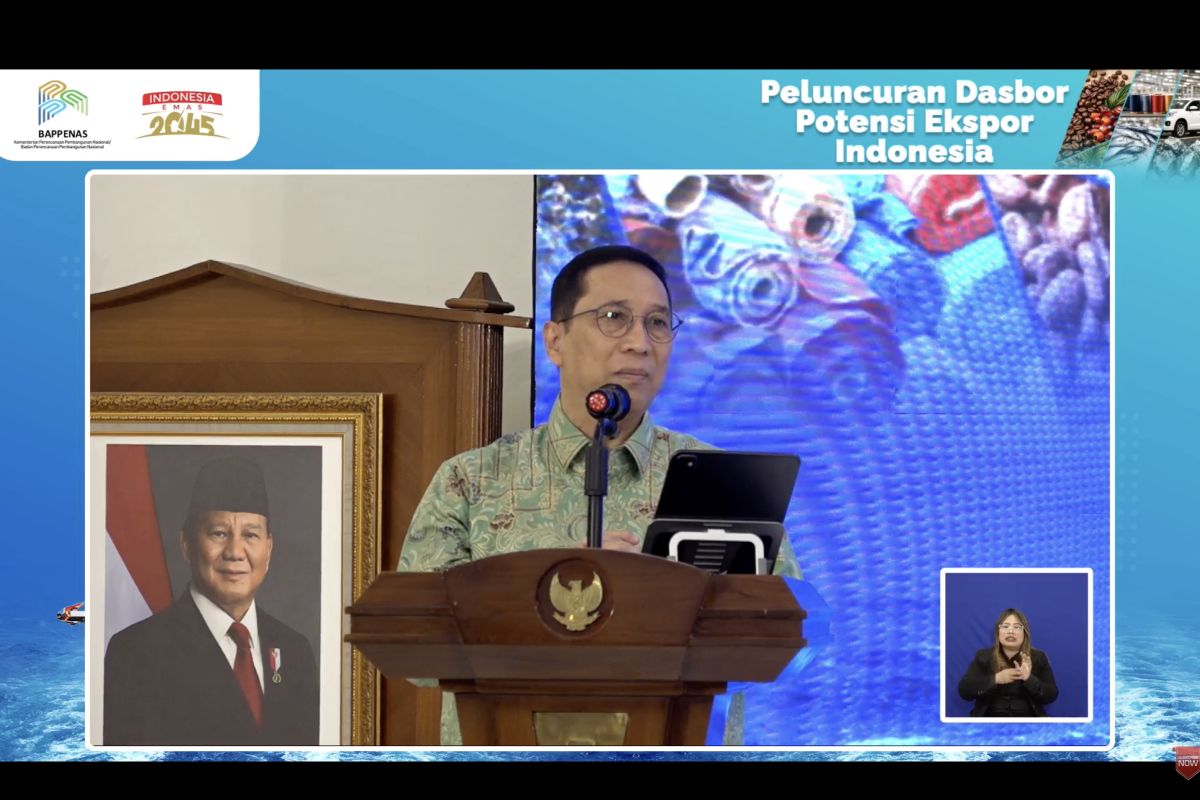
Deputy Minister of National Development Planning/Head of National Development Planning Agency (PPN/Bappenas) Febrian Alphyanto Ruddyard stated that export transformation requires a robust ecosystem.
“Export transformation cannot proceed with mere slogans or general policies; it requires a strong ecosystem,” he said at the launch of the Indonesia Export Potential Dashboard in Jakarta on Monday.
Among the key foundations of the ecosystem is the need for data as a new source of strength. With this, countries and businesses that can effectively interpret data will more quickly identify market opportunities and understand global supply chains.
Furthermore, data aids in determining the right trade strategies.
“Conversely, without robust data, policies often lack precision, investments become misdirected, and market opportunities remain underutilised. Therefore, with available data, we can better provide in-depth understanding and analysis of existing potential,” Febrian said.
The Indonesia Export Potential Dashboard is used to expand trade information access, support export policy transformation aligned with digital transformation, strengthen industrial downstreaming product diversification and Indonesia’s competitiveness in global supply chains, and serve as a basis for precise, data-driven strategic decisions to support Indonesia’s export potential development.
Additionally, the dashboard aims to provide information on export potential in each region, identify flagship products, potential export markets, and map export performance based on various indicators and analyses.
For national ministries and agencies, the dashboard serves as a shared data foundation for policy formulation, synchronising central and regional planning, supporting promotion strategies, export diversification, strengthening inter-regional trade, and monitoring national export targets holistically.
For regional governments, the dashboard acts as an analytical tool to identify export opportunities and challenges, set product and market priorities, and assess regional readiness and competitiveness.
For micro, small, and medium enterprises (MSMEs) and other businesses, the dashboard opens access to global markets while supporting data-driven decisions to identify flagship products, potential markets, and strategies to enhance value addition.
Local businesses can also use the dashboard to understand HS codes (international standard codes for classifying goods globally), and necessary standards such as SNI (Indonesian National Standard), HACCP (food safety management system), and halal certification.