
Deputy Law Minister: Advocate Reform Must Focus on Code of Ethics Enforcement
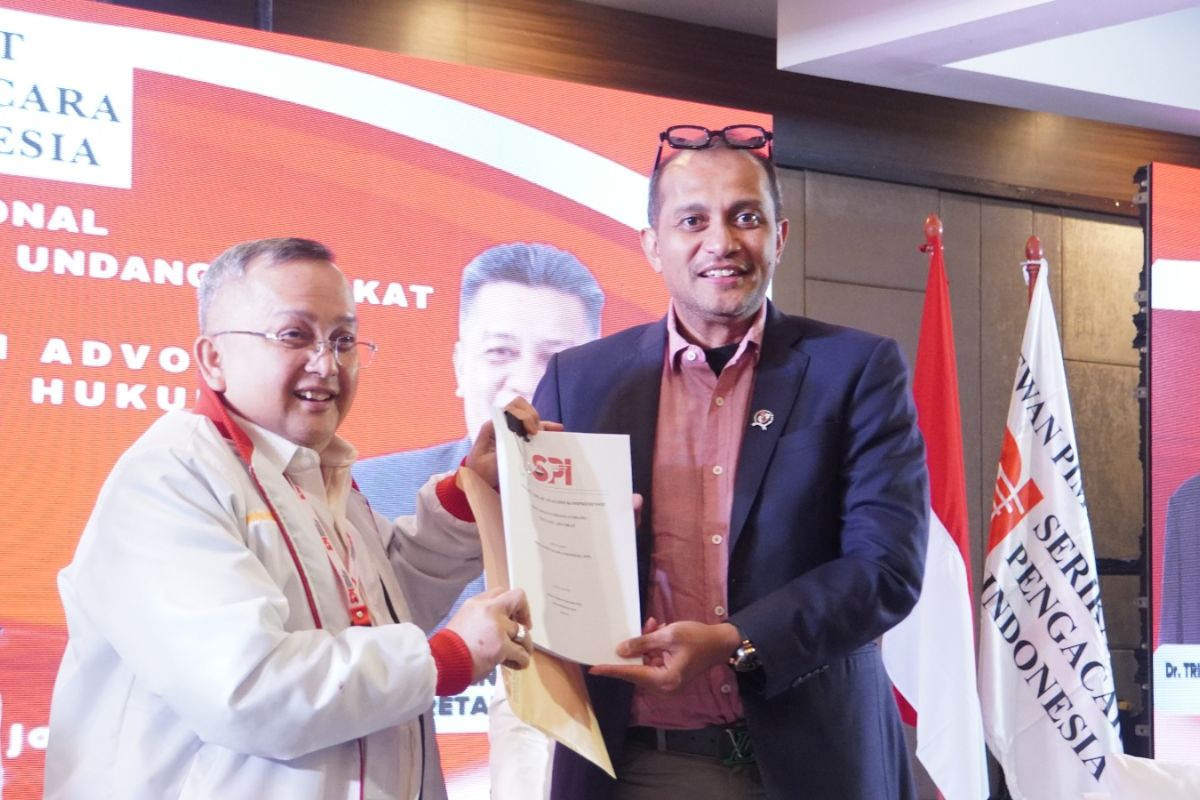
Deputy Minister of Law Edward Omar Sharif Hiariej believes that reform of the advocate profession must be directed towards strengthening the recruitment system, education, and enforcement of the code of ethics in order to maintain the dignity of advocates as an ‘officium nobile’. According to Eddy, the greatest challenge facing the advocate profession today lies not in the growing number of advocate organisations, but in the weak mechanism for ethical oversight. “This ‘officium nobile’ must have its dignity maintained through a clear recruitment pattern, education system, and, above all, enforcement of the code of ethics,” Eddy said during a National Seminar titled ‘A New Direction for Advocates in National Legal Reform’ held by the Indonesian Lawyers Union (SPI) in Jakarta on Tuesday. Officium nobile is a Latin term meaning ‘noble profession’. The term generally refers to professions in the field of law enforcement and humanity, such as advocates, notaries, and judges, as well as the medical profession (doctors), which demand moral responsibility, integrity, and high dedication to society. Personally, he is of the view that the new regulation being prepared should not only be called the Advocate Law, but rather the Advocate Profession Law so that the regulation of the profession is more comprehensive. According to him, a number of provisions in the new Criminal Procedure Code (KUHAP) have strengthened the position of advocates as part of a fair legal process mechanism (due process of law). On the same occasion, Chairman of the Advisory Board of Suara Advokat Indonesia (SAI), Juniver Girsang, assessed that the discussion of the Advocate Bill is an important momentum to reform the advocate profession. According to him, the design of a single bar organisation as stipulated in Law Number 18 of 2003 is no longer suitable for the current development of the legal profession. Juniver proposed the establishment of a National Advocate Council as an independent institution tasked with setting professional education standards, conducting advocate examinations, supervising continuing education, and enforcing the code of ethics. “The most concerning issue is the crisis of professional ethics. Many advocate organisations do not have an effective honour council to supervise their members,” said Juniver. Support for accelerating the discussion of the Advocate Bill was also conveyed by Deputy Chairman of the Indonesian Advocates Congress, Herman Kadir. According to him, the 2003 Advocate Law needs to be reorganised to be more adaptive to the development of the national legal system. Meanwhile, Chairman of the Indonesian Lawyers Union (SPI), Trimedya Panjaitan, said the seminar was held to consolidate the views of advocate organisations ahead of the discussion of the Advocate Bill. “This is a momentum that must not be lost. All advocate organisations must sit together so that a law is born that is capable of answering the challenges of the advocate profession in the future,” he said.