
Deputy Justice Minister Reaffirms Presidential Insult Clause in Criminal Code Is Not Designed to Silence Criticism
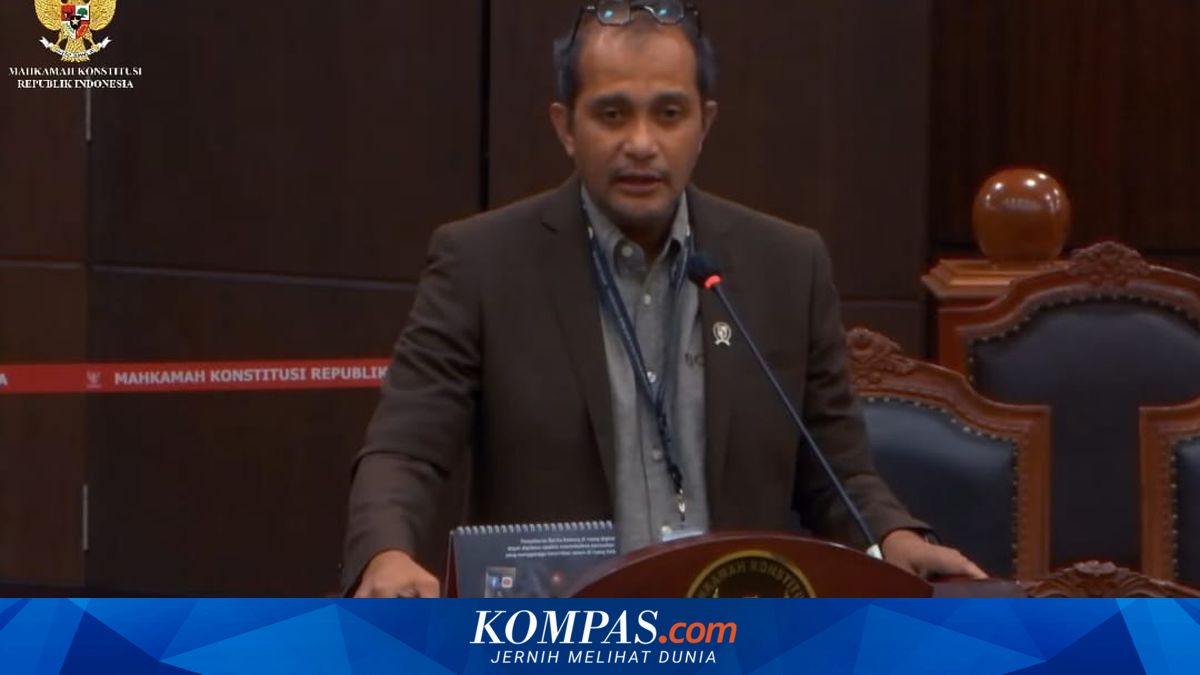
JAKARTA — The Deputy Justice Minister (Wamenkum) Edward Omar Sharif Hiariej, known as Eddy, has reaffirmed that Article 218 (1) and (2) of Law Number 1 of 2023 on the Criminal Code (KUHP) concerning presidential insult is not intended to silence criticism.
The reaffirmation was made during Constitutional Court proceedings in case Number 275/PUU-XXIII/2026, held on Monday, 9 March 2026.
“Criticism and protest against a particular policy are entirely not prohibited under this article and that falls within the scope of public interest,” Eddy stated during the hearing, as quoted from the Constitutional Court’s YouTube broadcast on Tuesday, 10 March 2026.
During the proceedings, Eddy explained that the president and vice president do not only hold status as private individuals but also as symbols of the state and representatives of popular sovereignty.
Consequently, attacks on the honour, dignity, and integrity of the president potentially undermine the constitutional symbols of the state as well as the presidential institution itself.
Eddy explained that Articles 218 and 219 of the Criminal Code were deliberately drafted to establish a clear distinction between criticism that forms part of democratic practice and insult in the form of defamation, abuse, or attacks on personal honour.
“Regarding Article 218, this protects state interests. What is protected are matters of sovereignty and matters of dignity and integrity,” Eddy clarified.
Eddy also explained that the presidential insult clause serves a preventive function in averting horizontal conflict within society.
In a paternalistic socio-political context, extreme insults against the head of state often trigger polarisation and even clashes between supporter groups in public spaces.
“This article acts as a channel. If the president and vice president are insulted or their dignity is attacked while their supporters do not accept it, this could lead to chaos. Therefore, this article serves as a channel or social control mechanism to prevent the public from acting anarchically,” Eddy said.
“To prevent this article from being used recklessly, this provision is an absolute complaint offence that can only be filed by the president or vice president,” he added.
Petitioners challenging the clause contend that the presidential insult provision conflicts with the 1945 Constitution of the Republic of Indonesia (UUD NRI 1945), particularly regarding guarantees of freedom of expression, equality before the law, and legal certainty.
Petitioners argue that Article 218 of the Criminal Code places the president and vice president in a different status from other citizens, thus conflicting with Article 27(1) of the 1945 Constitution.
The provision is considered to create a “fear effect” in society, causing citizens to hesitate in voicing criticism, opinions, or expressions in public spaces.
In their petition, the petitioners have requested the Constitutional Court declare Articles 218(1) and (2) of the Criminal Code to conflict with the 1945 Constitution and to have no binding legal force.