
Deputy Justice Minister Affirms Presidential Insult Article is a Complaint-Based Offence at Constitutional Court
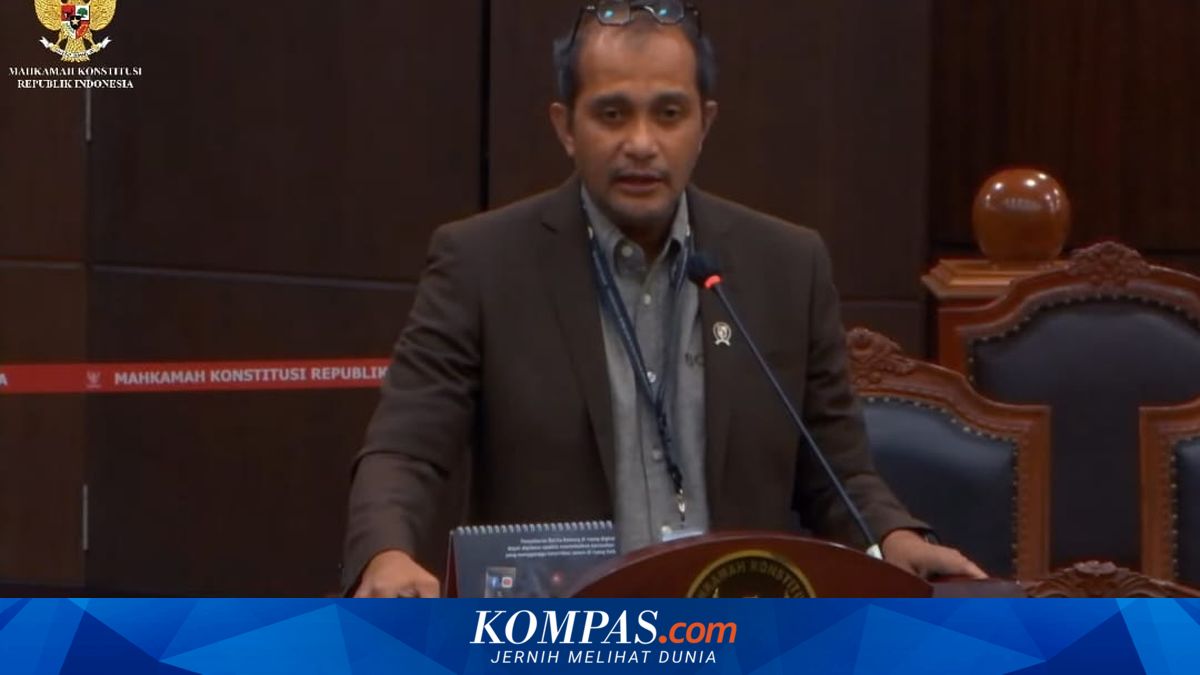
JAKARTA — Deputy Justice Minister Edward Omar Sharif Hiariej (Eddy) has affirmed that the article concerning presidential insults, specifically Article 218 paragraphs (1) and (2) of Law Number 1 of 2023 regarding the Criminal Code (KUHP), constitutes a complaint-based (aduan) offence.
A complaint-based offence is a criminal act that can only be processed by law enforcement authorities upon receipt of an official report or complaint from the victim or aggrieved party — in this case, the president.
“To prevent this article from being applied indiscriminately, this provision constitutes an absolute complaint-based offence that can only be filed by the president or vice president,” Eddy stated during a Constitutional Court hearing on Tuesday (10 March 2026).
In his statement, Eddy explained that the president and vice president hold positions not merely as private individuals but also as symbols of the state and as representatives of the people’s sovereignty.
Consequently, attacks on the honour, dignity, and integrity of the president potentially undermine the constitutional symbol of the state and the institution of the presidency.
The provision is intended to maintain balance between freedom of expression and the ethics of democratic life.
“Regarding Article 218, this concerns protection of state interests — specifically matters of sovereignty and dignity,” Eddy clarified.
Within a paternalistic socio-political context, extreme insults directed at the head of state frequently trigger polarisation and even clashes between supporter groups in public spaces.
“This article functions as a kind of pressure valve. If the president and vice president are insulted or their dignity is attacked whilst their supporters do not accept this, it could lead to chaos. Therefore, this article exists as a pressure valve or means of social control to prevent the public from acting anarchically,” Eddy explained.
“Criticism and protest against a particular policy are entirely prohibited under this article, and such expression falls within the scope of the public interest,” he added.
“Moreover, in the article’s explanatory clause, it states that one form of protest or criticism is public demonstration. This means Article 218, together with its explanatory provisions, and indeed Articles 240 and 241 with their respective explanations, expressly verbis permit demonstrations and permit criticism against the government and state institutions,” he concluded.