
Deputy Investment Minister Proposes Instant Permits for Industrial Zones to Unblock Investment
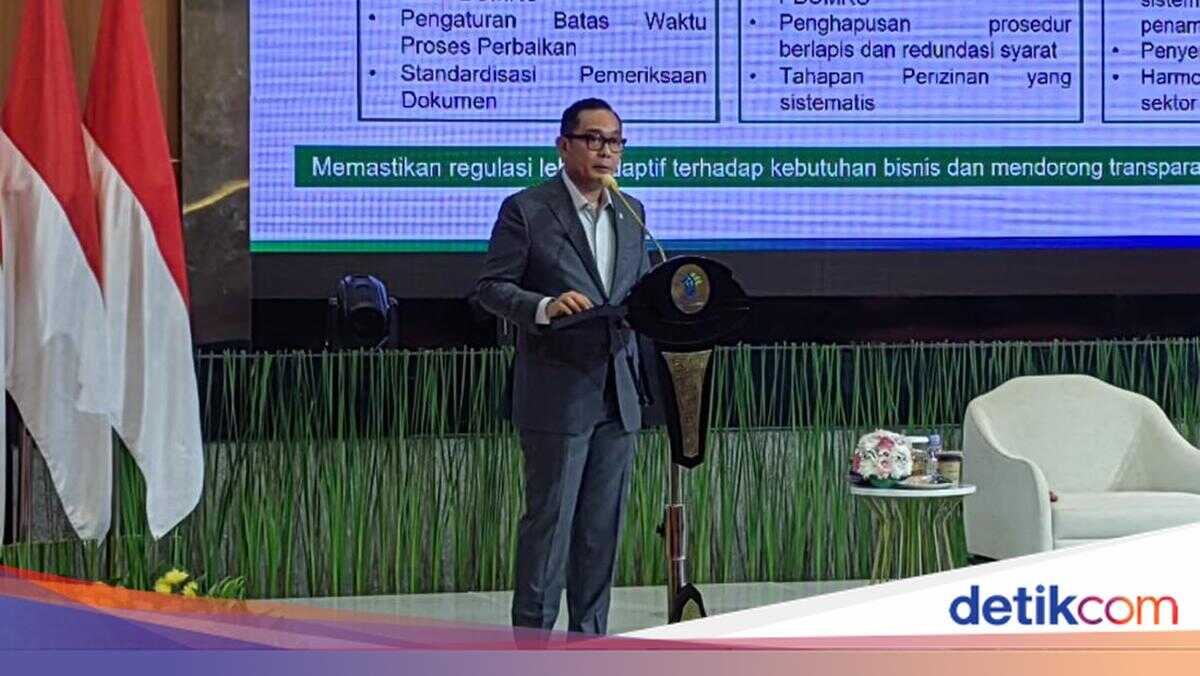
Jakarta — Deputy Minister of Investment and Downstream Industries/Deputy Head of BKPM Todotua Pasaribu has highlighted the complexity of investment licensing in Indonesia, describing the permit process as a stumbling block for investment realisation. He has therefore proposed to the Coordinating Ministry for Economic Affairs that investment permits be simplified, specifically for investments already confirmed to proceed in industrial estates, Special Economic Zones (KEK) and free trade zones.
“As long as the investment is entering a designated zone — whether an industrial estate, special economic zone or free trade zone — if the investor is ready to come in, we issue the permit immediately. But the basic requirements we can post-audit,” he said during a Public Consultation on the Draft Regulation of the Minister of Investment and Downstream Industries/Head of BKPM in Jakarta on Thursday (3 July 2025).
According to Pasaribu, the government must pursue breakthroughs to deliver faster licensing services. Licensing issues are frequently cited by business operators as a major obstacle to investment. He explained that if permits are only issued one to three years after an investor applies, this creates serious problems — particularly as business cycles may shift in the interim.
“For investment actors, the business cycle they wanted to invest in has already changed by the time the permit comes through. If licensing can only be executed one, two or three years after application, that is a problem. Going forward, this is something we truly must reform,” Pasaribu elaborated.
On this basis, his ministry has proposed that investment permits for industrial zones be issued directly by the Ministry of Investment and Downstream Industries/BKPM, with compliance checks conducted through post-audits.
“We need to create a breakthrough, and we at the Ministry of Investment — to start with, let us do this in designated zones. As long as it is within a zone and the investor is ready, we at the Ministry of Investment will issue the permit. The rest we post-audit. Because once someone has invested, they are not going to flee — they will not neglect their obligations,” he explained.
One of the proposed mechanisms is a deemed-approval scheme (fiktif positif). Under this approach, a business permit would be automatically granted if the relevant technical ministry fails to issue it within the agreed timeframe. Pasaribu noted that his ministry handles 1,700 types of permits involving approximately 17 ministries and government agencies.
“There is a concept called deemed approval — this is about providing certainty. Our ministry, as I mentioned, handles 1,700 types of permits linked to roughly 17 ministries and agencies,” he concluded.