
Deputy Interior Minister Urges HIPMI to Collaborate with Local Governments to Boost Creative Economy
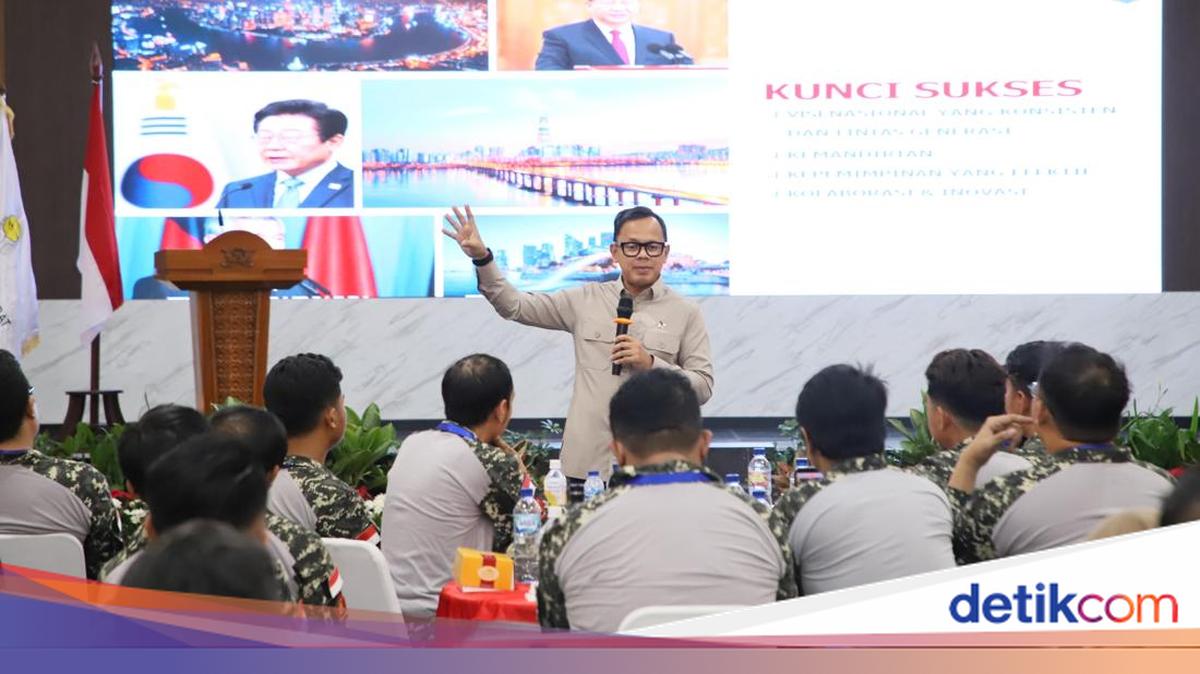
Bima believes HIPMI has significant potential to assist regional heads through a more collaborative and innovative perspective. He stated that HIPMI can also serve as a bridge between regional heads, business actors, and communities.
Meanwhile, as Deputy Interior Minister, Bima’s role is to support regional heads in building fiscal independence to underpin national priority programmes. According to him, regions need to be encouraged to seek alternative funding sources, such as crowdfunding, alternative financing, Public-Private Partnerships (KPBU), and the optimisation of regional assets.
“I know many of my friends [in HIPMI] who are involved in the creative economy, culinary, and so on. Because regional heads don’t understand it. So I convey this: friends can help regional heads to be more creative and innovative,” he said in a written statement on Sunday (10/5/2026).
He delivered these remarks while attending the Regional Education and Training (Diklatda) V of the West Java Regional Board (BPD) HIPMI at the Daan Mogot Building, Pusdikif, Bandung City, on Saturday (9/5).
Bima addressed the current challenges facing regional heads, which can be seen in their success in implementing national strategic programmes at the local level. He stressed that regional heads must be able to guide the Asta Cita in detail, from food sovereignty, the Free Nutritious Meals (MBG) programme, People’s Schools, Garuda Schools, to Village/Subdistrict Cooperatives (Kopdeskel).
He added that the current momentum presents an opportunity for the younger generation and business actors to contribute to realising Indonesia’s Golden 2045. In his view, Indonesia can become a developed nation if it can effectively utilise its demographic bonus and build national independence.
On this occasion, he emphasised the importance of continuity in national vision across leadership transitions. According to him, changes in leadership should not alter the direction of national development. This is reflected in several countries such as Singapore, South Korea, Japan, and Vietnam, which have maintained economic stability despite leadership changes.
“No government can do it alone; everything requires collaboration. Although collaboration is no longer sufficient today, this is now the era of co-creation. Collaboration merely accommodates, but co-creation means sitting together, facing challenges together, and planning together,” he stated.
Bima also cited the good practice of the Jambi City Government, which has been deemed successful in improving regional finances through the optimisation of national priority programmes. According to him, this has led to increased economic growth and a reduction in the open unemployment rate.
“The figures are good; yesterday I presented this to Bappenas, and I was quite pleased because this proves that regional heads are not just complaining but choosing to work hard. Thus, opportunities will open up,” he concluded.