
Deputy Interior Minister Reveals Strengthening Regional Governance as Key to Tackling Climate Change
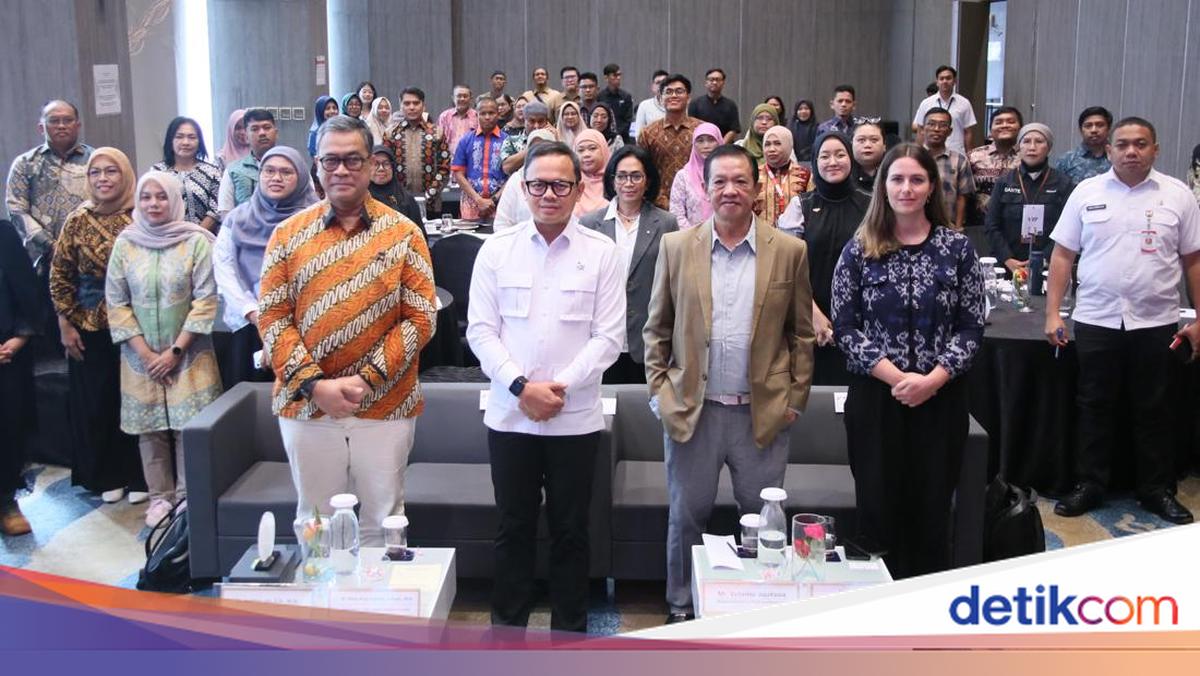
Bima explained that Indonesia already possesses various policy frameworks, regulations, and strong international commitments to support sustainable development and net zero emission targets. Nevertheless, these instruments have not yet been fully translated effectively into implementation at the regional level.
“So these executions are our major challenge (and) local governments are the key,” Bima stated in his remarks on Wednesday (6/5/2026).
He made these comments while delivering the keynote speech at the National Policy Dialogue and Workshop on Social Inclusion and Resilience in Asia (SIRA) at Grand Mercure Kemayoran, Jakarta, on Wednesday (6/5).
Bima explained that although various development indicators and indices show positive trends, there are still gaps between data achievements and on-the-ground conditions. He assessed that the main issues lie in weak data integration, cross-sector coordination, and insufficient attention to vulnerable groups in planning and implementation.
“So the urgency often stops at the level of training, documents, or actually just formalities in the budget,” he said.
Furthermore, Bima emphasised that gender perspectives, inclusivity, and disability should not be viewed merely as add-on programmes. According to him, these perspectives must be integral to how the government formulates policies and ensures that all societal groups gain equal access and benefits from development.
“This is about who gets access, who is involved, who then enjoys the benefits. This is the mindset for issuing policies and revenues,” he revealed.
On that occasion, Bima also highlighted the importance of strengthening the governance ecosystem at the regional level in facing climate change challenges as well as inclusive development. According to him, several regions have demonstrated good practices through integrated approaches, community-based methods, and institutional strengthening involving multiple stakeholders.
In addition, Bima cited Yogyakarta, which he regards as having strong institutional strengthening and planning integration, from the planning process to programme implementation at the regional apparatus level. Semarang was mentioned for its community-based approach, while Surabaya has succeeded in building integrated social services.
He also touched on good practices in Makassar, which promotes a community-based approach at the alley or neighbourhood level as a space for strengthening social and environmental issues.
“So in essence, each region has different strengths, and that becomes local inspiration that can be duplicated and learned from. So ladies and gentlemen, I think the main point is that it’s not the programmes that matter, but the system,” he concluded.
Bima hopes that local governments can continue to strengthen institutional capacity, data integration, cross-sector collaboration, and meaningful community participation. Such efforts are vital to realise inclusive, adaptive, and sustainable regional development amid global climate change challenges.