
Deputy Interior Minister Hopes Digital-Based Elections Will Not Remain at the Conceptual Level
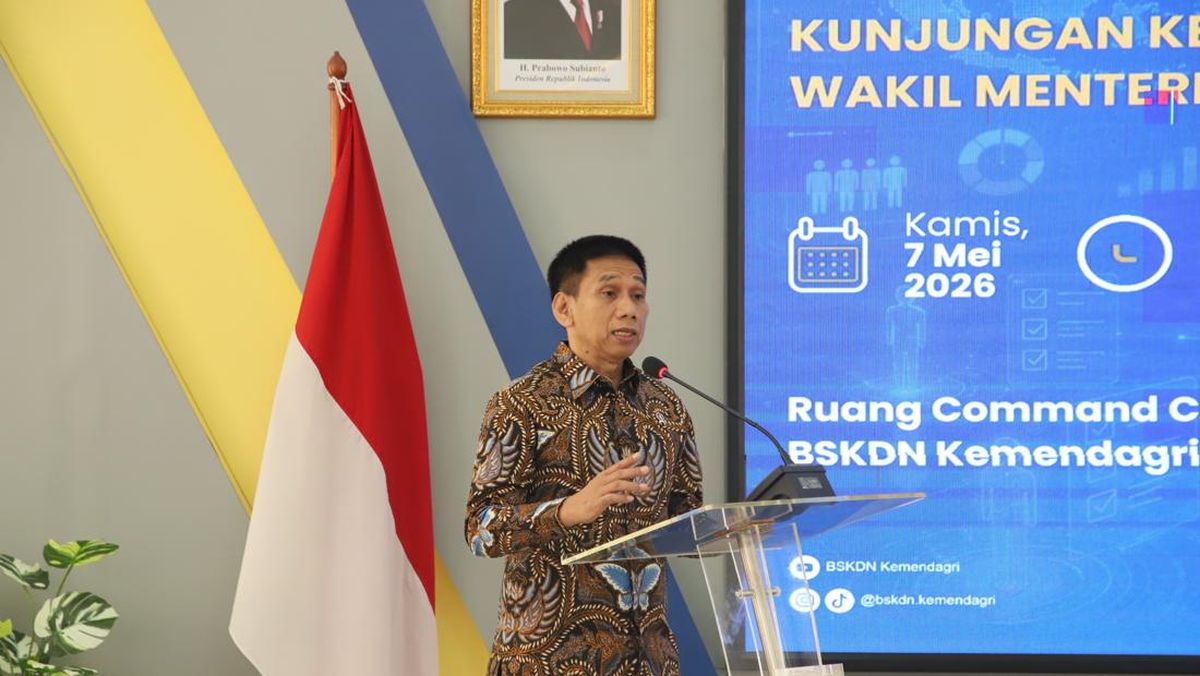
Deputy Interior Minister Akhmad Wiyagus hopes that discussions on digital-based election technology do not stop at the conceptual level but can be studied and tested directly. This was stated by Wiyagus at the inauguration of the Digital Election Simulation Lab (DESLab) of the National Domestic Policy Strategy Agency (BSKDN) in the BSKDN Command Centre Room of the Ministry of Home Affairs (Kemendagri), Jakarta, on Thursday (7/5). In a written statement from Kemendagri, Wiyagus said that the existence of the digital election simulation facility should not merely function as a place to showcase E-Voting technology. According to him, the facility must develop into a centre for knowledge development as well as the formulation of policy recommendations related to the governance of digital elections in Indonesia. “The BSKDN DESLab must not only become a display room for E-Voting devices, but the BSKDN DESLab must become a space for producing knowledge and policy recommendations,” said Wiyagus. According to him, the laboratory enables government officials, academics, students, civil society organisations, and various stakeholders to simulate the E-Voting process comprehensively. The process includes voter verification, the application of the one man one vote principle, vote counting, and audit mechanisms. He continued that based on data from PT Inti Konten Indonesia, the E-Voting system has been used in 1,910 villages across 16 provinces since 2013 without significant obstacles. That experience is considered an important asset for Kemendagri in mapping the benefits, challenges, and governance of broader E-Voting implementation. Wiyagus admitted that Indonesia needs to learn from the successes of countries such as Brazil in accelerating vote recapitulation, Estonia with its internet voting system, and the United States which implements ballot audits. Experiences from countries like Germany, the Netherlands, Ireland, and Norway also provide important lessons regarding security challenges in systems and public trust. “The experiences of those countries show that E-Voting is not merely about speed and efficiency, but must be supported by regulations, security, audits, voter literacy, and strong public trust,” said Wiyagus. Wiyagus views the presence of DESLab as a strategic step for Kemendagri in facing the challenges of modern government governance that is increasingly influenced by digitalisation issues, artificial intelligence, and cybersecurity. He hopes that this facility can strengthen objectivity in examining policy risks and serve as a learning medium from the planning stage to implementation. “The BSKDN DESLab is a message that Kemendagri is ready to adapt and prepare relevant domestic government policies with the times,” said Wiyagus.